

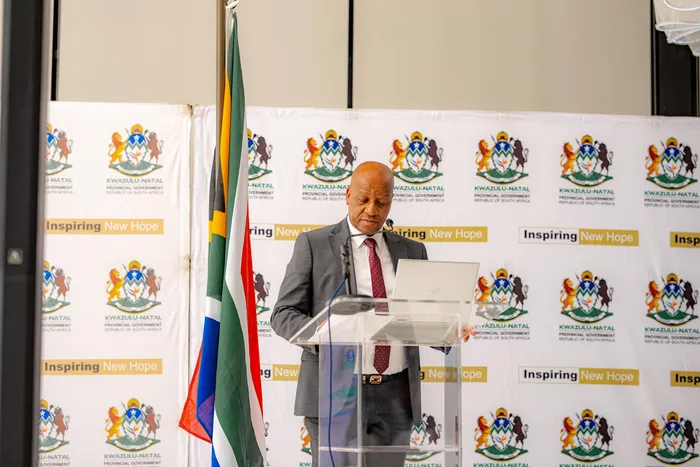
KwaZulu-Natal Premier Thamsanqa Ntuli addresses delegates at the inaugural KZN Energy Indaba.
Image: Supplied
In a bold move to secure the province's energy future, the KwaZulu-Natal Provincial Government has embarked on an ambitious drive to turn Richards Bay into a national energy hub that will drive development and create jobs.
Speaking at the two-day inaugural KZN Energy Indaba at Richards Bay last week - initiated by the provincial government and hosted by Richards Bay Industrial Development Zone (RBIDZ) – KZN Premier Thamsanqa Ntuli said the burgeoning port city was well placed to play a key role in energy security and job creation through investment in energy infrastructure.
This growth drive is part of its Secondary City strategy aimed at boosting development.
“If we are to unlock the full potential of our secondary cities, energy security must sit at the centre of our development strategy. The industrial future of Richards Bay, Newcastle and Pietermaritzburg will depend on our collective ability to invest in diversified energy generation, new technologies, and resilient energy infrastructure,” he said.
Hosted at the Thembela Venue, the indaba was attended by more than 560 delegates including key energy role-players, multi-national industry representatives, SOE leadership, Members of Parliament, local government mayors, traditional leaders, investors and partners. It included Friday's signing of a memorandum of understanding (MOU) between RBIDZ and the Zululand Energy Terminal (ZET - a partnership between Vopak South Africa and Transnet Pipelines) to build a gas-to-power LNG pipeline between Richards Bay and Empangeni, with the terminal feeding an additional 3 gigawatts into the Eskom power grid.
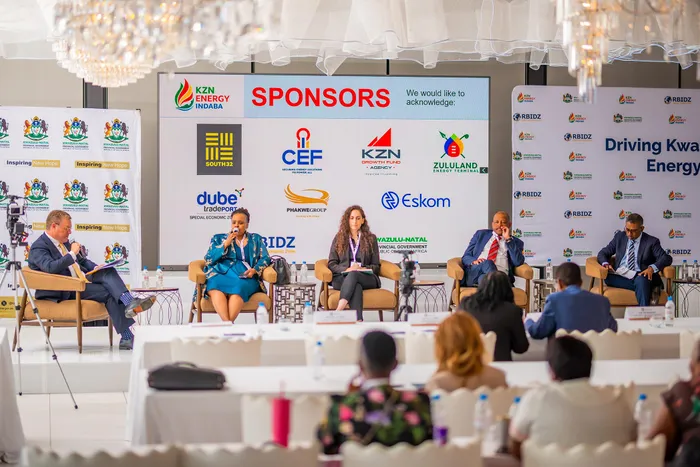
Panel discussions created enthusiastic dialogue on ensuring a smooth and equitable energy transition.
Image: Supplied
Many engines of growth
Ntuli said the Secondary City strategy was more than spatial planning and was aimed at reshaping the landscape of opportunities, stimulating regional economies and making these cities attractive to both local and global investors.
“Through co-ordinated planning, catalytic investment and policy certainty, we are confident that KwaZulu-Natal can emerge as a leading African example of balanced regional development — a province united in purpose, powered by many engines of growth. And in that journey, Richards Bay will undoubtedly stand as one of the key pillars of KwaZulu-Natal’s energy and industrial future,” Ntuli said.
The conference comes as the world grapples with geopolitical tension in the Middle East which has disrupted oil and gas supplies, making the country's Integrated Resource Plan (IRP) 2025 more pressing than ever.
Project owner and director of ZET, Oliver Naidu, told Business Report that the country's IRP was on a trajectory to create a sustainable energy mix, and that the ZET would be a significant player in energy transformation, development and job creation.
"Apart from what is happening in the geopolitical situation, we have a good plan in terms of how we are going to sustain and develop our energy mix and energy security in the country,” elaborated Naidu.
The ZET comes with a R15-billion price tag, with contracts being concluded for different aspects of the massive project.
Sibongiseni Khathi, Transnet Pipelines Chief Executive, said the public-private partnership required inputs from many other players in ensuring that the port's infrastructure and that of Transnet and Eskom resulted in reliable power generation. “It is a multi-stakeholder project that requires key co-ordination, not only from the port authority and Transnet, but also from the local authorities in terms of providing services like water and roads to support the terminal.
“It is important that the communities that the pipeline goes across benefit by way of skills development and job opportunities. The terminal is not just a springboard for providing energy - it is also a springboard for our young people to develop skills in the energy sector,” he said.
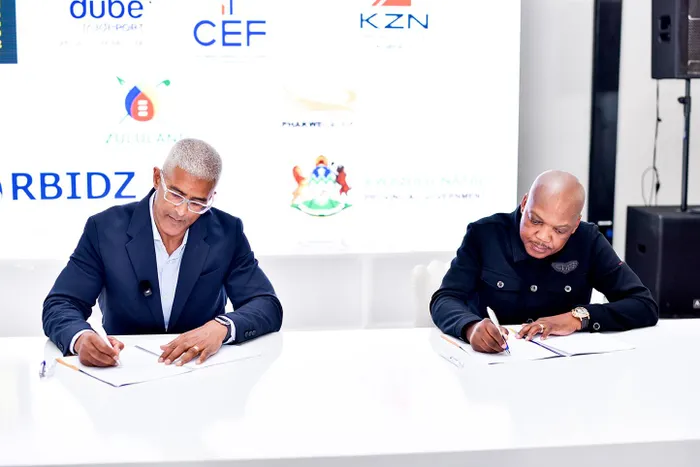
Oliver Naidu, project owner and director of ZET, signs the MOU alongside RBIDZ CEO, Thabane Zulu.
Image: Supplied
Real power to the people
Premier Ntuli told delegates that energy security was directly linked to KZN's economic future. “Reliable power supply strengthens investor confidence, unlocks industrial expansion, and enables innovation in emerging sectors of the green economy.
“Our energy strategy must therefore be understood not only as an infrastructure priority, but as a central pillar of economic transformation and long-term prosperity for the people of KwaZulu-Natal,” he said.
Rev Musa Zondi, KZN MEC for Economic Development, Tourism and Environmental Affairs, emphasised that unlocking energy investment was complex and required long-term co-ordination. “The Provincial Growth Development Plan Vision 2035 places inclusive and sustainable economic growth, job creation, spatial equity, human capital development, strategic infrastructure and effective governance at the centre of our developmental mandate.
“Through this energy agenda, we must ensure that we address availability, accessibility, affordability and sustainability, while decisively tackling poverty and inequality.
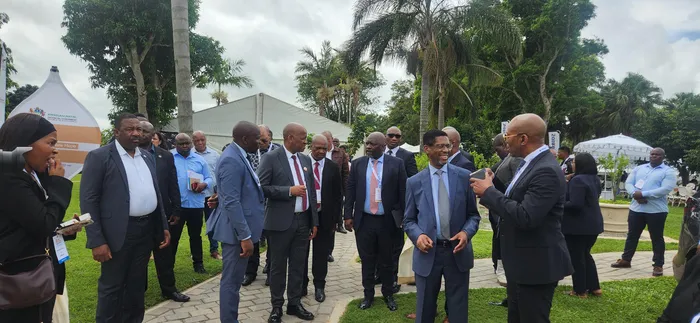
KwaZulu-Natal Premier Thamsanqa Ntuli, MEC for EDTEA, Rev Musa Zondi and other dignitaries in discussion after viewing the exhibition stands at the event.
Image: Terry van der Walt
“Energy is not simply an input into production; it is the backbone of manufacturing, logistics, value-addition industries and every component of our modern economy. For communities, energy access unlocks dignity, safety, education, health and entrepreneurship. Indeed, energy security is a developmental imperative," he said.
In his address, RBIDZ CEO Thabane Zulu said: “We are honoured to have received the call from the KZN provincial government and shareholder EDTEA to implement and facilitate this Indaba. This mandate reflects the confidence that our government has placed in us to help drive the province’s energy future.
“As part of our mandate, the RBIDZ has built an investment portfolio representing all key sectors of the economy with a value now exceeding R273bn.
“Of this, a substantial portion of R242bn represents energy-related investments, positioning RBIDZ as a leading destination for national energy infrastructure.”
Zulu added that the entity enjoyed the vital support of the ministries of Electricity and Energy; Trade, Industry and Competition; and Minerals, Petroleum and Resources; as well as the King Cetshwayo District Municipality and City of uMhlathuze.

Image: Supplied
‘No one left behind’
MEC Zondi told delegates that as the country embarked on its just energy transition, it was imperative that no one be left behind.
“We must confront our past with conviction. Too many communities, particularly rural and township households, continue to experience energy poverty - a condition that has persisted for decades.
“This history needs to change through a just transition that will close energy poverty and its gaps - and prioritise affordability and universal access - as well as ensure that rural and township economies become participants, not bystanders,” he said.
Enthusiastic panellists discussed the challenges and opportunities in the energy sector, while the need for honest and transparent dialogue and processes was raised in questions from the floor.
In a panel discussion on innovative financing models, panellist Meta Mhlarhi of Mahlako Financial Services, shared how her business partners put their homes up as security to start their women-only business, but then struggled to get finance because of a lack of experience. This statement raised a call for new finance instruments to replace the “home as collateral” model, as well as for blended finance facilities that cater for entrepreneurs as players and participants in economic generation.