

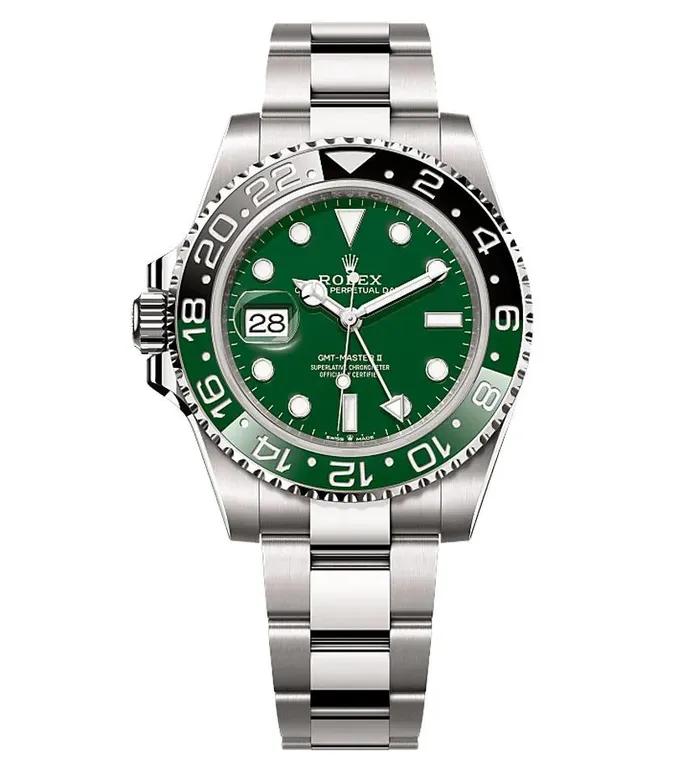
The second-hand luxury market is growing three times faster than new retail, with brands like Rolex appreciating 20% year-on-year, says writer.
Image: Rolex
While fashion remains one of the world's most polluting industries, a growing cohort of consumers is driving a measurable shift toward circular luxury. Globally, the second-hand market is expanding three times faster than new retail, and South Africa is mirroring this trend, according to Luxity’s eighth annual State of the Luxury Market in Africa report.
The shift is both environmental and economic. The fashion industry accounts for up to 8% of global carbon emissions and is the world's second-largest consumer of water. Yet, every pre-owned designer handbag purchase saves over 8kg of CO₂ and 22 litres of water compared with buying new, while a pair of pre-loved designer shoes spares 3kg of CO₂ and more than 7 litres of water
Investment-grade assets fuel circular behaviour
Financial data helps explain why consumers are extending product lifecycles. Luxury goods are increasingly behaving like assets: Hermès trades at 67.8% of retail value on the secondary market, Chanel 64.4%, and Louis Vuitton 64.2%. Meanwhile, Rolex now trades at 126.5% of its current retail price, up 20% year-on-year - an appreciating asset outperforming many traditional investments.
We're seeing wealth preservation and environmental consciousness converge. When consumers realise a well-maintained classic piece appreciates while reducing waste, the choice becomes obvious. This isn't about sacrifice, it's about smarter consumption that serves both your portfolio and the planet.
Category shift signals maturation
Consumer behaviour is clearly evolving from trend-driven purchases toward “forever pieces.” Search interest for handbags rose 14.6% year-on-year, while jewellery surged 43.8%. By contrast, shoes (-10.2%) and wallets (-21.3%) lost momentum - categories with shorter lifecycles and weaker resale performance.
Shoppers are redirecting attention from fast-turnover fashion to tangible assets. This reweighting toward permanence shows a market prioritising pieces that hold or grow in value rather than fade with the season. It extends product lifecycles and keeps textiles, leather, and precious materials in circulation, rather than contributing to waste.
Long-term growth validates circular model
Buyers now understand that longevity isn’t just an environmental virtue in this market; it’s a financial deliverable. The most financially sound decision is now also the most sustainable one.
* Zahariev is the co-founder of Luxity.
PERSONAL FINANCE