
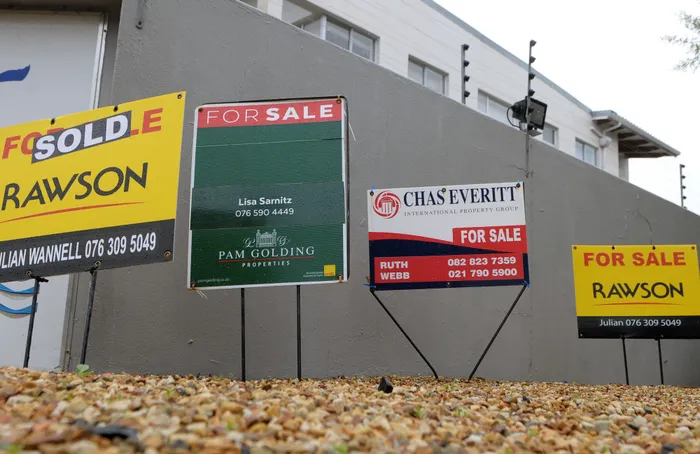
Discover effective strategies for resolving disputes in sectional title properties in South Africa, from understanding your rights to engaging with the Community Schemes Ombud Service.
Image: Independent Newspapers
Demand for sectional title properties remains a dominant feature of South Africa’s residential property market.
According to ooba Home Loans’ oobarometer Q4 2025, 66% of individual buy-to-let investors applying for home loans in 2025 chose sectional title properties, with demand steadily increasing across investor and owner-occupier segments over the past five years.
While sectional title schemes offer buyers affordability and security, disputes can arise in shared living environments if expectations are not well managed.
Sectional title ownership works best when everyone understands their role and responsibilities,” says Smee. “Problems typically arise when communication breaks down or when owners aren’t fully aware of the rules that govern their scheme.
Understanding owners’ rights
While owners have responsibilities to maintain their individual sections, they also have clearly defined rights under the Sectional Titles Schemes Management Act. These include:
Owners are often aware of what they have to pay, but not always aware of what they are entitled to. Knowing your rights makes it much easier to resolve disputes calmly and quickly.
Common disputes in sectional title schemes
Disputes within sectional title schemes tend to follow familiar patterns, with the most common areas of conflict being:
These are not unusual problems. In most cases, they are manageable if they are addressed early and through the correct channels.
Best practice for dispute resolution
Many disputes can be resolved internally if both parties are willing to engage constructively. Trustees must act in good faith and in the best interests of the body corporate, and owners should allow the internal process to work before escalating the matter.
The best approach follows this format:
Communication and internal resolution
The first step in resolving any sectional title dispute should be direct engagement. Owners must submit their concerns in writing to the trustees or managing agent, outlining the issue and referencing the relevant management or conduct rules.
Trustees also play a vital role in preventing disputes: Transparent communication, accurate record-keeping, and consistent enforcement of rules help build trust and reduce friction within schemes. In certain instances, establishing a dispute resolution committee consisting of impartial owners can be beneficial, as they can objectively review the situation and make a recommendation.
Involving the Community Schemes Ombud Service (CSOS)
If internal engagement fails, the Community Schemes Ombud Service (CSOS) can resolve issues such as:
CSOS is the practical next step for smaller or straightforward disputes. Its rulings are legally binding, and the process is generally faster and more affordable than litigation.
Involving the Courts
A recent Supreme Court of Appeal ruling confirmed that owners and bodies corporate are not required to exhaust CSOS processes before approaching the courts. This is relevant for more complex or high-value disputes.
The ruling gives owners more flexibility. While court action should never be the first choice because of costs and time, it’s important to know that CSOS is not the only route available.
Tips for Dispute Resolution
The most effective dispute resolution strategies focus on practicality rather than confrontation. These include:
With sectional title ownership continuing to grow, understanding the rules and avenues for disputes is vital when investing. The support structures are there; owners just need to know how and when to use them.
* Smee is the CEO of Only Realty Property Group.
PERSONAL FINANCE