

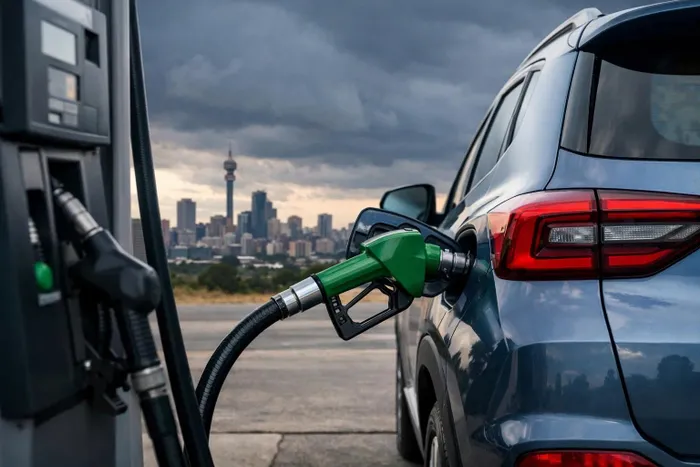
Fuel levy relief extended, but here’s why some are pushing back Recent errors in fuel price calculations by the Department of Petroleum and Mineral Resources have led to significant adjustments in diesel prices, adding to the uncertainty in South Africa's already volatile fuel market.
Image: AI / Sora
The latest fuel announcement has contributed to additional uncertainty in an already volatile market after the Department of Petroleum and Mineral Resources made an error in its fuel price calculations for May 2026.
The Department had to revise its initial announcement of a R6.19 per litre diesel increase to R5.27 after a calculation error was identified. The error occurred because only 0.93 cents was applied instead of 93 cents (R0.93) in fuel levy relief, which led to an overestimation of the increase.
While the correction means that diesel users are now paying approximately 92 cents less per litre than initially announced, prices remain elevated.
Although the error was corrected relatively quickly, such conflicting announcements add to uncertainty. In an environment where fuel prices are already heavily influenced by global factors, this makes planning more difficult for both households and businesses and undermines confidence in short-term forecasts.
The incident highlights how sensitive South Africa’s fuel pricing mechanism is.
It shows that prices are not only dependent on international market movements, but also on administrative accuracy, which plays an important role alongside market factors. Even small errors can have a meaningful impact on perception and planning.
The latest fuel price increases serve as a clear reminder of how vulnerable South Africa remains to global shocks.
Even with government intervention, we are already seeing significant pressure on households and businesses.
Petrol prices increased by R3.27 per litre last Wednesday, while diesel jumped by R5.27 per litre.
The primary driver behind the increase is the sharp rise in international oil prices. Brent crude oil has climbed from around $103 per barrel in March to between $107 and $116 in the last 10 days.
Geopolitical tensions, particularly in the Middle East, have disrupted supply and pushed prices higher. These factors are largely beyond South Africa’s control and carry the greatest weight in the current price increase.
Estimates suggest that oil prices accounted for approximately 80% to 90% of the increase. While the rand strengthened slightly, the relief was minimal.
A stronger rand helps, but it is simply not enough to offset the impact of higher oil prices. The underlying pressure remains strong.
The rand strengthened from R16.74 to approximately R16.57 against the US dollar during the period, reducing the increase by about 20 to 50 cents per litre.
The government has extended temporary fuel levy relief to cushion the impact on consumers.
These measures have made a meaningful difference. Without this intervention, fuel prices would have been significantly higher. Petrol could have increased by R5 to R6 per litre, and diesel by as much as R10 to R14 per litre.
However, this relief is temporary and is expected to be phased out from July. Persistently high fuel prices will have broader economic consequences.
Higher transport costs feed directly into the price of goods and services, particularly food. This places additional pressure on inflation and household budgets.
More than 70% of goods in South Africa are transported by road, meaning fuel prices have a direct impact on the cost of living. At the same time, economic growth remains under pressure, with the outlook for 2026 revised down to around 1%.
This environment also places the Reserve Bank in a difficult position. Inflationary pressure may delay interest rate cuts or even result in rates increasing again.
Consumer inflation rose slightly to 3.1% in March, with core inflation and utility prices also beginning to accelerate. However, these figures do not yet reflect the full impact of global developments.
The current inflation data does not yet provide a complete picture. The impact of rising international oil prices, particularly in light of the conflict in the Middle East, will become clearer in the coming months. Based on the current market conditions, as long as oil prices remain elevated and global tensions persist, consumers should prepare for a prolonged period of higher fuel costs. Analysts suggest that this pressure could continue for another 9 to 12 months. The next major risk for consumers is the planned withdrawal of fuel levy relief from July 2026.
If this relief is removed while global prices remain high, further increases cannot be ruled out.
The current environment highlights the importance of financial planning.
Consumers and businesses will need to adapt to an environment of higher input costs. This requires discipline, planning, and realistic expectations about the road ahead.
* Van Zyl is the chief executive officer of Everest Advisory Services.
PERSONAL FINANCE