

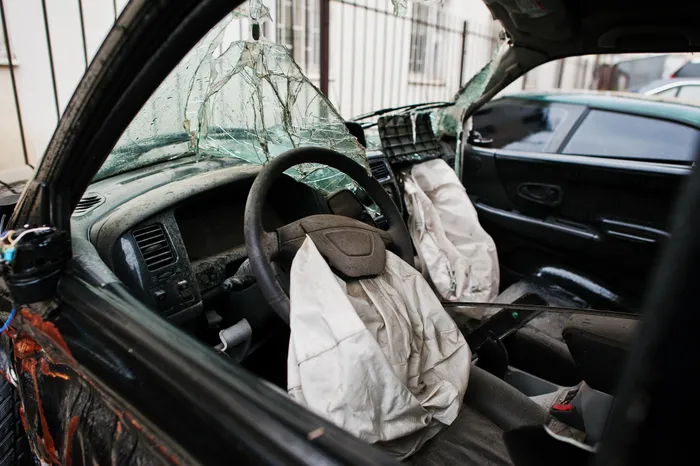
South African motorists may face severe consequences for speeding, including the potential loss of insurance cover. Learn how reckless driving can affect your claims and what you need to know to stay protected.
Image: Freepik
South African motorists who treat speed limits as optional could face more than fines or criminal charges after a crash, they may also find themselves without insurance cover.
That is the warning from Christelle Colman, chief executive and founder of Ami Underwriting Managers, following concerns raised by the National Financial Ombud Scheme South Africa (NFOS) about the impact reckless speeding can have on motor insurance claims.
“Drive as if you are not insured,” Colman says.
In a recent statement, the NFOS warns that while standard motor insurance policies generally cover negligence and honest mistakes, dangerous speeding could amount to a breach of a policy’s “due care” or “reasonable precautions” clauses, potentially leading to rejected claims and sharply higher premiums.
Colman says many policyholders do not fully understand how those clauses work.
“Many people know drunk driving, unlicensed driving, or illegal vehicle use can affect cover. Speeding is sometimes treated less seriously, but it can have equally serious consequences if the facts show the behaviour was reckless,” she says.
The warning comes as South Africa continues to grapple with one of the world’s deadliest road safety records. According to the Road Traffic Management Corporation (RTMC), more than 12,000 people die on South African roads every year, with excessive speed consistently listed as one of the leading contributing factors in fatal crashes.
The World Health Organization also identifies speeding as a major global road safety risk, noting that even a small increase in speed significantly raises both the likelihood of a crash and the severity of injuries sustained.
She says recently, concerns over reckless driving are again thrust into the spotlight after a 19-year-old motorist was arrested in Boksburg for allegedly driving an Audi at 214km/h in a 100km/h zone on the R21 freeway. The teenager faces charges related to speeding as well as reckless and negligent driving.
Colman says the distinction between ordinary negligence and reckless driving becomes critical when insurers assess claims.
“Insurance exists for sudden and accidental loss and in the normal course of events, insurers pay claims where a driver made an honest mistake,” she says.
She says that ordinary negligence may include misjudging braking distance, reacting poorly in difficult traffic conditions or making a momentary error in judgement.
“Those situations are not unusual and are exactly why people have motor insurance. In the case of the 19-year-old motorist, things can become very serious when the facts show that the driver acted with reckless disregard for the possible consequences. Then the case moves beyond ordinary negligence into something far more grave,” she says.
According to Colman, speeding is not assessed in isolation.
“Driving 20km/h over the speed limit may still constitute negligence and remain unlawful but it does not automatically mean a claim will be rejected. Extreme speeding, however, is treated very differently,” she says.
She says driving at extremely high speeds in urban areas or near intersections, pedestrians, and traffic lights makes it increasingly difficult for insurers to view the conduct as a simple driving error.
“That does not mean every allegation of speeding automatically results in a rejected claim. Every claim must still be assessed fairly and on its own merits,” she says.
Insurers generally require substantial evidence before declining a claim. This may include police reports, photographs from the accident scene, telematics and tracking data, witness statements, CCTV or dashcam footage, assessor reports, and accident reconstruction findings.
Colman says insurers are becoming increasingly focused on speed-related claims as technology improves and repair costs continue to escalate.
“The market has definitely become stricter and more aware of these types of claims, but it is not about insurers trying to avoid pay-outs. Insurers now have more data and better evidence available, while vehicle repair costs have increased dramatically,” she says.
The cost of repairing modern vehicles has surged in recent years as cars become increasingly reliant on advanced electronics, cameras, and sensor technology. Industry bodies have repeatedly warned that severe high-speed crashes are contributing to rising insurance premiums across the market.
Even where insurers honour claims, motorists involved in reckless speeding incidents may still face long-term financial consequences.
Colman says dangerous driving behaviour can affect future risk assessments, potentially leading to higher premiums, increased excess payments, restricted cover or difficulty obtaining insurance altogether.
“Insurance is not a permission slip to take chances,” she says.
“Obey speed limits, adjust your driving according to road conditions, traffic and weather and be especially cautious in residential areas, near intersections, in poor visibility and at night.”
She also urges motorists to read policy documents carefully and ask brokers to explain exclusions in plain language, particularly clauses dealing with speeding, intoxication, licences and reasonable precautions.
“It is far better to have those conversations before an accident than when a claim is already being disputed, because by then, the consequences of a few reckless seconds can last for years,” Colman says.
PERSONAL FINANCE