

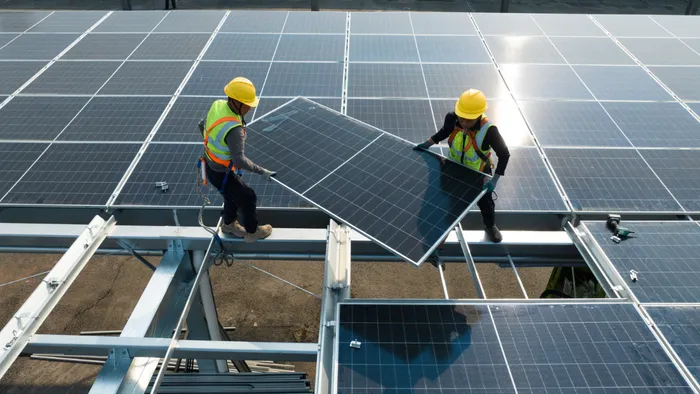
Explore how the rise of rooftop solar power in South Africa is impacting commercial insurance policies. Learn about the importance of updating insurance coverage for solar installations and the risks businesses need to consider.
Image: Supplied.
The National Transmission Company of South Africa (NTCSA) estimates that rooftop solar power reached 7.345 gigawatts (GW) towards the end of 2025.
The accelerating move by South African businesses towards energy independence, through solar PV installations, battery energy storage systems, generators, and hybrid micro-grids, is reshaping the short-term commercial insurance landscape in ways that many business owners have not fully anticipated.
From an ESG perspective, the decision to go off-grid is overwhelmingly positive; it reduces a business's carbon footprint, decreases dependence on Eskom's coal-heavy generation mix, demonstrates environmental stewardship to investors, lenders, and customers, and contributes to the broader energy transition that South Africa's Just Energy Transition commitments demand.
Responsible insurers and their reinsurers are increasingly attuned to this shift. Globally, underwriters are under growing pressure from their own ESG frameworks and investor mandates to favour clients whose risk profiles align with sustainability objectives, and a business that has invested in renewable energy infrastructure is, in principle, signalling a long-term, forward-looking approach to risk management that insurers should regard favourably.
While solar panels certainly offer greater energy independence, cost-saving potential, and reduced environmental impact, businesses must ensure their insurance policies are updated to cover these assets.
Most business insurance policies in South Africa will not automatically extend to cover solar installations. In many cases, solar systems would therefore be treated as new or additional assets that must be specifically declared to the insurer.
Even where cover can extend, the value of the solar system will typically not be included in the original insured amount. Solar installations can significantly increase the value of a property, so if a business fails to update the insured amount to reflect this additional value, it could be underinsured, which can reduce payouts in the event of a claim.
In addition to permanent fixtures like solar panels, movable components like inverters and batteries may need to be specified separately. This is particularly important in relation to commercial-grade items that are typically high-value and therefore particularly vulnerable to theft or damage.
There are also structural risks that business owners need to be aware of. Solar panels add extra weight to a building’s roof, and if the original structure cannot support this heavier load, both the panels and the roof itself could be damaged.
Adhering to installation requirements and keeping the right records is critical. Insurers typically require that solar systems be installed by qualified professionals and comply with relevant safety standards. As non-compliant installations can lead to claim rejections, we recommend keeping a detailed record of all invoices, the technical specifications of the system, and the details of the installer.
Off-grid systems can introduce additional risks that standard policies may not fully address. Depending on the system, the risk for power surges or electrical fires may be elevated, which could require a policy extension or endorsement.
In the event of theft or vandalism, insurers may also require a physical inspection by an assessor and will generally expect a police case number to be provided before a claim can be settled.
With electricity costs soaring, de Kock agrees that the business case for renewable energy is strong. Even with loadshedding out of the picture, Eskom tariffs have surged by over 450% since 2008, this is immense financial pressure for businesses already managing rising operating costs.
However, all South African businesses that have made or plan to make changes to their energy reliance should be aware of insurance gaps that could be introduced. Renewable energy, especially for commercial operations, can be a major investment, and without the right cover in place, the financial benefits can quickly be undermined by unexpected losses.
To ensure that this investment is properly protected, businesses must engage with their broker as early as possible to ensure their policies remain fit for purpose.
* De Kock is the head of distribution at PSG Insure.
PERSONAL FINANCE