

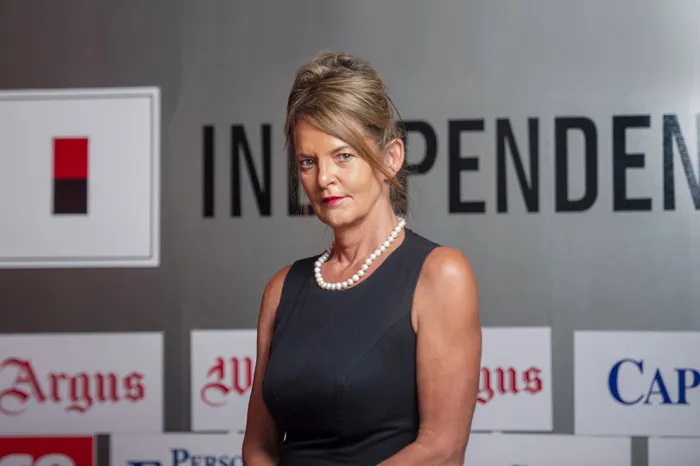
South Africa's recent interest rate hikes exacerbate the struggles of millions facing unemployment and economic despair, highlighting the disconnect between policy decisions and the realities of everyday life, writes Independent Media’s editor-in-chief Adri Senekal de Wet.
Image: Armand Hough/Independent Newspapers
The South African Reserve Bank’s (Sarb) decision to increase interest rates by another 25 basis points this week once again exposes the painful disconnect between economic theory and the brutal realities facing ordinary South Africans.
At a time when more than 8.1 million South Africans are unemployed, according to the latest Statistics South Africa figures, one would have expected policymakers to show greater sensitivity towards a nation already drowning in economic despair. Instead, South Africans are once again being punished for circumstances far beyond their control.
The official unemployment rate now stands at a staggering 32.7%, while youth unemployment remains nothing short of catastrophic. Among South Africans between the ages of 15 and 24, unemployment exceeds 60%, while those between 25 and 34 face unemployment levels above 40%.
These are not merely statistics. These are millions of shattered dreams, empty dinner tables, parents unable to provide for their children, and graduates losing hope before they have even entered the workforce.
Yet, despite this national crisis, the Reserve Bank continues to aggressively defend inflation targets as though South Africa operates in a normal economy.
It does not.
South Africans are already crippled by soaring food prices, escalating fuel costs, electricity hikes and unaffordable transport expenses. Consumers are not overspending because they are reckless; they are borrowing to survive.
The SARB this week increased the repo rate to 7%, pushing the prime lending rate to approximately 10.5%.
But perhaps the most bizarre reality in this entire system is the massive gap between the repo rate and the rates commercial banks charge ordinary South Africans.
Banks remain the only consistent winners in this punishing economic cycle.
Every quarter, South Africa’s major banks proudly announce “strong earnings”, “record profits”, and “solid shareholder returns”. Executives celebrate balance sheets while millions of South Africans are staring hunger in the eye.
How can this possibly be morally defensible in a country facing one of the highest unemployment rates in the world?
The ordinary South African is being squeezed from every direction. Home loans rise. Vehicle repayments rise. Credit repayments rise. Small businesses suffocate under borrowing costs. Young entrepreneurs cannot access affordable capital. Families are forced deeper into debt simply to survive another month.
Meanwhile, the banking sector continues to thrive in an environment where risk is transferred almost entirely onto struggling consumers.
What makes this even more troubling is that many of the inflationary pressures currently affecting South Africa are not demand-driven. Oil prices linked to global geopolitical tensions, food insecurity, logistics failures, electricity costs and external market shocks cannot simply be solved by making life more expensive for ordinary citizens.
Raising interest rates will not create jobs.
It will not lower food prices overnight.
It will not fix ports, rail infrastructure or collapsing municipalities.
And it certainly will not restore dignity to millions of unemployed young South Africans.
South Africa desperately needs an economic approach grounded in reality, compassion, and growth. We need aggressive industrial expansion, support for manufacturing, revitalisation of agriculture, investment in infrastructure, and incentives for small businesses to employ young people.
Instead, the country remains trapped in a cycle where ordinary citizens carry the burden, while powerful financial institutions continue posting billions in profits.
The Reserve Bank may believe it is protecting the economy.
But many South Africans no longer feel protected by the economy at all.
They feel abandoned by it.
* Senekal de Wet is the editor in chief of Independent Media.
PERSONAL FINANCE