

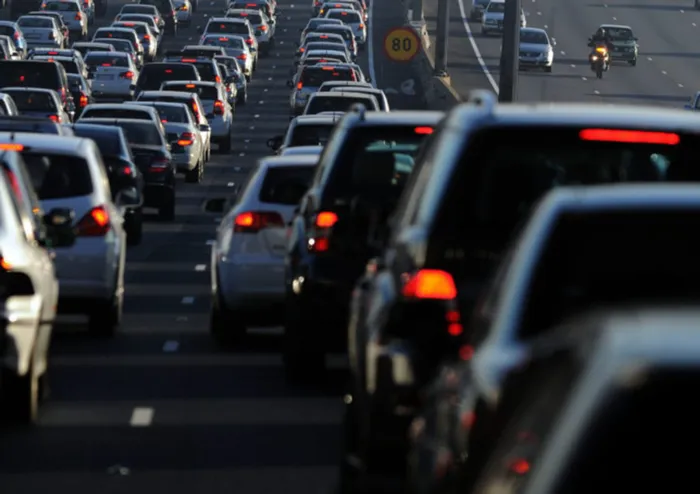
An accident on the N1 causes heavy delays in traffic. Such risks are increasing as more vehicles use Gauteng roads. Picture: Chris Collingridge An accident on the N1 causes heavy delays in traffic. Such risks are increasing as more vehicles use Gauteng roads. Picture: Chris Collingridge
The front page of yesterday’s Pretoria News carried a report by Patrick Hlahla about the plans of the City of Tshwane for its first Bus Rapid Transit line, from Hatfield to the city centre. It follows a public participation meeting in Hatfield on June 7.
This, however, is just the Tshwane cog in a much bigger Gauteng public transport wheel. In mid-May the MEC for Transport, Ismail Vadi, hosted a Gauteng City Region Public Transport Indaba. It was intended as the start of public discussion on a province-wide integrated public transport system.
Does any of this matter? More and more Gautengers have cars. Why should there be such emphasis on public transport?
Well, the recent events surrounding the proposal for e-tolling of the province’s arterial roads may give an indication.
One of the intentions of e-tolling was to use it as a “demand-management” tool. The idea is that as road congestion grows, tolls – especially peak-hour charges – can be adjusted to equalise supply and demand. We would effectively have rationing of road space by price. But with that would come demands for alternatives.
If, on the other hand, there are no e-tolls and therefore no price mechanism, road use in the Gauteng city-region will increase until we reach a stage of rationing by congestion. It may take as little as five years for this to happen. There will then be demands for yet more road expansion.
Quite apart from issues of costs and funding, cities around the world have found that this is a self-defeating strategy. The result is an expensive parking lot masquerading as a freeway system.
In either case, public transport is the only cost-effective option.
Short-term plans
The problem is that it takes time to introduce improvements to the level where public transport would be an attractive alternative to the private car. A city planner told the Hatfield meeting that the full Tshwane Integrated Rapid Public Transport Network would take “a decade or two” to be completed. At provincial level, Gauteng has just commissioned a 25-year Integrated Transport Master Plan. These are indications of the timescales being envisaged.
Luckily, there is an acceptance by the government that there must be improvements in the interim. When Vadi announced the commissioning of the 25-year plan, he made it clear that the planners were being told to come up with a five-year plan which, as he told a newspaper, “we can begin to operationalise immediately”. That plan is expected to be delivered in the next few weeks.
Tshwane will obviously be included in this plan. But what might that plan propose? It can be argued that it is not worthwhile spending a lot of money over the next five years on existing public transport services, be they bus, rail or taxi, if they are to be transformed over the next 20-25 years.
We have the assurance of Vadi that members of the public will have their say. But it is possible to make some suggestions.
Better information
One immediate improvement which might be considered is to make information about existing services better and more widely available. The present train, bus and taxi services may not be great, but they might be more widely used if it were easier to find out about them.
Just as an example: a few years ago Tshwane persuaded taxi operators to use a colour-coding system for their vehicles, so it was immediately obvious on which route they were operating.
This has fallen by the wayside, but if it were to be reintroduced it would pave the way for a wider market to use this convenient mode of transport.
Smart card
There is a feeling that we should be able to buy a single smart card ticket that would allow the holder to travel on any public transport service in the province. This is an integral part of the vision of a future “seamless” integrated public transport network. But if it were available right now, with improved information, it would be easier for the optional or occasional commuter to use the existing services.
Public participation
While the long-term grand plans are being developed, there must be some improvements to what is available. It is now up to the planners to show what they can come up with, and for the residents of Gauteng including Tshwane to have their say on what is proposed.
l Paul Browning is an independent transport consultant