

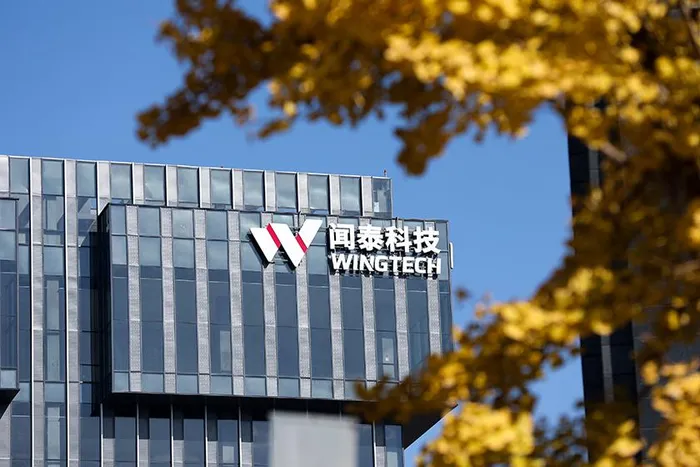
Wingtech Technologies.
Image: Supplied
ON the 30th of September 2025, the Dutch government swooped into the offices of Nexperia in Nijmegen, figuratively that is, roundly sacked the Chinese leadership with immediate effect, and took control of the organisation. In so doing, it effectively nationalised the semi-conductor chip supplier for Europe.
The sudden blitz which removed Mr. John Chang, the expatriate lead honcho, together with his entire Chinese executive team, replacing them with a Dutch contingent, also sought to sever the relations with Nexperia’s parent company Wingtech Technologies. Said Mr Chang was even accused of corruptly enriching himself with more than USD 200 million.
To be sure, the issuance of the expropriation edict was unprovoked, triggered by some contrived perception that this Chinese wholly owned subsidiary, headquartered in the Netherlands, will someday weaponise the supply of chips critical to the automotive manufacturing supply chains to the detriment of Europe in general and the Netherlands in particular. Importantly, the most pressing fear expressed in hushed tones, was that Chang was planning to move the headquarters of Nexperia to China.
The facility to execute what possibly tantamount to corporate banditry, is the 1952 legislation, the Goods Availability Act. At the time of its conceptualisation, it was intended to protect the Netherlands against the proclivities of the then Soviet Union from withholding critical necessities for the survival of the Dutch polity.
Nothing in its provisions suggests that the Act or the diktats possible under it were designed to combat alleged corruption, real or imagined. Neither was it contemplated that the Act or its preeminent provisions were meant to supplant a plethora of Dutch laws and a corroborating lot from the European leviathan designed to curb corrupt practices within the European Union.
The move by the authorities confounded many observers, as it should. Aside from the justification proffered by the authorities, the excuse was altogether not rational. It must have been persuaded by other extraneous factors than the officially fretted narrative.
For one, if the fear was that the Chinese would someday stop supplying critical chips to the Netherlands, and by extension to Europe, how would nationalising the subsidiary of a Jiaxing based Wingtech Technologies contribute to the prevention of the feared eventuality?
Second, how were the Dutch planning to compel China to send them the chips they wanted, hoping that their instruction to, or the bullying of China, whichever is the case, would yield the desired outcome? The mind boggles.
China watched this awkward development with bemusement, hoping that with minimum drama and hype, they would deliver a formalistic yet less than flattering retort. On the 4th of October 2025, the relevant government department in Beijing announced that no chip made in China will thenceforth be delivered to Nexperia.
It took the Chinese four days to respond this time. On 7 July of 1633, Admiral Hans Putman of the Dutch East India Company, launched a surprise attack on a Chinese base in Amoy, in the Taiwan Strait. The retaliation by Zheng Zhilong was slow, deliberate and methodical. He pursued the Dutch fleet without relent. Cornering them in the historic bay, he engaged them in the decisive Battle of Liaoluo Bay.
By setting fire on the Dutch destroyer, the Broeckerhaven. Zheng sunk so many of the invading ships and captured the rest. On the 22nd of October 1633, the Ming dynasty emerged victorious, imposing its dominion over the Taiwan Strait.
Exactly on the 22nd of October, 392 years after the Liaoluo Bay defeat, the chip manufacturing sibling of Nexperia in Shanghai, not wishing to be ruled by the Dutch government, declared its independence from its headquarters in Nijmegen, supported no doubt by the parent company Wingtech Technologies.
The pedigree of chips supplied by Nexperia is not the kind preferred for artificial intelligence nor for that matter, for mobile telephony. Rather, they supplied what is called MOSFETS, an acronym for metal oxide semi-conductor field effect transistors and other electrical control units.
These are the chips that are used in automobile functional efficiencies. They facilitate the electric circulatory functionality of automobiles largely. Putting it more accurately, there could be no manufacturing of cars anywhere without a supply of these oddly acronym-ed MOSFETS.
To complicate matters, there had been no contingencies for back up inventories. According to the European Automobile Manufacturers Association, ECEA, the available inventories can only last for two weeks.
Spare an empathetic thought for the Dutch. They were introduced to their folly by two punishing realities. So many of the chips, allocated to the 20% that is made in Europe, still must be sent to China for final testing and packaging. Sadly, that too is also proscribed.
Above all, the Chinese would not fund the salary bill of the newly expropriated Dutch outfit, nor subvent its operational budget. With nothing to offer to the market, either the Dutch government has to subsidise a workless 10 000 strong work force or do the politically unthinkable. Fire all of them!
Panic set in. And the algorithmic outcomes were predictable. The bigger the capacity of the automobile manufacturer in Europe, the greater the threat it represented to the automaker and their political administrators.
Volkswagen, Europe’s behemoth automaker, indeed the world’s largest, was the first to issue a cautionary, warning of possible reduction in the emoluments of its employees and the depletion of MOSFETS inventories. The Wolfsburg giant became a canary not only in a German colliery, but in Europe’s entire semi-conductor coalmine!
Given the exposure of VW in the developing crisis, Mr Johann Wadephul, the Foreign Minister of Germany sought to jump to a plane and go to Beijing. His objective was to put paid to a misunderstanding that has inadvertently mired his country in a supply chain dilemma. And whilst at it, he would lecture the Chinese on why it is important not to support Russia or Putin, as the case may be.
To accomplish this complicated task of proselytising for Europe and lecturing the Chinese, he needed a lot of audience, including officials, Ministers and probably President Xi Jinping himself. Beijing’s response was somewhat calculated. In the busy schedule of a superpower, they could only accommodate the minister for a single meeting with his counterpart Mr Wang Yi and no one else. In his exasperation, Wadephul cancelled the trip. And in so cancelling, he made the trip of Chancellor Merz impractical as well.
So many lessons can be learnt from this experiment with none of them portending equal weight. The most attractive of them all, however, even if somewhat unlikely, is the fact that China rationalised that the semi-conductor disagreements are a critical facet of growing geostrategic tensions.
And the two most important belligerents are China and the United States. Germany and indeed the whole of Europe, howsoever affected by the Nijmegen edicts, do not represent the right partner at this level of negotiations. Seeing that Donald J. Trump was already scheduled to meet Xi Jinping in Korea, the imperative of meeting Germany and its politicians had become otiose.
The Americans for their part, had simply established a black book of companies which must be sanctioned. Wingtech Technologies, Nexperia’s parent company, is one of them. Washington’s expectations are that all their allies, especially the ‘collective West’ must comply. The pressure started mounting and the Hague caved in without a fight. They succumbed to do the unthinkable and were told to move on. The reasons for their actions would not matter. Uncle Sam had ordered it!
Who could blame the Dutch for the sentimentality they have attached to Nexperia? After all, Nexperia was a subsidiary of Phillips, a company whose global reach and prosperity was tied to the image of the Netherlands itself. Established in Eindhoven in 1891, Phillips started producing semi-conductors in the 1950’s. In 2006, Phillips spun off the semiconductor division into a company called NXP Semiconductors. Nexperia became independent in 2017 when it was acquired by Wingtech Technologies. Nexperia had become the alto ego of Phillips, the Dutch’s uber alto ego. It would be sad for the Dutch to see Nexperia migrating to the belly of the dragon.
The Germans and indeed the Europeans, may be learning their lessons, unsure as to their meaning in the ever-growing geopolitical tensions. Notwithstanding their uncertainty, Trump has already met Xi Jinping in Korea. The concessions they have made, each to its strategic advantage, seem to suggest that not even the US behemoth can tariff the dragon into submission.
As for the Dutch, they have learnt their important lesson. Whether in the year of the rooster or the year of the snake, never torment the dragon!
* Amb. Bheki Gila is a Barrister-at-Law.
** The views expressed here do not reflect those of the Sunday Independent, Independent Media, or IOL.