

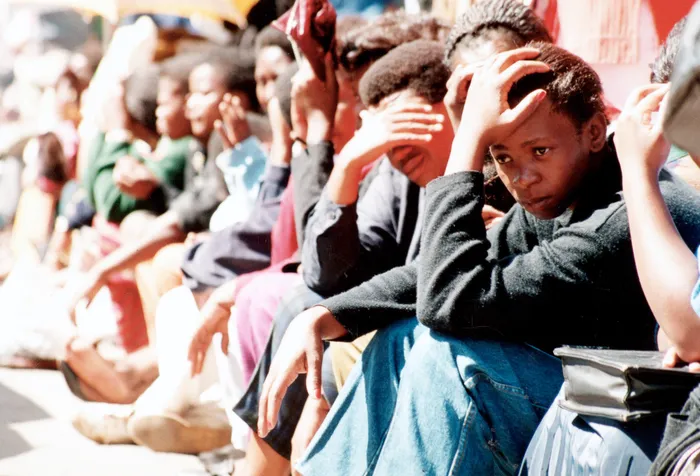
The existential crisis facing our young people: 4.9 million unemployed youth aged 15-34, a staggering 58% of unemployed graduates under 35, and over 45% of existing jobs at high risk of displacement by artificial intelligence and automation.
Image: File
IN June 2025, as executive director of the Centre for Alternative Political and Economic Thought (CAPET), I penned a letter to the Chairperson of the Portfolio Committee on Higher Education, Science and Technology, titled *The Urgent Need to Reskill South Africa's Youth for the AI Future*.
In that piece, I highlighted the existential crisis facing our young people: 4.9 million unemployed youth aged 15-34, a staggering 58% of unemployed graduates under 35, and over 45% of existing jobs at high risk of displacement by artificial intelligence and automation.
The article served as a resounding and urgent call to Parliament, underscoring the dire AI/tech education emergency gripping South Africa, a crisis marked by skyrocketing youth and graduate unemployment, outdated curricula, and the looming threat of automation displacing millions of jobs.
We passionately advocated for convening a National Indaba on South Africa’s AI readiness between policymakers and industry to foster collaborative strategies among stakeholders, while also designating 2026 as the transformative Year of Youth Skilling, dedicated to equipping the next generation with cutting-edge digital competencies for a resilient, inclusive economy.
This was not mere rhetoric; it was a plea for political will to align the country’s education curricula with industry, jobs of the future, mitigate structural unemployment, and foster inclusive innovation amid economic stagnation.
I therefore write this response to the Organisation Undoing Tax Abuse (Outa) on its recent claims of a “recapture” of the Ministry of Higher Education, in particular, the Sector Education and Training Authorities (SETAs), assertions that seem designed to erode public confidence in the department’s institutional reforms and the designated Minister, Buti Manamela.
South Africa requires a functional Ministry of Higher Education capable of delivering skilling and reskilling programs for our youth, bolstered by constructive civic engagement. While Outa, as a civil society organisation, plays a vital role in accountability, it is not a political party and cannot impose preferred leaders or dictate policy through courts whenever it disagrees.
Consequently, stabilising the Ministry of Higher Education is crucial because ongoing disruptions hinder the implementation of essential reforms, such as aligning SETAs with industry needs, addressing skills mismatches in emerging technologies like AI, and ensuring consistent funding for youth training programs. Without stability, we risk perpetuating high youth unemployment, widening inequality, and failing to build a resilient economy where young people can thrive as innovators and entrepreneurs rather than remaining onlookers.
SETAs and the National Skills Fund (NSF) were established under the Skills Development Act to bridge the apartheid-era skills gap, linking education to employment for marginalised youth. Over two decades later, the system is imperfect: some SETAs excel in governance and delivery, while others have been crippled by mismanagement, procurement flaws, and instability. Yet, the Act is clear, SETAs are public entities with boards appointed by the Minister from nominations by labour, business, community, and government. These boards recommend CEOs for the Minister's concurrence, balancing autonomy with accountability.
In August 2025, the Minister invoked Section 15(1) of the Act to place the Construction SETA, Local Government SETA, and Services SETA under administration, a necessary step backed by Auditor-General findings, internal audits, and governance failures that hindered their mandates. These appointments followed consultations with the National Skills Authority (NSA), representing diverse stakeholders and were gazetted, explained to Parliament, and accompanied by transparent terms of reference. Outa's assertion of decisions made "in the dark" is baseless and ignores these public processes.
The 2024/25 Auditor-General's report offers a nuanced view: of 21 SETAs, 13 achieved clean audits, six were unqualified with findings, and only two were qualified, both now under administration. Most are now financially stable, with interventions addressing weaknesses in performance data, grant management, and consequence enforcement. To dismiss this progress is to mislead the public and stall renewal.
I ask Outa: Have you sent specific recommendations to Minister Buti Manamela on what SETAs need to do to improve governance, skills alignment, or youth reskilling, or are you operating in a continuous combative manner?
Until then, their noise distracts from the real work of building a skills system that produces artisans, technicians, digital specialists, and a self-reliant youth and society.
It has become trendy to label every corrective action by the government as conspiracy: dissolving a failing board is "interference," consulting the Auditor-General and NSA is "manipulation," and vetting chairpersons is "delay." True accountability demands truth over innuendo. The Skills Development Act, Public Finance Management Act (PFMA), and Auditor-General reports are public; they affirm that the Department's actions align with the law's letter and spirit.
South Africans crave a skills ecosystem that works, not one paralysed by suspicion. That requires supporting the Minister and his team to implement reforms, not constant court challenges that drain resources and delay progress.
A stable ministry enables focused leadership to execute long-term strategies, foster public-private partnerships, and deliver measurable outcomes in skilling initiatives, ultimately empowering the next generation to drive South Africa's growth.
Building on my June 2025 article, what needs to be done now is to advance those proposals into action: convene the National Indaba on AI readiness to bring together government, industry, and educators for a unified strategy; declare an AI/tech education emergency to prioritise funding for digital literacy programmes in schools and TVET colleges; and designate 2026 as the Year of Youth Skilling, with targeted initiatives like apprenticeships in high-growth sectors, scholarships for AI and coding courses, and partnerships with African Union, G20 and BRICS nations for knowledge exchange.
We must reskill our nation to prevent job losses from automation, overhaul curricula to include data science and machine learning, and invest in infrastructure for online learning in rural areas. Scandals in bodies like the MICT SETA highlight the need for competent leadership, not perpetual disruption. Outa can offer recommendations, like all South Africans, but it must allow the Minister to lead without presuming to select his team.
History teaches us that rapid economic reconstruction demands stable, focused leadership unhindered by constant opposition. Post-World War II Japan democratised education to fuel its industrial boom with high literacy and skilled labour; Singapore under Lee Kuan Yew built a merit-based STEM system to attract investment and become a global hub; China's 1978 reforms under Deng Xiaoping reopened universities and emphasised technical training to drive market growth and lift millions from poverty; and India, through recent curriculum overhauls and public-private partnerships, is projecting 1 million AI engineers by 2026, transforming its economy via inclusive innovation; all achieved under leaders who could implement education visions without frequent legal interruptions from civil society groups.
In South Africa, we enjoy democracy's freedoms, but excessive adversarialism risks stagnation. Groups like Outa must evolve from critics to collaborators, offering solutions rather than sowing doubt.
In conclusion, CAPET stands for an alternative thought that advances People's Power through education. We support the Minister's efforts to renew the skills system, urging Outa to provide constructive recommendations while allowing him to lead. Our youth, facing AI disruption and unemployment, need a functional Ministry.
South Africa needs to urgently transform its youth into human capital, which is the mantra of our think tank beyond our core thematic areas.
Let us draw from global lessons: stability breeds progress. Declare 2026 the Year of Youth Skilling, partner with advanced and emerging nations, and build a system worthy of Oliver Tambo's vision: “The children of any nation are its future. A country, a movement, a person that does not value its youth and children does not deserve its future.”
* Phapano Phasha is the chairperson of The Centre for Alternative Political and Economic Thought.
** The views expressed here do not reflect those of the Sunday Independent, IOL, or Independent Media.