

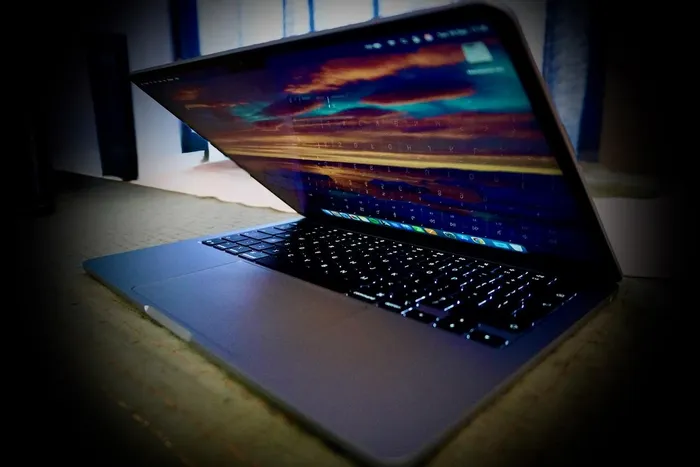
Apple is set to unveil a new budget MacBook on March 4, featuring a 12.9” display and an A18 or A19 Pro chip, with an estimated price of around $500 in the USA and R10,000 in South Africa, aiming to revolutionise the ultra-book segment. Picture: Michael Sherman/IOL
Image: Michael Sherman/IOL
The release date for the new MacBook has been finally confirmed, for the first week of March.
The new budget MacBook, which is set to take the ultra-book segment of the laptop market by storm, mostly due to its price. It’s set to be announced on March 4, as a special invite has been sent out by Apple to a select group of media and influencers to unveil its new product or products.
Though the actual design is still open to speculation, the retail price in the USA will be around the $500 mark. That works out to around R8,000. Given that the M4 MacBook Air starts at $999 (+-R16,000) in the US, and sells for around R20,000 in South Africa, the price can be accurately estimated.
Based on the same percentage import costs, it means the new MacBook could cost around R10,000.
According to what YouTuber MaxTech told his 1.25m subscribers, the laptop will come with a 12.9” display, which is only slightly smaller than the 13.6” of the M4 Air.
The new MacBook would be a reintroduction of the model launched in 2015. Back then, the laptop featured a 12” screen, the awful butterfly keyboard, and a severely underpowered Intel processor.
The design was way ahead of its time, and the hardware could not keep up as it was prone to overheating and would freeze if you tried to do basically anything on the device.
Now, it’s a different story as the processor that would be used for a new MacBook would either be an A18 Pro or, less likely, an A19 Pro chip, which are the same ones used in the iPhone 16 Pro and new iPhone 17 Pro models.
The processing power of these chips is roughly the equivalent of the 2020 M1 MacBook Air. The M1 Air was the first MacBook to use the new Apple silicon chip after the company moved away from the underpowered and battery-sapping Intel processors.