


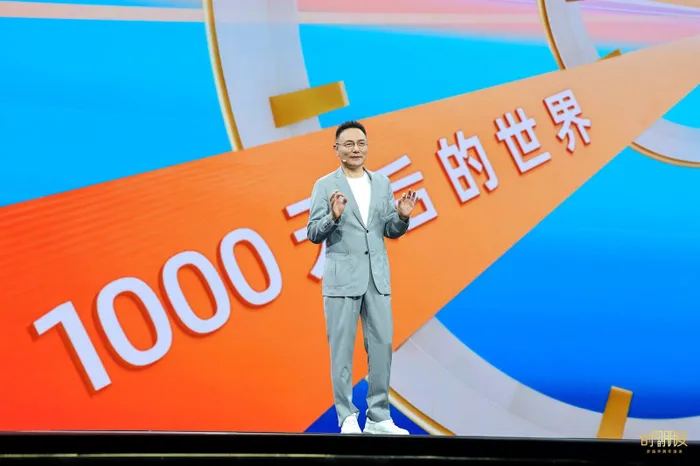
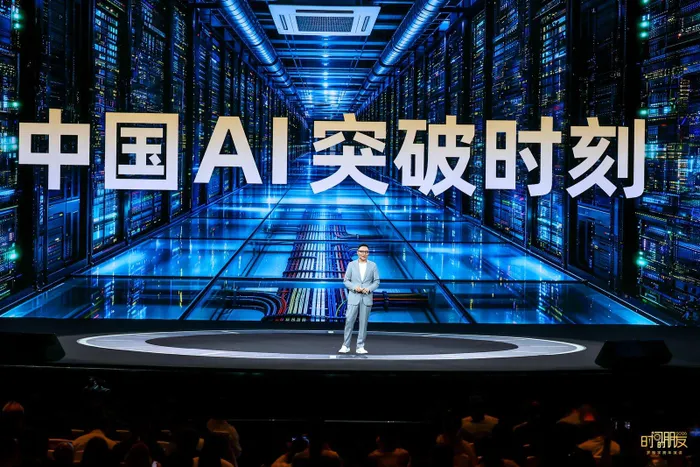
Luo Zhenyu, founder of Dedao, an independent media platform and online community providing new knowledge and insights in history and business, delivered his 2026 "Time's Friend" New Year address Tuesday night, urging individuals and organisations to embrace an "incurable optimism" and chart a course for the next 1,000 days.
Image: Supplied
Against the sweeping tide of artificial intelligence, Luo Zhenyu, founder of Dedao, an independent media platform and online community providing new knowledge and insights in history and business, delivered his 2026 New Year's Eve Speech: Time's Friend on Wednesday evening, urging individuals and organisations to embrace an "incurable optimism" and chart a course for the next 1,000 days.
Held at the Poly International Expo Center in Sanya, Hainan, the event marked the 11th instalment of Luo's self-pledged 20-year series. It drew a live audience of over 4,400, alongside over 45 million online viewers and 324 offline viewing parties worldwide, for a thought feast themed "The World in 1,000 Days," exploring pathways for survival and growth in the AI era.
Luo Zhenyu, founder of Dedao, an independent media platform and online community providing new knowledge and insights in history and business, delivered his 2026 "Time's Friend" New Year address Tuesday night, urging individuals and organisations to embrace an "incurable optimism" and chart a course for the next 1,000 days.
Image: Supplied
Why 1,000 days? Luo explained: "5,000 days is too long, where technological iteration and personal fate become unpredictable. Three hundred days is too short to witness genuine transformation. But 1,000 days is a timescale both foreseeable enough and disruptive enough. It allows us to craft a solid plan, yet is brief enough for us to see that plan pivot in real-time."
From this temporal vantage point, the address centered on "Survival Strategies in the AI Era," offering a navigational map for the audience.
Luo Zhenyu, founder of Dedao, an independent media platform and online community providing new knowledge and insights in history and business, delivered his 2026 "Time's Friend" New Year address Tuesday night, urging individuals and organisations to embrace an "incurable optimism" and chart a course for the next 1,000 days.
Image: Supplied
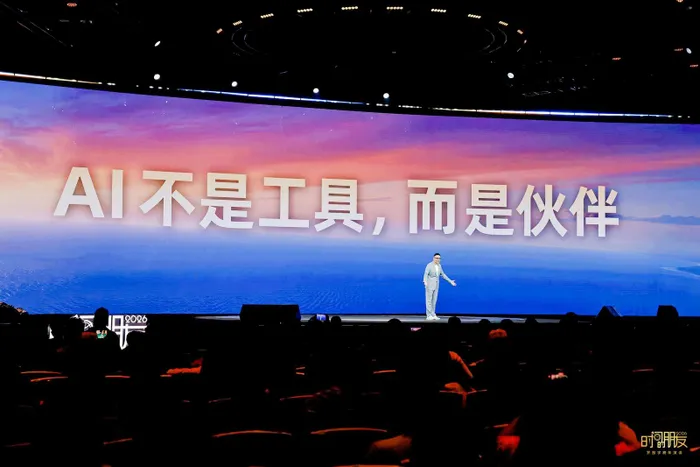
Addressing widespread concerns over whether AI will ultimately replace humans, Luo Zhenyu offered a more human-centric and uplifting definition: "The essence of AI may not be to push people out or take their place, but rather to lift them up." However, he candidly acknowledged that such rapid technological advancement means not everyone is immediately prepared to catch—or keep up with—this rising tide.
Luo Zhenyu, founder of Dedao, an independent media platform and online community providing new knowledge and insights in history and business, delivered his 2026 "Time's Friend" New Year address Tuesday night, urging individuals and organisations to embrace an "incurable optimism" and chart a course for the next 1,000 days.
Image: Supplied
Real-world cases illustrated this "elevation": unmanned mining trucks at the Yimin Coal Mine in Hulunbuir enhance efficiency while eliminating safety hazards in high-risk operations; Pei Jun, a veteran master worker at Conch Cement, transitioned from the concrete mixing frontline to become an assistant director in the group's AI division, crossing from "blue-collar" to "AI guide"; Li Jianheng, a workshop director at Dongming Petrochemical, integrated simple camera data into Feishu's multi-dimensional tables, drastically improving safety management efficiency and foresight.
From cross-border e-commerce operations to community service managers, from supermarket supervisors to factory technicians, this model of deep human-machine collaboration is rapidly spreading across industries.
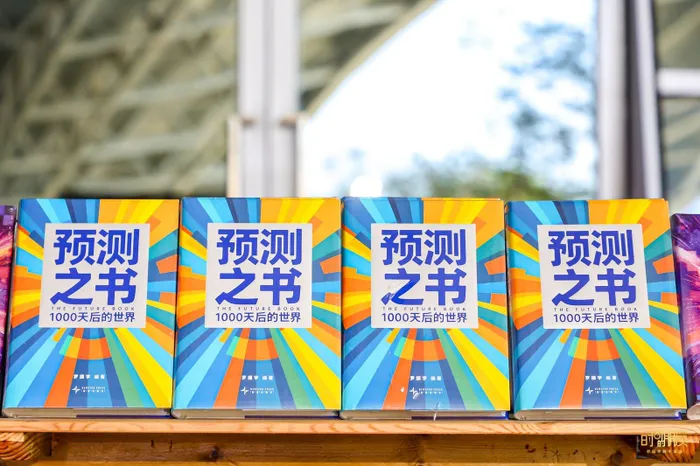
As noted in the book 'The Book of Predictions: The World in 1,000 Days', released during the address, a new type of worker is emerging—neither traditional white-collar nor typical blue-collar.
Image: Supplied
As noted in the book 'The Book of Predictions: The World in 1,000 Days', released during the address, a new type of worker is emerging—neither traditional white-collar nor typical blue-collar. Professor Li Yuhui from Renmin University of China terms them "purple-collar": "cross-boundary solution experts" who deeply understand business logic while adeptly leveraging AI tools to solve complex on-site problems. By 2035, China's purple-collar workforce is projected to exceed 31 million, potentially representing the largest future employment opportunity.
The address also tackled education. To parents anxious about "which majors can shield their children from AI impact," Luo responded: "Given the pace of change in the AI era, such questions no longer have 'good answers.' Moats built from past human knowledge and experience are being quickly filled by technology. The shelf life of any so-called 'good major' likely won't exceed three years."
"Before AI, all schools worldwide are effectively just three years old," he added, proposing that a future child's lifelong mission is to "invent" a profession only they are best suited for. He cited the example of 30-year-old "micro-scenario designer" Cao Dezhi, who creates exquisite 3D miniature dioramas from clients' cherished childhood photos.
Luo also highlighted innovative institutions like Shenzhen's Kechuang College and Shanghai's Chuangzhi College, where students essentially "start a business upon enrollment," receiving support from market research to prototyping and mass production.
His advice to parents and educators: help children "escape uniformity" by exposing them to diverse people, requiring them to deliver tangible outcomes, and letting them engage with the real world through unique rules.
Luo also announced his own 21-day "Learning Calculus with AI" experiment, guided by the Yuanbao AI assistant, showcasing how AI istransforming not just children's education but also adult lifelong learning models.
What constitutes individual core competitiveness? Luo proposed a three-layer model for human-AI interaction: "Walk beside AI" (treating AI as a dependable partner), "Sit below AI" (becoming someone accountable for AI), and "Run above AI" (providing more complex upstream solutions as AI permeates foundational tasks).
He emphasised that focusing solely on efficiency gains might only lead to intensified competition. "The greatness of technological revolutions lies in creating vast, unprecedented new demands, expanding the frontiers of human civilisation," Luo said. "Like the electric light bulb, it didn't just replace candles; it created nightlife, night markets, and the entire nighttime economy."

In an era where AI's logic and computing power surpass humans, what remains uniquely human? Luo's answer: willpower.
Image: Supplied
In an era where AI's logic and computing power surpass humans, what remains uniquely human? Luo's answer: willpower. He framed it philosophically as what Kant described as "a judgment sufficient for the subject himself, but not for the objective."
From Zhang Qian's pioneering journeys to the Western Regions to Xuanzang's pilgrimage to India, from Columbus's discovery of the New World to Einstein's theory of relativity, all heroic narratives advancing civilization share a common element: pursuing a distant goal without full certainty.
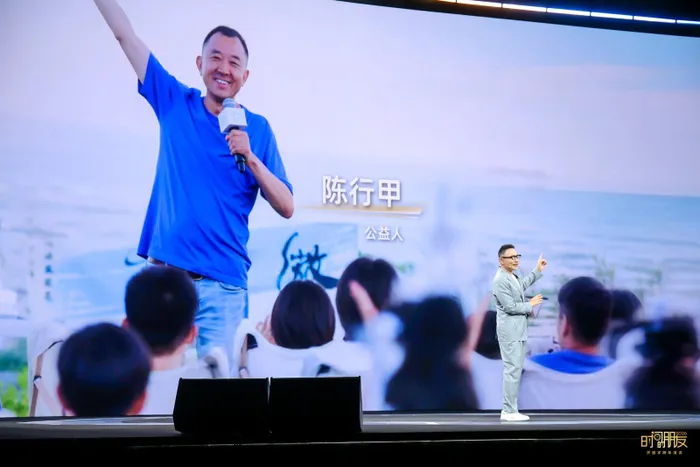
In conclusion, Luo offered three bold and optimistic predictions for the world in 1,000 days.
Image: Supplied
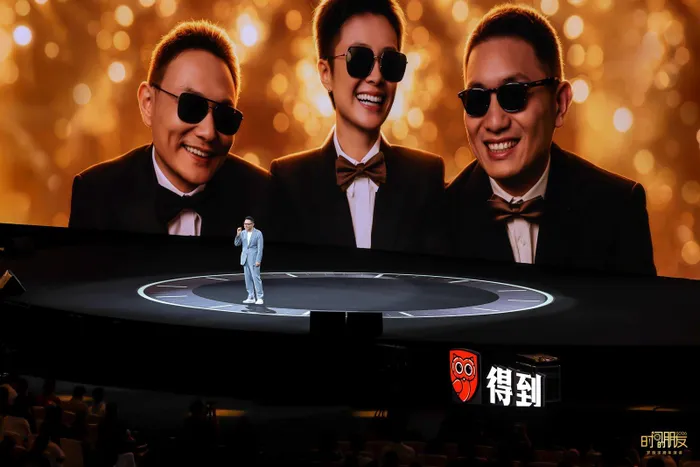
In conclusion, Luo offered three bold and optimistic predictions for the world in 1,000 days:
First, healthcare enters an era of "great equity," with AI making top-tier medical diagnosis and treatment universally accessible. Second, employment enters a "de-diploma" era, where ability and tangible results outweigh paper credentials. Third, language enters an era of "great integration," with AI enabling seamless, real-time translation, even beginning to break communication barriers between species—technology to interpret the calls of cats, dogs, and even whales is maturing.
"We may usher in an era of rebuilding the Tower of Babel," Luo said.
Finally, he drew inspiration from the poet Su Dongpo, who, despite repeated demotions to Huangzhou, Huizhou, and Danzhou, consistently built homes and settled his spirit—a poignant coincidence, as Danzhou is also in Hainan, where the address was held.
Image: Supplied
Finally, he drew inspiration from the poet Su Dongpo, who, despite repeated demotions to Huangzhou, Huizhou, and Danzhou, consistently built homes and settled his spirit—a poignant coincidence, as Danzhou is also in Hainan, where the address was held. It served as a millennium-spanning echo: while times may be uncertain, the world remains vast. By being an incurable optimist and diligently building one's own small "creations" in every "forsaken place," one can enjoy life's most fundamental joy.
As the New Year bell resonated through the venue, Luo quoted Albert Einstein: "There are only two ways to live your life. One is as though nothing is a miracle. The other is as though everything is a miracle." He dedicated these words "to all who intend to embark on something new in the coming year." The 12th "Time's Friend" address is scheduled for December 31, 2026.
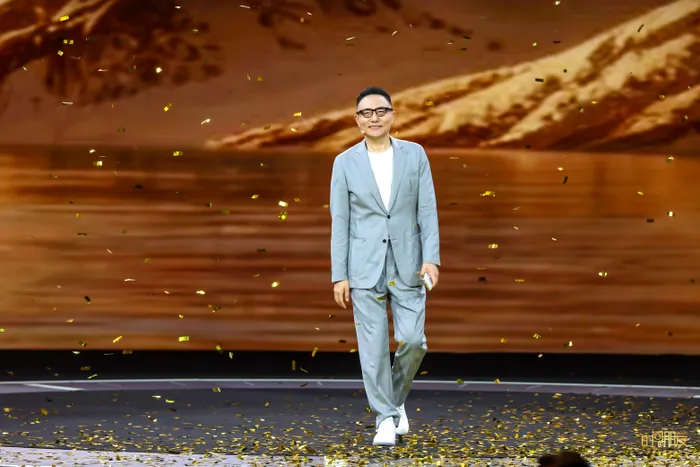
The event also launched several knowledge products: the trend insight book 'The Book of Predictions: The World in 1,000 Days', the annual report series Where Does Money Come From and Variables, the "Come Read" annual knowledge book list, and Dedao's first AI hardware product—the GetSeed recording card for convenient note-taking and intelligent organisation.
Image: Supplied
The event also launched several knowledge products: the trend insight book 'The Book of Predictions: The World in 1,000 Days', the annual report series Where Does Money Come From and Variables, the "Come Read" annual knowledge book list, and Dedao's first AI hardware product—the GetSeed recording card for convenient note-taking and intelligent organisation.