

It doesn't matter where America's black elite winters. Oak Bluffs on Martha's Vineyard is where it summers. Here, black women wear diamonds casually with bathing suits. And pampered black children splash in the cold water of the Inkwell, a town beach. Black men with trim grey beards carry about them that understated pride that comes with accomplishment.
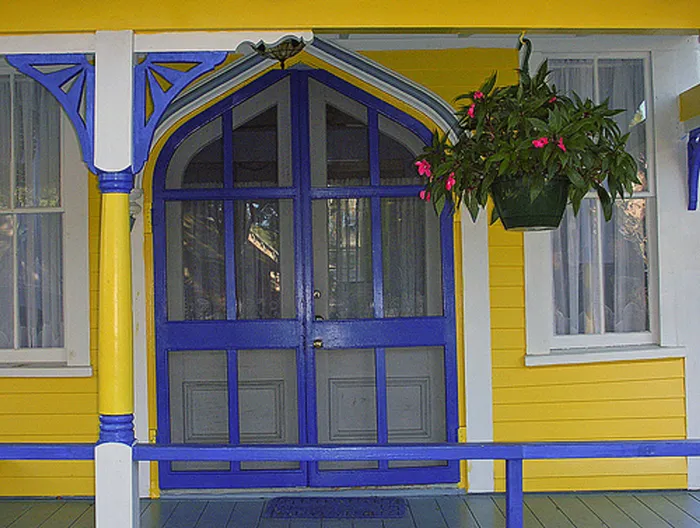
Oak Bluffs, an integrated village on the island of Martha's Vineyard, has been called the Black Hamptons, a place where for generations black people have owned cottages and Victorian houses with wide porches and screen doors. And fine retreats perched on cliffs with panoramic views of the blue coast. And philanthropic meetings of the famed Cottagers, an exclusive group of black female property owners who require members to summer here for at least four weeks consecutively. "Once you sell," one woman says, her make-up perfect, "you are out".
Here, a choppy one-hour ferry ride from Providence, Rhode Island, America's black privileged class has come for at least four generations to find respite. Doctors, lawyers, artists, writers, business owners, professors and now a president. Those who have risen to the top of their professions come to escape the stress of breaking glass ceilings.
"We have all the opportunity to holiday anywhere else, but when I have my two or three weeks I come to the Vineyard where I can relax with other African-Americans," says Louis Baxter, a New York doctor.
He is sitting on the breakwater overlooking the Inkwell, which some say was named by Harlem renaissance writers who found inspiration near the water and thus named the beach that was once segregated from the white beach. Some people don't like the name and its connotation, but it's endured.
"It gives us an opportunity to network with other upwardly mobile African-Americans," Baxter says. "We love bringing our children here. They can see if you work hard, get a good education, you can partake of the American dream."
This is a picture of black America few people see: moneyed black families at leisure.
Oak Bluffs, once a Methodist retreat where anti-racism sermons were preached, has drawn black people since the 1800s. Some came as family servants; others worked in hotels. Eventually, elite blacks from New York, Boston and Washington retreated here for summer holidays, many buying houses in an area they called the Oval or the Highlands, which Harlem renaissance writer Dorothy West wrote about in her 1995 novel, The Wedding.
"They formed a fortress, a bulwark of coloured society," West wrote. "Their occupants could boast they, or even better their ancestors, had owned a home away from home since the days when a summer hegira (exodus) was taken by few coloured people above the rank of servant."
Representative Adam Clayton Powell jr of New York owned a cottage in the Oval where Arctic explorer Matthew Henson was a guest. Down the road is Shearer Cottage, an inn built by Charles Shearer, the son of a slave and a slave master who wanted to provide lodging during segregation for black people including self-made millionaire Madame CJ Walker; singer Paul Robeson and composer Harry Burleigh. Edward Brooke, the first black senator elected since Reconstruction, and Martin Luther King jr summered in Oak Bluffs.
Summer visitors now include White House adviser Valerie Jarrett and Vernon Jordan, former adviser to president Bill Clinton. Filmmaker Spike Lee owns a house here.
The Obamas have rented an estate in Chilmark, about 19km up the island. It is assumed they will visit Oak Bluffs.
People say it is a magical island with down-to-earth people and tsk-tsk at the talk about the black elite.
But in reality, anybody who makes it here has to have reached a certain status in life and the luxury of leisure time in a recession. Each generation produced children who climbed into another social class - the daughters of maids became teachers, the children of teachers became doctors and lawyers.
There is a social stratification here, hard to discern but present, just as sure as the water is cold.
On the Vineyard, you know people who come here have arrived. "You don't get it when you first meet them," says Donna-Marie Peters, a Temple University sociology professor who has come here since childhood. "But when you do, it will be subtle. A coded word. 'I live on such and such street'."
Yet Oak Bluffs is not glitzy but quaint, with dirt roads, and sea grass and little houses perched on hills. Where hotel rooms have pink roses climbing wallpaper and are priced at $300 (R2 300) a night. Where gingerbread cottages are painted pink, purple or sea-foam green and might cost more than a million.
It is August and Cousen Rose Gallery on Circuit Avenue is hosting an exhibit by Glenn Tunstull, who uses Van Goghlike strokes to compose paintings of black families on the beach. Earlier, there was a wine tasting and a book signing.
The shop is quiet. On its shelves are books written by those whose families holiday here. "For the months of summer the weight of being race representative - and all the political, emotional, and psychic burdens that come with demanding that an individual represent a non-existent monolith - was lifted," writes Jill Nelson, author of Finding Martha's Vineyard: African Americans at Home on an Island."
"Here, it was enough that you simply be yourself." - The Washington Post