

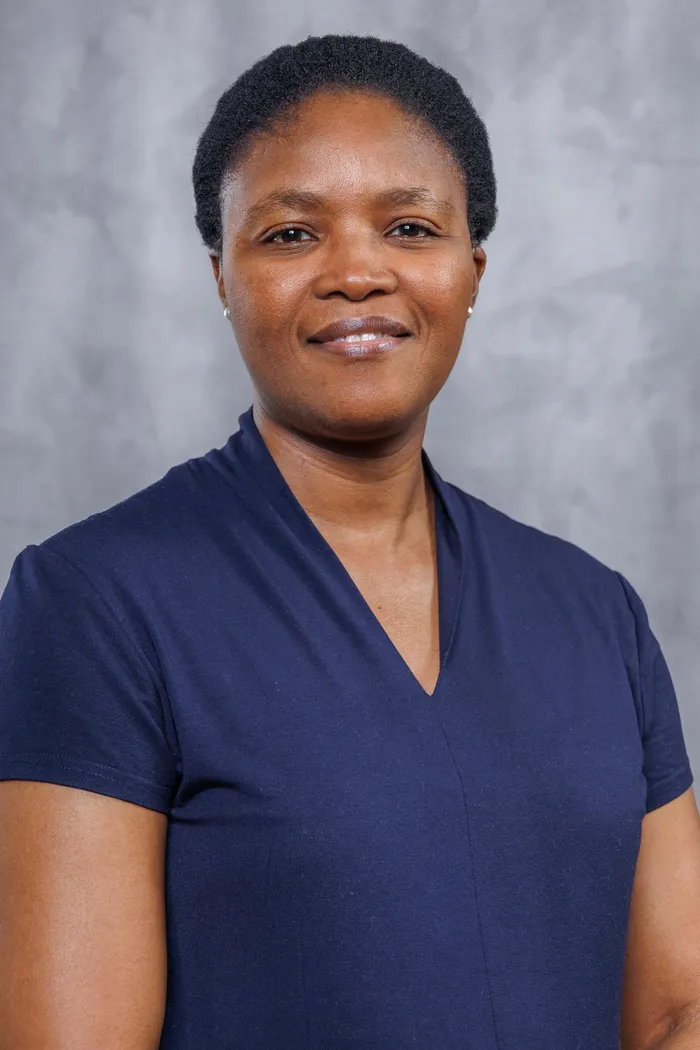
Susan Njeyiyana
Image: Supplied.
Susan Njeyiyana
Every year, the International Week of Deaf People, observed during the last week of September, reminds us that deaf rights are human rights. The International Day of the Deaf is celebrated on the last Sunday in September. In 2025, the World Federation of the Deaf calls on people across the globe to recognise a simple truth: “No Human Rights Without Sign Language Rights.”
In South Africa, Deaf Awareness Month — also observed in September — shares this theme, highlighting the urgent need to protect and promote sign language access from birth. For many deaf people, especially those born into hearing families, sign language is not given at birth. Instead, they grow up in silence surrounded by speech they cannot hear and expectations they cannot meet. This is called language deprivation, and it remains one of the most overlooked human rights violations in the world.
Speak and listen
One thing we shouldn’t lose sight of is that many hearing parents believe their deaf child must learn to speak and listen. But why? Often, it’s not because the child chooses this path; it’s because the parents are unsure, overwhelmed, and searching for solutions. Without proper guidance, they may be told that speech is the only way forward. They are rarely encouraged to consider sign language as a natural, valid option. Families are often advised not to use sign language. Schools may not offer bilingual education. Governments delay legal recognition of sign language, while medical professionals push speech-only approaches.
These decisions are not neutral — they impose deprivation. Historically, deafness has been classified as a disability, often viewed through a medical lens. This perception leads to stigma. Parents may feel ashamed, and society may discourage sign language, calling it unnatural or even mocking it as “monkey language.” Basic gestures are mistaken for full sign language, spreading misinformation and undermining its legitimacy. Globally, sign languages have been denied recognition for decades. Doors have been shut, not because deaf people lack ability, but because society refuses to see sign language as equal.
Deaf identity
Some deaf adults only discover sign language and the deaf community in their teens or adulthood. They often describe this moment as a kind of awakening: “I didn’t know I was missing something until I found it.” This late discovery brings joy, but also grief. Grief for the childhood they could have had. Grief for the relationships that never fully formed. Grief for the years spent trying to “pass” as hearing. For example, a deaf child may pretend to be hearing, lipreading, speaking, and playing with hearing children because their parents want them to feel included. But the child feels emotionally disconnected, unable to express themselves fully.
For instance, when families learn sign language and embrace deaf culture, deaf children often grow up with stronger self-esteem and identity. Many deaf people look back on these years with sadness. They tried to hide their deafness, fit into hearing society, and survive without language. There were deaf role models —perhaps a deaf church leader, a sports coach, or a teacher at a a deaf school. But because the majority of decision-makers were hearing, deaf heroes were often not given the space or authority to motivate and lead the community.
Their visibility was limited, and their influence suppressed, even though they had the power to inspire deaf children and help shape their identity. For many, identity only began to form after arriving at a deaf boarding school where they met other deaf children, learned sign language, and finally felt seen. Some students dreaded going home for holidays not because they didn’t love their families, but because they couldn’t communicate with them. After school, many chose to stay in the deaf community, building new families, marrying deaf partners, and raising hearing children who grew up bilingual.
In families (deaf families) where deafness is generational, sign language is often passed down naturally. These families tend to have rich cultural traditions — including storytelling, visual arts, and community involvement.
Language rights are human rights
When deaf people are denied access to sign language, they are denied far more than just away to communicate. They are denied the right to family, and the ability to connect meaningfully with parents and siblings. They are also denied the right to education not because of cognitive limitations, but because of language barriers as well as education systems that often rely on a “one-size-fits-all” model that assumes all children learn the same way. This approach fails to recognise that deaf learners, like all children, have diverse cognitive abilities and learning needs.
Instead of adapting education to support their development, deaf learners are often provided with limited instruction that does not match their potential simply because their language needs are not met. They are denied the right to autonomy often having to rely on others to speak for them, even when they are fully capable of expressing themselves in their own language. They are denied the right to justice when courts, hospitals, and public services operate without interpreters, leading to exclusion, misunderstanding, and harm. Going forward, we should keep reminding one another that sign language is not a luxury — it is a lifeline and the foundation of identity, learning, love, and freedom.
*Njeyiyana is a junior lecturer and coordinator of South African Sign Language in the Department of General Linguistics at Stellenbosch University (SU). She is currently pursuing a PhD in General Linguistics.