

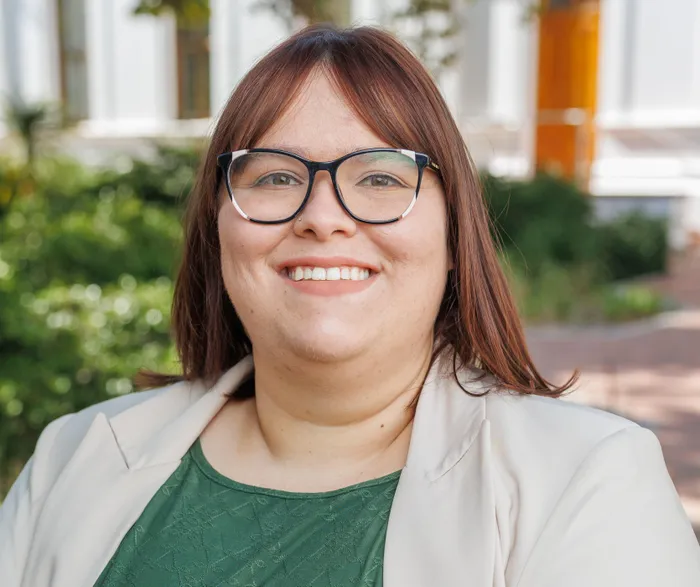
Dr Bryony Fox is postdoctoral research fellow at the Chair in Urban Law and Sustainability Governance at Stellenbosch University.
Image: Supplied
Dr Bryony Fox
When we talk about the climate crisis, we are usually shown scary graphs of global temperatures rising, confronted with images of melting ice caps, and given warnings of a burning planet in the distant future. But in Africa, climate change is not unfolding as an abstract graph or distant future threat. It has already arrived in the form of empty boreholes, failed harvests, flooded homes, unbearable heat, and the slow unravelling of childhoods.
Across the continent, children are being forced from their homes by current climate impacts. While most will move across districts and provinces within their states, increasingly, children are also crossing borders in search of safety and survival. The laws meant to protect such children, however, were designed for a different time - when displacement meant fleeing war or political persecution, not escaping a climate that is threatening human life.
Because these children do not fit neatly into the categories our protection systems recognise, they are often deemed irregular migrants rather than rights-holders entitled to protection, education, safety, and future opportunities. And so, they are left in legal limbo. The result is stark: thousands of African children displaced by climate change are falling through legal and policy gaps. These children need lasting “durable” solutions to end their displacement so that they may live their childhoods in safety and dignity. This something we should all reflect on as we mark World Children’s Day on 20 November.
Why “durable solutions”?
Children need access to all the basic services - food, water, shelter, education, and healthcare. They also need stability, safety and security to survive and thrive, and develop without being stunted. However, many of these basic needs are not accessible while on the move. This is compounded when displaced by climate change. Children’s displacement must therefore come to an end as soon as possible. International law recognises the following three “durable solutions” that a host state must facilitate to end displacement: safe return home, local integration into the host country, and resettlement in a third state.
These pathways have long shaped refugee protection systems. But they were not designed for climate displacement. A child fleeing drought, farmland damaged by saltwater, or repeated deadly flooding, does not qualify as a refugee under traditional refugee definitions because they are not seen as persecuted. Without formal recognition, they are left without meaningful routes to rebuild their lives after displacement. The average duration of displacement for a child seeking a durable solution to their displacement is now between 10 – 26 years. Children, however, cannot suspend their development while the law debates their legal status.
For a child, displacement is not a temporary inconvenience; it shapes their entire formative years. However, even if they were recognised as refugees, climate change complicates each traditional durable solution. What does “return” mean when one’s home is projected to be under water by 2040, or when soil degradation has made farming and a livelihood impossible? What does “integration” look like when neighbouring states are also strained by climate impacts? How do we talk about “safe third states” when borders are hardening globally? In short, climate change destabilises every traditional assumption underpinning international protection regimes for displaced persons. And for children, every year lost deepens the damage that may never be undone.
To protect their future, we need to adaptfaster to changing circumstances.
Soft law
The good news is that progress is happening. Over the past decade, momentum has grown to formally recognise climate change as a driver of displacement and to acknowledge the rights of those forced to move because of it. Soft-law instruments - non-binding principles, guidelines, and compacts - are emerging as important bridges where treaties have not yet evolved. Notably, the African Commission’s 2023 African Guiding Principles on the Human Rights of all Migrants, Refugees, and Asylum Seekers mark a significant shift.
They recognise climate-displaced people as a group explicitly in need of rights protections and suggest that, within Africa’s existing human rights framework, they may, in certain circumstances, qualify as refugees. This reinterpretation places Africa at the forefront of rights-based thinking on climate displacement. Yet soft law alone is not enough. It guides, it encourages, it inspires. But it does not compel. It does not guarantee a school place for a displaced girl in Malawi. It does not secure legal status for a boy whose family fled slow-onset drought in the Sahel. It does not ensure protection against human trafficking, psychosocial support, or a path to belonging for climate-displaced children across Africa.
Additionally, this recognition, whether binding or not, does not remove the barriers to durable solutions for displaced children created by climate change. As such, there is a need for creative, climate-responsive solutions.
Moral crossroads
We cannot allow a generation of African children to grow up as temporary guests in countries they will build, lead, and hopefully call home. These children are not abstract policy questions or administrative burdens. They are future scientists, farmers, teachers, artists, parents, and leaders. They deserve roots, not limbo.
Using instruments such as the 2023 Guiding Principles, Africa can lead globally by crafting systems rooted in dignity, justice, and intergenerational equity for those displaced by climate change. But soft-law progress must be matched by binding protections, political will, and implementation capable of keeping pace with climate reality. The climate crisis is already stealing the childhoods of African children. We are at a moral crossroads. The question is whether the law will help restore what climate change and global inaction have taken, or whether we will allow children to drift between humanitarian categories while their futures slip away.
*Dr Fox is postdoctoral research fellow at the Chair in Urban Law and Sustainability Governance at Stellenbosch University.