

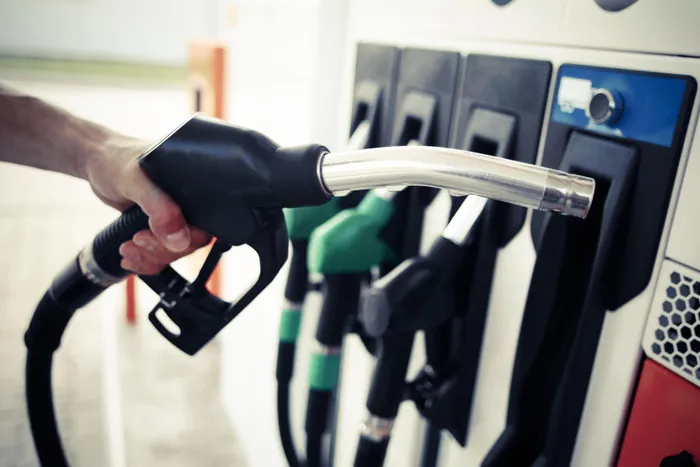
The crisis has intensified global energy pressures, with the global price of Brent crude oil nearly doubling from $63 per barrel just a month ago
Image: Newspress
South African motorists are bracing for a significant fuel price increase, with the Department of Mineral and Petroleum Resources (DMPR) confirming that the official adjustment will be announced on Friday, following weeks of volatility in global oil markets.
Brent crude oil prices remained elevated at more than $100 per barrel on Wednesday afternoon after dropping more than 6% to $98 per barrel during the day as US diplomatic efforts to end the war with Iran gained traction, overshadowing reports of additional troop deployments and the near-closure of the Strait of Hormuz.
The crisis has intensified global energy pressures, with the global price of Brent crude oil nearly doubling from $63 per barrel just a month ago. Hundreds of fuel shortages have been reported in Australia, with the Philippines declaring a national energy emergency, and Asian nations reportedly hoarding jet fuel.
Speaking during a media briefing on the fuel pricing mechanism on Wednesday, Raphi Maake, director for fuel pricing mechanism at the DMPR, indicated that the anticipated hike is driven largely by geopolitical tensions in the Middle East.
“We will make the official announcement on Friday,” Maake said, stressing that current projections are based on unaudited daily data and could still change before the final calculation.
While exact figures will only be confirmed in Friday’s announcement, Maake acknowledged that current data already points to steep increases. Daily fuel price indicators published by the Central Energy Fund (CEF) suggest substantial under-recoveries, meaning fuel importers are paying more for fuel than they are recovering at the pump.
This under-recovery will be passed on to consumers in April’s adjustment.
“The announcement will be done on Friday,” officials reiterated, noting that the final price will incorporate both global cost pressures and local tax changes announced earlier this year.
Currently, the latest data from the Central Energy Fund is forecasting a R4.67 per liter increase for petrol 93, R5.20 for petrol 95, R8.95 for diesel 0.05%, and R9.08 per litre increase for diesel 0.005%.
Among the key domestic factors set to push prices higher are increases in fuel levies. The general fuel levy is expected to rise by 14 cents per litre, while the Road Accident Fund levy will increase by 7 cents per litre. These adjustments come on top of rising international costs, compounding the impact on motorists.
Fani Tshifularo, CEO of the Fuels Industry Association of South Africa (Fiasa), explained that the Basic Fuel Price (BFP), which reflects the cost of importing refined fuel, remains the largest component of the pump price and is highly sensitive to global market conditions.
Tshifularo said the recent spikes in oil prices, coupled with a weaker rand and higher shipping and insurance costs, have significantly elevated the BFP.
Although reports have circulated about petrol price increases exceeding R4 per litre, Maake stopped short of confirming specific figures, instead directing the public to daily CEF updates for an indication of trends.
“The numbers are not rumours; they are based on daily data,” Maake said, cautioning that the final figure will only be confirmed once all variables, including taxes and levies, are factored in.
The looming increase has already triggered behavioural changes in the market. Reports indicate that consumers and businesses, particularly those reliant on diesel, are attempting to purchase fuel ahead of the adjustment.
This has created temporary supply pressures at some service stations, though officials stressed that there is no national shortage.
“Supply in the country remains stable,” Tshifularo said, attributing isolated outages to logistical constraints and increased demand rather than a lack of fuel.
Concerns were also raised about the broader economic impact of the expected hike. Higher fuel prices are likely to ripple through the economy, increasing transport costs and putting additional pressure on household budgets.
Maake warned that while fuel prices are adjusted monthly, there is no guarantee that costs will ease in the short term. The trajectory will depend largely on global oil markets and currency movements.
“If geopolitical tensions persist, prices may remain elevated or even rise further,” he said.
BUSINESS REPORT