

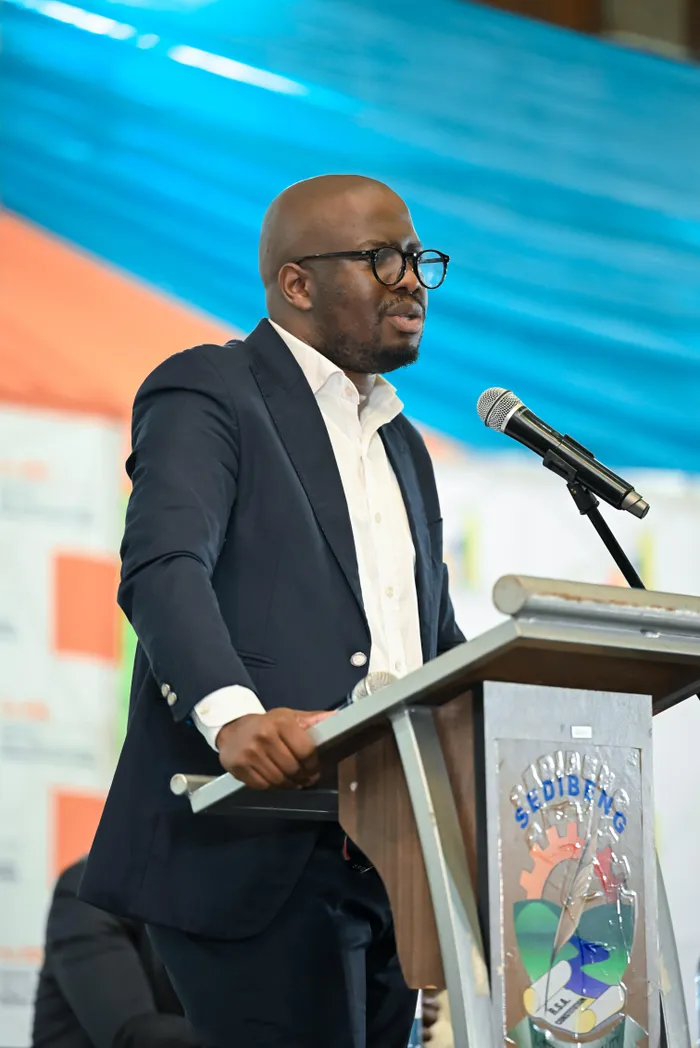
Deputy Minister of Trade, Industry and Competition, Zuko Godlimpi, addressing attendees at the public participation meeting held at the Veereniging Town Hall on the designation of the Vaal Special Economic Zone.
Image: Supplied
The government has unveiled an ambitious plan to revive the once-thriving industrial economy of the Vaal region, with the proposed Special Economic Zone (SEZ) expected to reignite manufacturing, attract investment, and create thousands of jobs.
Deputy Minister of Trade, Industry and Competition (the dtic), Zuko Godlimpi, outlined the vision during a public consultation meeting held on Wednesday at the Vereeniging Town Hall, where community members, business leaders, and stakeholders gathered to discuss the project’s potential impact.
The proposed Vaal SEZ forms part of a broader strategy by the dtic to reverse decades of industrial decline in the region, south of Gauteng province.
Once a manufacturing powerhouse, the Vaal has experienced significant economic contraction over the past 30 years, with factory closures and job losses eroding its economic base.
ArcelorMittal South Africa, which is an anchor business and the largest employer in the Vaal, has been contemplating winding down of its Long Steel Business, which would affect thousands of jobs, pending a regulatory reforms and financial support from the largest shareholder.
Godlimpi said the SEZ represents a decisive step toward reindustrialisation, built on years of research and planning.
He said the move to designate the SEZ follows eight years of extensive work done within the department to study the causes of the collapse of the manufacturing might of the region and to explore new policy instruments that would revive and protect it going forward.
“This region already has strong foundations. It has industrial capacity, strategic location advantages, access to major transport routes, and a workforce with experience and potential,” Godlimpi said.
“What has been missing is coordinated investment, modernisation, and new economic drivers aligned with the future. The Vaal SEZ addresses exactly that.”
The SEZ model is designed to create a business-friendly environment through targeted incentives, improved infrastructure, and streamlined regulations. By clustering key industries in a designated zone, government hopes to stimulate production, boost exports, and encourage both domestic and foreign investment.
According to Godlimpi, the Vaal SEZ will focus on future-facing sectors such as green industrialisation, agro-processing, logistics, energy, and the emerging blue economy linked to the Vaal River.
These sectors are expected to not only revive traditional manufacturing but also align the region with global economic trends.
The initiative follows a public consultation process initiated by Trade, Industry and Competition Minister Parks Tau, who recently gazetted a 30-day notice inviting public comment on the proposed designation. The consultation phase is a critical step in securing official approval and ensuring that local voices shape the development.
Job creation is central to the project’s objectives. The government estimates that the initial construction phase alone could generate more than 4,000 direct jobs and over 1,300 indirect jobs.
These opportunities are expected to benefit local contractors, artisans, suppliers, and small businesses, providing a much-needed economic boost to surrounding communities. Beyond short-term employment, the SEZ is also positioned as a catalyst for long-term skills development.
Godlimpi emphasised that economic transformation must go hand in hand with human development, highlighting plans to expand training programmes, apprenticeships, and partnerships with educational institutions.
“The SEZ will stimulate demand for skills training, apprenticeships, and partnerships with educational institutions,” he said. “Young people in this region must not remain spectators. They must become active participants in the economy.”
The project also carries broader social implications. By stimulating economic activity and creating employment, the SEZ is expected to address some of the underlying drivers of crime and inequality in the region. The government sees inclusive growth as a key tool in building safer, more stable communities.
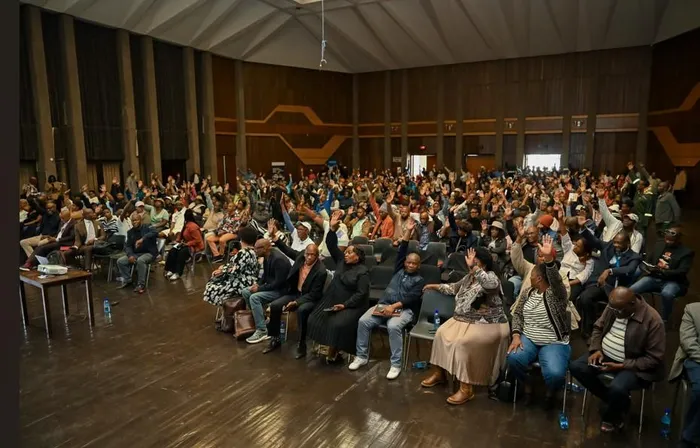
Community stakeholders and local entrepreneurs came out in large numbers to participate in the discussions and gave the Vaal SEZ a resounding yes.
Image: Supplied
The dtic said stakeholders at the meeting broadly welcomed the initiative, though some called for clear timelines, transparency, and ongoing engagement to ensure the project delivers on its promises.
If successfully implemented, the Vaal SEZ could mark a turning point for a region long associated with South Africa’s industrial heritage. With coordinated investment, modernisation, and a focus on emerging industries, government hopes the initiative will restore the Vaal to its former status as a key engine of economic growth.
BUSINESS REPORT