

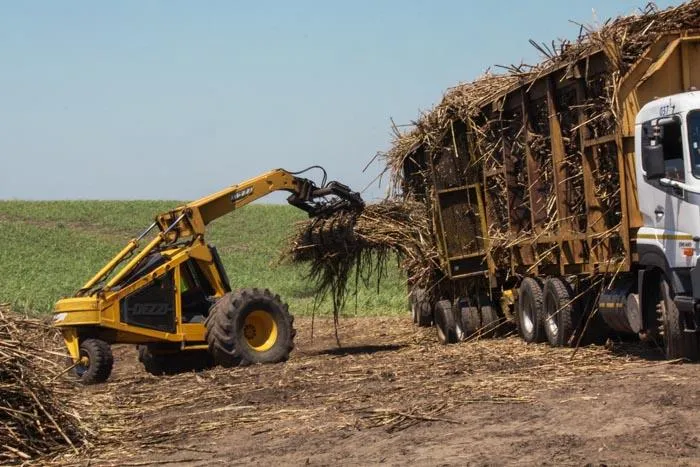
There are 15,000 small-scale cane growers and 435 commercial farmers who depend on Tongaat Hulett as their primary route to market. If the mills close, those growers have nowhere to take their cane, argues the writer.
Image: Supplied
Let me be direct. When most people talk about the Tongaat Hulett crisis, they reach for the language of finance. They talk about creditors, claims, business rescue practitioners, and court timelines. I understand why this is the first reaction of many who engage with the story of Tongaat Hulett. I have spent considerable time navigating the business-legal terrain, and I know it well.
But I want to speak a different language today, because if we continue to discuss the collapse of one of South Africa’s most storied agro-industrial assets in purely financial terms, we will miss the real cause of the crisis, and we will fail to prevent the next one.
The Tongaat Hulett crisis is, at its root, a trade crisis. It is a consequence of years of cheap regional and offshore sugar flooding this market without adequate protection for domestic producers. Until our government confronts that reality with the same urgency it brings to other economic emergencies, no amount of restructuring will be sufficient. You cannot restructure your way out of a rigged playing field.
South Africa produces approximately 2 million tons of sugar per year. It is a 100-year-old industry with deep roots, employing directly and indirectly over 250,000 people across KwaZulu-Natal and Mpumalanga. Behind those numbers are small-scale cane growers, seasonal workers, truck drivers, millers, engineers and rural communities whose entire economic lives are organised around the cane cycle.
For years, that industry has been competing against imported sugar that does not play by the same rules. While there are some regional culprits, Brazil, in particular, subsidises its sugar industry at a structural level. The result is that Brazilian sugar arrives on South African shelves and in regional food manufacturing supply chains at prices that our domestic producers simply cannot match. This is not free trade. It is subsidised dumping, and the damage it causes is cumulative and, if left unchecked, irreversible.
When a mill is competing against artificially cheap imports every season, margins erode. Investment is deferred. Maintenance is deferred. Growers receive less for their cane. Banks become reluctant to lend. And then, after years of this attrition, a company that was once a regional industrial anchor suddenly appears on the front pages in business rescue. People ask what went wrong. The answer is that the warning signs were there for anyone willing to look.
Through Vision, we have committed more than R5 billion to the rescue and stabilisation of Tongaat Hulett by acquiring the Lender Group claims. That is real capital, placed at real risk. When a consortium of banks claimed settlement of their R10bn in debt, driving the company into business rescue, we stepped in and committed to pay above R4bn to settle those claims against THL, giving those institutions return on assets they had effectively valued at zero. We have since invested additional hundreds of millions in costs for due-diligence, legal and consulting fees.
I say this not to ask for applause. I say it to make a point. If private capital, taking on 100% of the commercial risk, is still not enough to guarantee the survival of this asset, then something structural is broken. And the structural problem is that you cannot stabilise a company whose core product is being undercut by dumped imports at every turn. The financial rescue and the trade remedy must happen together. One without the other is a waste of everyone’s effort.
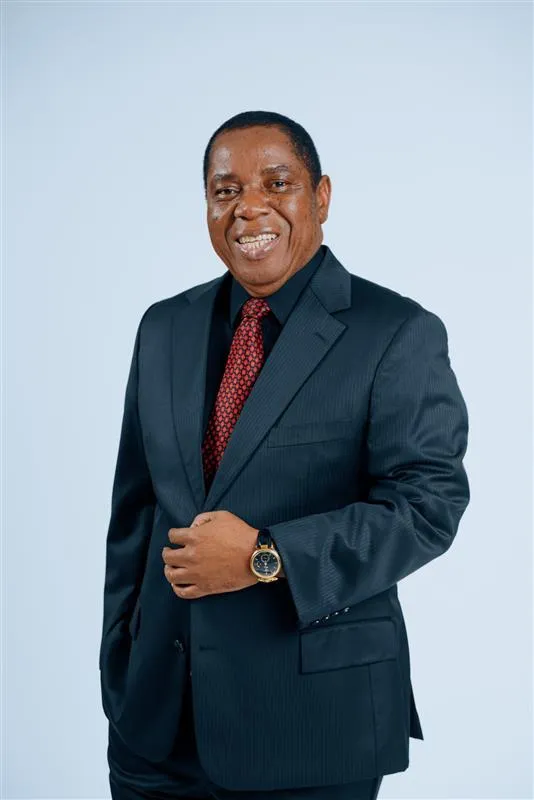
Robert Gumede is part of the Vision Group and one of the architects of the Vision Sugar Group’s effort to rescue and rebuild Tongaat Hulett Limited.
Image: Supplied
The workers on those estates are not financial claimants in a restructuring. They are people. And the government that is silent while cheap foreign sugar destroys the conditions for their livelihoods will have to account for that silence.
I am not asking the government to subsidise failure. I am asking it to remove the conditions that make success impossible. Specifically, I want to address three things that the State needs to do, and do urgently.
First: enforce meaningful anti-dumping measures. South Africa has trade remedy instruments available under the International Trade Administration Commission. The question is whether there is the political will to use them decisively and at scale. The sugar industry has been raising the alarm about below-cost imports for years. The response has been too slow and too limited. We need a definitive determination on dumping margins, followed by duties that actually restore competitive parity for our domestic producers. This is not protectionism in any pejorative sense. It is the responsible application of rules that exist precisely to prevent the kind of structural damage we are witnessing.
Second: the State must become a functional partner in the recovery, not a spectator. We have proposed that the Industrial Development Corporation convert its debt position in Tongaat Hulett into a meaningful equity stake. This would align the State’s interests with long-term industrial recovery rather than short-term debt recovery. It would also send a clear signal to other investors that South Africa is serious about protecting its strategic agro-industrial assets. Moral support from ministers is welcome, but it does not pay salaries or keep mills running.
Third: support the transition to a diversified, future-facing industry. Sugar alone is not the answer, and the most forward-thinking players in this sector know that. Vision’s strategy for the Tongaat Hulett assets includes generating electricity from bagasse, which is sugarcane residue, for the national grid and the Durban Municipality, as well as a shift toward high-value ethanol production. These are not speculative ideas. They are commercially viable diversification strategies that can reduce dependence on volatile export sugar markets and create new revenue streams. But they require regulatory support, licensing frameworks and, in some cases, off-take agreements with State entities. Government needs to fast-track these enablers, not slow them down.
By 17 June 2026, the current legal window in the Tongaat Hulett business rescue process draws to a close. That is not a distant deadline. It is weeks away. And while our legal and financial teams are working around the clock to reach a negotiated solution, the broader structural conditions that created this crisis remain largely unchanged.
I have spent my career building businesses in environments where the deck is stacked against you. I know how to compete in difficult markets. But I also know that there are problems that no single entrepreneur or private consortium can solve alone. The dumping of cheap foreign sugar into this market is one of them. It requires State intervention. It requires the kind of decisive regulatory and trade policy action that only the government can deliver.
South Africa cannot afford to treat the collapse of Tongaat Hulett as a purely financial event, to be managed by lawyers and resolved in court. It must be understood as a symptom of a broader policy failure, one that will continue to claim other companies and other jobs unless it is addressed at the source.
We are at the table. We have put our capital at risk. We have a plan that goes well beyond the immediate rescue and encompasses operational stabilisation, regulatory reform, innovation, and a sustainable future for the growers, millers and workers who depend on this industry. What we need now is a government that treats this sector with the seriousness it deserves.
Stop the dumping. Enforce the trade rules. Partner with the private sector in a meaningful, structured way. And recognise that saving this industry is not charity. It is an investment in the economic backbone of a region and in the dignity of a quarter of a million South Africans who have earned the right to compete on fair terms.
I want to be clear about something that sometimes gets lost in the noise of the legal proceedings. The fight to save Tongaat Hulett is not an isolated corporate rescue. It is a proxy for the future of the entire South African regional sugar ecosystem.
There are 15,000 small-scale cane growers and 435 commercial farmers who depend on Tongaat Hulett as their primary route to market. If the mills close, those growers have nowhere to take their cane. Their investment in land, equipment and labour evaporates overnight. The downstream effect on rural KwaZulu-Natal would be devastating and long-lasting. These are not abstract statistics. These are households, schools, clinics and local businesses whose economic survival is tied to whether those mills continue to operate.
* Robert Gumede is part of the Vision Group and one of the architects of the Vision Sugar Group’s effort to rescue and rebuild Tongaat Hulett Limited. He writes in his personal capacity.
** The views expressed do not necessarily reflect the views of IOL or Independent Media.
BUSINESS REPORT