

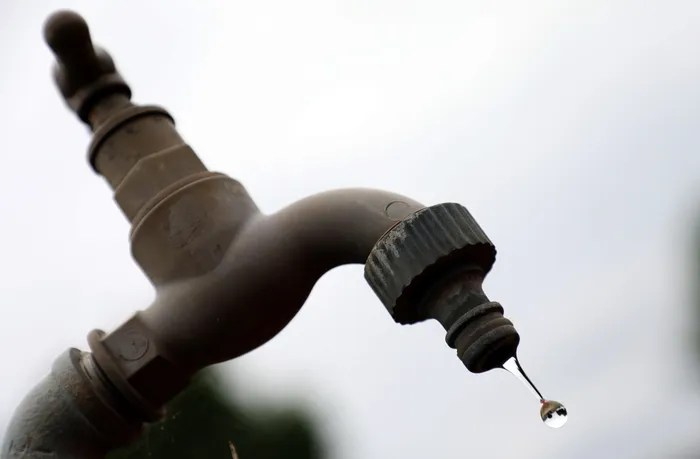
The City of Tshwane is leaking money, including through wasting water.
Image: Oupa Mokoena | Independent Newspapers
The City of Tshwane has received a qualified audit opinion for its 2025 financial statements.
The auditor-general raised major concerns over inflated asset values, unpaid bills, and accountability gaps.
The audit found that the city overstated the value of infrastructure and community assets due to incorrect valuation methods, making it impossible to determine the full scale of the misstatements.
Contingent liabilities were also understated by more than R4.3 billion, leaving taxpayers exposed.
Unpaid debts remain a serious problem, with R20.89 billion written off on consumer accounts.
In addition, R1.4 billion and R665 million were impaired on other receivables from exchange and non-exchange transactions.
At the same time, the city suffered R1.7 billion in water losses – nearly 39.1% of all water purchased – and R1.87 billion in electricity losses.
This included R610 million in technical losses and R1.26 billion in non-technical losses such as theft, meter tampering, negligence, and administrative errors.
Legal and administrative challenges are piling up.
A court recently ruled the city’s cleaning levy on households and businesses using private refuse services unlawful.
Moreover, the city’s attempt to bypass the 2021 Salary and Wage Collective Agreement with unions was dismissed.
The auditor-general also highlighted material misstatements in the city’s annual performance report.
This covered critical areas such as the electrical grid, road maintenance and expansion, public transport, water infrastructure, and support for vulnerable residents.
On accountability, the report flagged gaps in consequence management.
Some irregular, unauthorised, and wasteful expenditure was not investigated to determine if anyone was liable.
Losses were not always recovered, leaving questions over oversight and responsibility.
While the auditor-general confirmed that the financial statements were otherwise fairly presented, the findings underline serious governance, financial management, and service delivery challenges for Tshwane.
And residents and taxpayers face the consequences.
IOL BUSINESS