

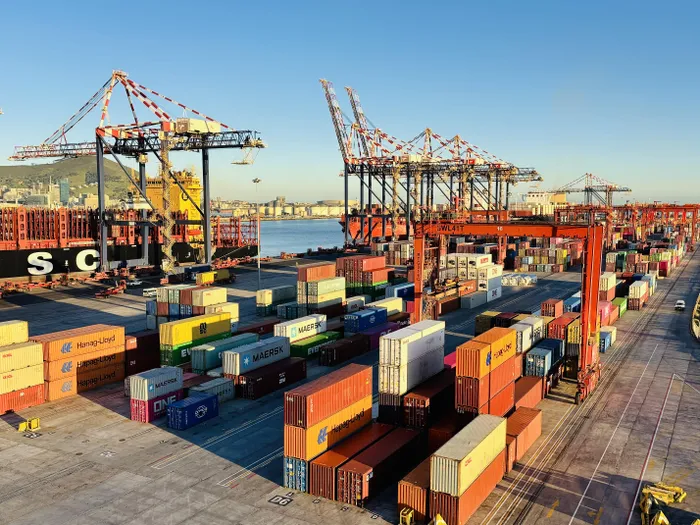
The fruit industry has lost around R350 million this season due to operational failures at the Port of Cape Town.
Image: Supplied
The fruit industry has lost around R350 million this season due to operational failures at the Port of Cape Town.
This, according to industry body Hortgro, comes as delays at the Cape Town Container Terminal have forced exporters to reroute shipments through other ports at additional cost, while thousands of containers remain in cold storage, putting millions of rand worth of fruit at risk.
This comes as the Port of Cape Town continues to grapple with operational issues. The port was ranked among the worst-performing ports in the world in 2024.
Hortgro said that the industry was also mulling formal legal action against Transnet as it seeks to recoup losses and ensure that urgent improvements are made to prevent further disruptions.
"This follows sustained, material underperformance at the Cape Town Container Terminal (CTCT) since the start of the season, which continues to cause significant and measurable harm to the country’s export economy," Hortgro said.
"Hortgro is currently quantifying the direct and indirect losses of income to producers, arising from unacceptable levels of unsound fruit in markets, discounted prices, additional expenses incurred to divert to other ports, and the forced utilisation of conventional vessels".
According to Hortgro, by the second week of the season, fruit exports were down 9% while inspections rose 37%, creating a backlog of around 1,688 containers and putting an estimated R1 billion worth of fruit at risk in cold storage".
The body added that CTCT’s underperformance stems from five structural failures: labour and HR, health and safety, equipment and infrastructure, operational processes, and communication and accountability.
"Hortgro is firmly of the view that the challenges at CTCT can no longer be addressed by incremental fixes or reactive crisis management. What is required is a coordinated, transparent, and expert-led transformation programme, supported by measurable commitments, strong executive ownership, strict accountability, and private-sector operational involvement".
According to Hortgro, exporters have been forced to divert volumes through alternative ports at extraordinary cost, including:
mthobisi.nozulela@iol.co.za
IOL Business