

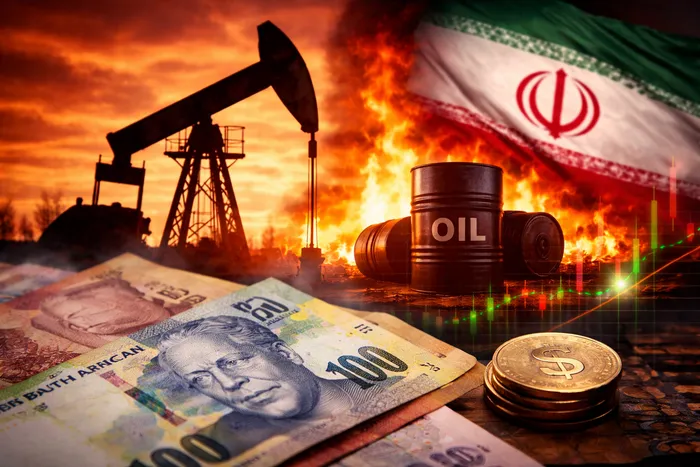
Rising tensions in the Middle East have lifted oil prices and pressured the rand, increasing the risk of higher fuel costs for South African consumers.
Image: ChatGPT
South Africa’s currency has taken a hit because of the ongoing military strikes on Iran, which has also pushed the oil price higher, causing concerns that fuel may likely go up again.
Having hit as low as R16.17 on Monday, the currency was trading at R16.11 by mid-afternoon on the back of global financial market risk aversion as investors moved to safe havens, explained Annabel Bishop, Investec chief economist.
Nolan Wapenaar, Head of fixed income and Co chief investment officer at Anchor, said that the decline in the rand and some financial assets is “partly because of questions around our nation’s political allegiances and partly because oil imports will be a touch more expensive”.
The rand, already sensitive to global risk sentiment, could weaken in a ‘flight to safety’ environment, compounding imported inflation given the current situation in the Middle East, said Dr Ernst van Biljon, head lecturer of Supply Chain Management at the IMM Graduate School.
“As a net importer of crude oil, and with already-high interest rates, the country is highly exposed to price shocks. A 10% rise in oil quickly filters into higher fuel prices, placing upward pressure on transport costs, food inflation and ultimately consumer spending,” said van Biljon.
Bishop noted that, given the currency’s sharp decline from Friday’s R15.87 and the rapid rise in oil prices, fuel prices are likely to be increased in April if the situation does not reverse.
Andre Cilliers, currency strategist at TreasuryoNE, said because the Strait of Hormuz is the main exit for a large share of Gulf oil – about a fifth of global supply – oil prices have jumped sharply and could go much higher if traffic doesn't restart soon.
Brent crude was hovering near $80 a barrel by mid-afternoon.
Cilliers said OPEC+ is trying to soften the shock by increasing production quotas, but that only helps if oil can physically get out through safe shipping lanes.
There could be, Bishop said, a 9% increase in the April fuel price when compared with March. March’s prices have already been hit with the National Budget-mandated hikes.
Petrol goes up by 20c a litre and diesel variants by between 63c and 65c a litre.
Bishop said that a higher rand fuel price elevation could lift inflation from the forecast 2.9% in April to 3.3%.
Inflation is currently 3.5%, and most market commentators had expected to see if it start settling towards the 3% South African Reserve Bank target inside this half of the year.
“Markets are now watching two things hour by hour: whether fighting calms down (or talks restart) so tankers move again, or whether the conflict widens and keeps the strait risky – because that's the difference between a short-lived price spike and a more serious global energy and inflation shock,” said Cilliers.
IOL