


Women hold about 47% of senior management roles locally, one of the highest levels globally. Women also occupy about 38% of board seats at companies listed on the JSE, while executive committee representation stands closer to 31%.
Image: ChatGPT
Women remain underrepresented in the highest levels of corporate leadership in South Africa, even as their presence in senior management and boardrooms has grown.
According to BDO South Africa’s Women in Business report, women hold about 47% of senior management roles locally, one of the highest levels globally. Women also occupy about 38% of board seats at companies listed on the JSE, while executive committee representation stands closer to 31%.
However, Buhle Hanise, national head of business restructuring at BDO South Africa, said the distribution of real power tells a different story, with chief executive officer positions across major listed entities still overwhelmingly held by men.
Hanise said that while women are increasingly present in senior management and board roles, the highest levels of corporate authority remain largely male-dominated.
“Women already sit across board tables and executive committees in significant numbers. Yet when the most consequential mandates arise, the distressed asset, the turnaround, the high-risk Profit & Loss, authority remains disproportionately concentrated.”
The issue is not capability, said Hanise.
“Women have long been present in finance and advisory. The issue is how opportunity is allocated.”
Hanise noted that women are also underrepresented in complex turnaround mandates and profit-and-loss leadership roles, assignments that often shape reputational capital and succession prospects.
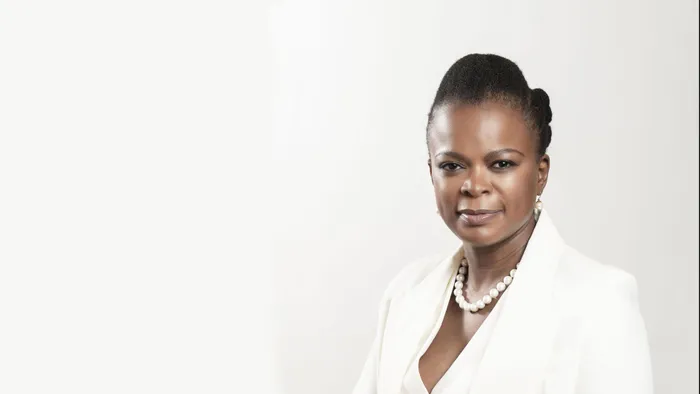
Buhle Hanise, national head of business restructuring at BDO South Africa.
Image: Supplied
Globally, a similar pattern is evident. The United Kingdom has surpassed 40% female board representation across the Financial Times Stock Exchange 350, yet female chief executive officer representation remains in the low teens.
Hanise pointed to research by McKinsey & Company describing the “broken rung”, where women are promoted at lower rates than men at the first critical step into management, creating a gap that widens over time.
McKinsey’s 2025 Women in the Workplace study found that only half of the companies it surveyed prioritise women’s career advancement, part of a several-year trend in declining commitment to gender diversity.
The “broken rung” at the first step up to manager continues to hold women back. In 2025, only 93 women were promoted to manager-level roles for every 100 men. The gap is even bigger for women of colour, with 74 women of colour promoted for every 100 men.
“As a result, men significantly outnumber women at the manager level, making it difficult for women to catch up,” said McKinsey.
What it also noted is that, for the first time, there is a notable ambition gap, women are less interested in being promoted than men. McKinsey surveyed 9,500 people in the United States.
“When women receive the same career support that men do, this gap in ambition to advance falls away. Yet women at both ends of the pipeline are still held back by less sponsorship and manager advocacy,” McKinsey said.
If women represent nearly half of senior management but only a third of executive leadership, something in the design of advancement is filtering them out, said Hanise.
“This is not a supply problem. It is structural.”
Hanise added that leadership diversity can strengthen decision-making, particularly in high-risk environments such as corporate distress and restructuring.
“In distressed environments, where groupthink can carry material cost, diversity of perspective is a risk-mitigation asset. The ‘glass ceiling’ metaphor suggests a barrier waiting to be shattered. But in corporate finance, durable change comes from redesign, not from force,” said Hanise.
Hanise said companies should implement clearer processes around leadership development and succession.
“Leadership pipelines require the same discipline: transparent criteria for high-impact mandates; formal tracking of succession pipelines; measurable sponsorship accountability; public reporting on executive progression.”
The issue has broader economic implications, Hanise said, particularly as South African companies face continued pressure from low economic growth and operational instability.
“South Africa cannot afford symbolic transformation. In an economy under strain, every restructuring decision carries consequence namely jobs preserved or lost, capital recovered or destroyed, confidence restored or eroded.”
Hanise said corporate South Africa would need to ensure capable leaders are not excluded as economic conditions remain challenging.
“The question is no longer whether women can lead in complex financial environments. The question is whether corporate South Africa is prepared to redesign its systems,” said Hanise.
Hanise added that “in the end, this is not about breaking ceilings. It is about building institutions strong enough to outlast them”.
IOL BUSINESS