


Recent consumer behaviour data shows people are driving less.
Image: ChatGPT
South Africa’s latest payments data is beginning to reflect the economic strain created by sharply higher fuel prices, with transaction volumes and values slowing during April as households and businesses come under mounting pressure.
The PayInc Economic Index declined by 0.5% month-on-month in April to 104.8, although it remained 6.1% higher than a year earlier. Shergeran Naidoo, head of stakeholder engagements at PayInc, said the data pointed to “some moderation in economic activity,” despite the year-on-year gain.
The index tracks the value of electronic transactions cleared through PayInc, together with a wholesale cash component.
Transaction activity softened across several payment streams during April. The number of transactions cleared through PayInc fell 4.7% in April, while the nominal value of electronic transactions eased to R1.367 trillion from R1.475 trillion.
The slowdown comes as South Africa absorbs the impact of steep fuel increases linked to conflict involving the US, Israel and Iran, following recent fuel price adjustments announced by the Department of Mineral and Petroleum Resources.
According to the department’s published adjustments, petrol prices have increased by a cumulative R6.29 a litre since April, while diesel prices have risen by R12.60 a litre over the past two months, PayInc pointed out.
Elize Kruger, independent economist, said consumers and businesses were already adjusting behaviour in response to rising transport and fuel costs. “Consumers and businesses are already responding to the pressure of higher transport and fuel costs, which is likely to influence spending patterns in the months ahead,” she said.
Kruger added that, “while the economy continues to demonstrate resilience in some sectors, the current environment points to a more cautious consumer and business outlook”.
Some of that shift is already becoming visible, said PayInc. Discovery Insure data showed motorists reduced fuel consumption by 35% during April, while trips declined by 10% and total distance travelled fell by 9%.
At the same time, some parts of the economy continue showing resilience despite the pressure. According to Naamsa figures, total vehicle sales rose 13% year-on-year during April, while new car sales increased 14.3%. Year-to-date vehicle sales growth reached 12.5%, PayInc noted.
Business activity indicators also improved, it said, with the S&P Global South Africa Purchasing Managers’ Index and the Absa Purchasing Managers’ Index both higher.
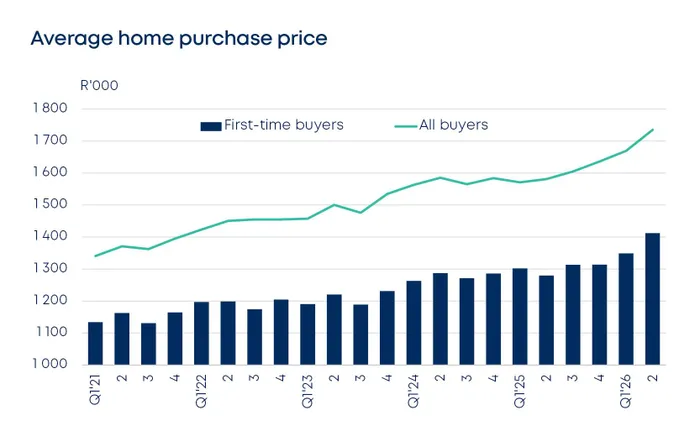
The average home price has been increasing, says BetterBond.
Image: BetterBond
The residential property market has also continued recovering, with the latest BetterBond Property Brief showing that home loan applications increased 6.2% year-on-year during April, while average home prices for first-time buyers reached a record R1.4 million.
“This month’s data reflects a resilient but increasingly cautious outlook for South Africa’s economy and residential property market,” BetterBond said.
The mortgage originator added that, “while elevated fuel prices and ongoing conflict in the Middle East continue to create global uncertainty, several domestic indicators remain supportive, including strong trade performance, rising buyer incomes and continued growth in housing market activity”.
Stephan Potgieter, CE of BetterHome Group Mortgage Origination and BetterBond, said lower interest rates and stronger household finances were still supporting the market, “but rising fuel costs and tighter lending conditions could temper momentum in the months ahead”.
However, Annabel Bishop, chief economist at Investec, said inflation expectations had already begun rising.
“Inflation was expected to average 3.0% this year, but inflation expectations have risen instead, to 3.8% year-on-year and would climb further without a moderation in oil prices,” Bishop said.
“The oil price shock has hit fuel prices in South Africa with around a month’s lag.”
Bishop said the South African Reserve Bank was not currently expected to raise interest rates at its next Monetary Policy Committee meeting on 28 May. However, she warned that the South African Reserve Bank remained concerned about second-round inflation effects becoming entrenched.
Kruger said that while diesel prices could potentially ease slightly in June if conditions stabilised, the broader economic environment remained difficult.
“South Africa’s unemployment rate remains elevated at 32.7% in the first quarter of 2026, reinforcing the challenging operating environment facing households and businesses.”
IOL BUSINESS