

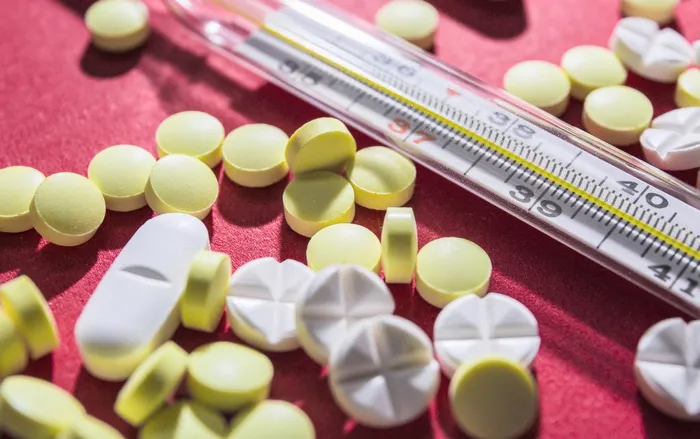
While authorities are actively intervening, the scale of the illicit pharmaceuticals problem remains significant.
Image: Freepik
South Africa is facing a growing public health and economic risk from the illegal trade in prescription medicines, with experts warning that the market for counterfeit, smuggled, and unregulated drugs continues to expand.
According to the TRACIT 2025 Strategic Review, South Africa faces a significant illicit trade challenge, ranking 60th globally out of 158 countries and 4th in Africa on measures of resilience to illegal markets, with a score of 52.4 out of 100.
The report notes that the illicit economy includes pharmaceuticals alongside alcohol, tobacco, foodstuffs, and other sectors, with unregulated spaza shops and informal markets serving as common distribution points.
This systemic weakness not only erodes tax revenues and legitimate business but also facilitates the sale of counterfeit and unregulated prescription medicines.
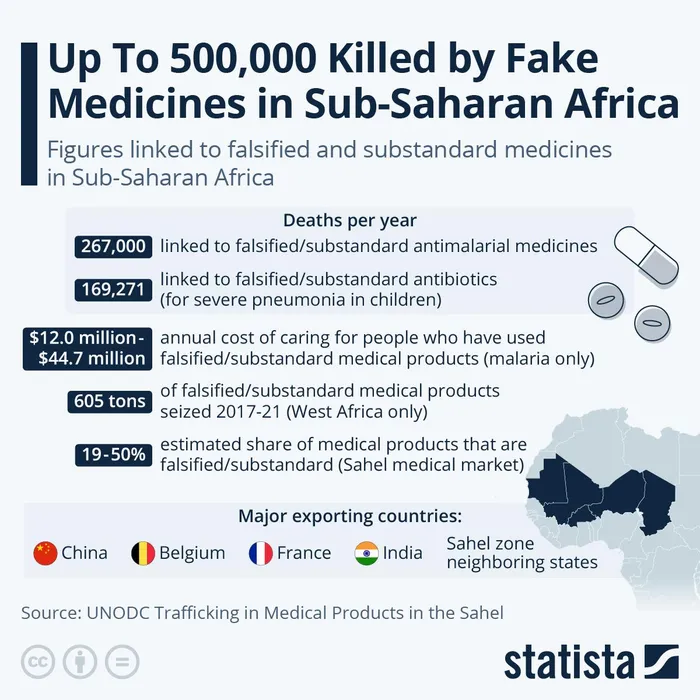
Half-a-million people killed by fake medicines in sub-Saharan Africa.
Image: Statistica
According to the South African Health Products Regulatory Authority (SAHPRA), 507 suspected cases of counterfeit or illicit medicines were reported in 2024/25, with 110 confirmed.
The state spent approximately R3 million to destroy fake products in that year as regulators emphasised that prescription medicines cannot legally be sold online or outside authorised channels.
In Johannesburg, investigators have documented a thriving informal market for prescription-grade medicines, particularly antibiotics, sold on the streets without valid prescriptions, SAHPRA spokesperson Lindiwe Motsoaledi has said.
Many of these products are reportedly smuggled from Malawi and Zimbabwe. Experts warn that the unregulated sale of such drugs contributes to the rise of antimicrobial resistance, which could undermine public health efforts across the region.
While street sales remain prevalent, the illegal trade has increasingly moved online. Research from the University of KwaZulu-Natal highlights the risks in digital spaces.
A study reviewing 25 South African online pharmacy websites found that three operated without links to physical pharmacies and supplied prescription medicines without requiring valid prescriptions, exposing consumers to the risk of receiving substandard or harmful products.
The South African Police Service (SAPS) and regulators recently busted an online syndicate selling steroids, stimulants, and other scheduled medicines without proper authorisation.
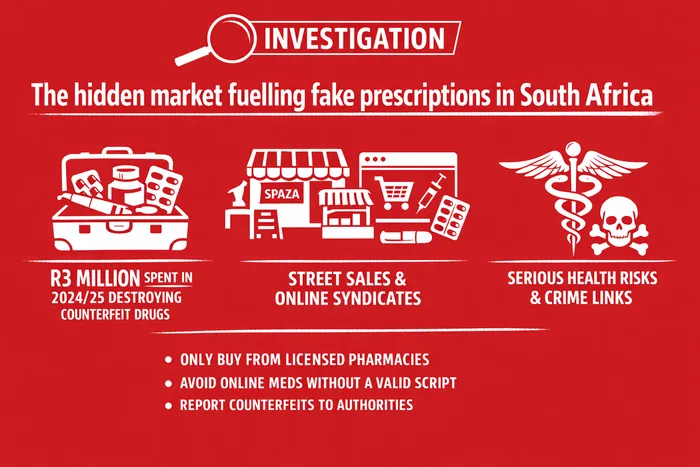
The hidden prescription drug market in South Africa.
Image: ChatGPT
The arrests were made under both the Medicines and Related Substances Act and the Counterfeit Goods Act, highlighting the legal consequences of participating in such operations.
The illegal trade also extends to scheduled medicines being sold in unlicensed shops. Health authorities in Gauteng have repeatedly found pharmacies and retail outlets selling drugs that are meant to be controlled, in direct contravention of South African law.
Only licensed pharmacies and registered practitioners are permitted to sell these medicines, SAHPRA officials say.
SAHPRA, in collaboration with the World Health Organization, developed Africa's first National Action Plan to combat falsified medicines, which aims to improve surveillance, inspections, and enforcement against illegal medical products.
Officials warn that failure to enforce these regulations could have widespread consequences for public health and undermine trust in legitimate healthcare providers.
Authorities are also tracking the emergence of illegal online offers for GLP-1 weight-loss drugs, including Ozempic and Mounjaro.
These products are not legally registered in South Africa for weight-loss purposes and may pose significant health risks to users. Regulators caution consumers against purchasing such medicines from unverified sources.
Health experts emphasise that the growth of the illegal prescription medicine market carries both direct and indirect costs.
The state spends millions to seize and destroy counterfeit products, while patients may experience treatment failures or adverse reactions from unverified medicines.
In addition, the circulation of unregulated drugs facilitates the development of drug resistance, which can compromise the effectiveness of legitimately prescribed medications.
"This is not just an enforcement issue; it is a public health crisis," SAHPRA spokesperson Lindiwe Motsoaledi told IOL previously.
"Consumers must ensure they obtain medicines only from licensed pharmacies and registered practitioners. The risks of illegal drugs, whether online or on the street, are substantial."
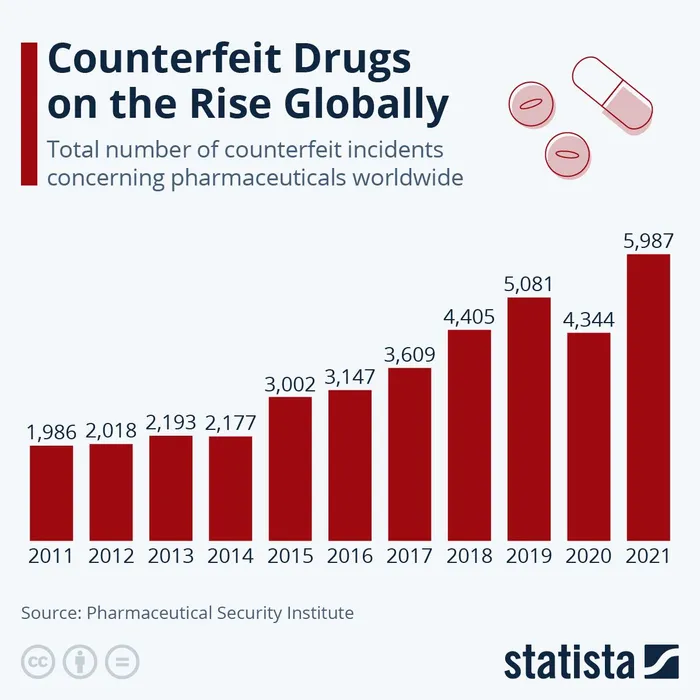
Rise of fake drugs across the globe.
Image: Statistica
SAPS officials also stressed that organised crime syndicates are increasingly involved in the trade. The online syndicate arrests in 2024/25 revealed sophisticated operations that bypass regulatory checks and exploit loopholes in digital commerce.
Continued vigilance, coordinated enforcement, and public education are essential to curb the illegal market, authorities say.
Experts caution that the problem is likely to worsen if regulatory gaps are not closed. Online pharmacies remain difficult to monitor, cross-border smuggling continues, and informal street markets persist in major urban centres.
Coordinated action by law enforcement, regulators, and healthcare providers is essential to reduce the scale of the illegal trade.
Consumers are advised to:
The 2024/25 figures show that while authorities are actively intervening, the scale of the problem remains significant.
Without sustained public awareness and regulatory action, the illegal prescription medicine market threatens to undermine public health and strain healthcare resources across South Africa.
IOL BUSINESS