


Inflation could reduce disposable income if tax brackets aren't changed to provide relief.
Image: Freepik
As South Africa heads into the National Budget on February 25, a familiar phrase is again surfacing in economic commentary: bracket creep.
Tax specialists are warning that bracket creep may once again be one of the National Treasury’s quieter revenue tools.
Kristof Kruger, senior fixed income trader at Prescient Securities, said the pressure is already visible.
“Bracket creep is already putting pressure on households. If tax brackets aren’t adjusted for inflation, people end up paying more tax in real terms, even though their purchasing power hasn’t improved,” he said.
Unlike an explicit tax hike, bracket creep works subtly. Employees may receive an annual increase, yet take-home pay fails to stretch further.
Lance Collop, CA (SA) and Chartered Tax Adviser, said inflation itself becomes the mechanism. “The government’s most effective tool for raising revenue isn’t a new tax law; it’s inflation,” he said.
Collop explained that if a worker receives, for example, a 5% inflation-linked salary increase but tax brackets remain largely unchanged, part of that increase is absorbed by higher tax.
“You earn more on paper, but you take home less in real terms,” he said.
Collop added that fiscal drag – another term for bracket creep – allows the government to collect additional revenue without formally announcing a tax increase. “It is silent, invisible, and incredibly effective,” he said.
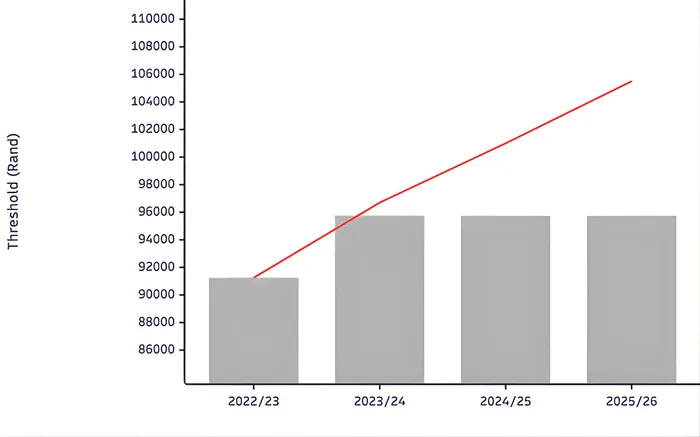
Stagnation of tax thresholds
Image: Supplied
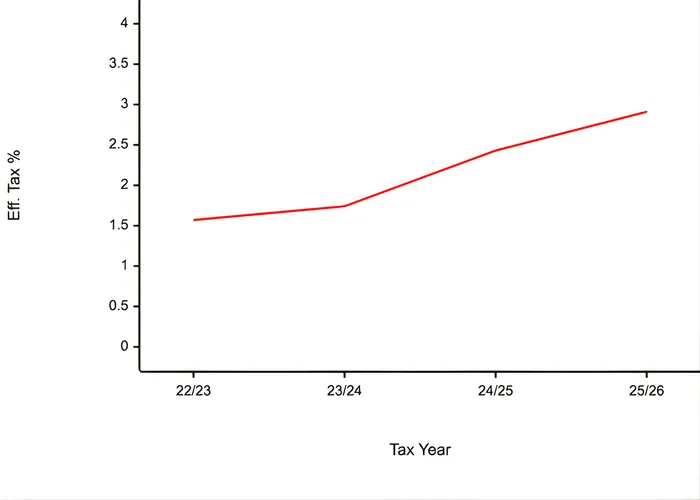
Lower income earner.
Image: Supplied
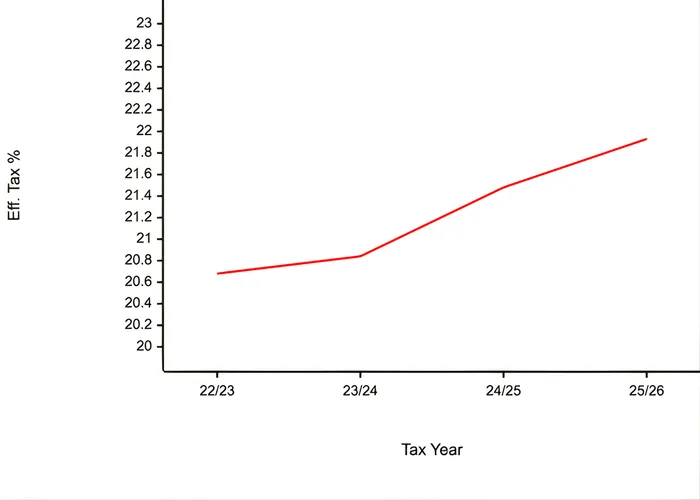
Medium income earner.
Image: Supplied
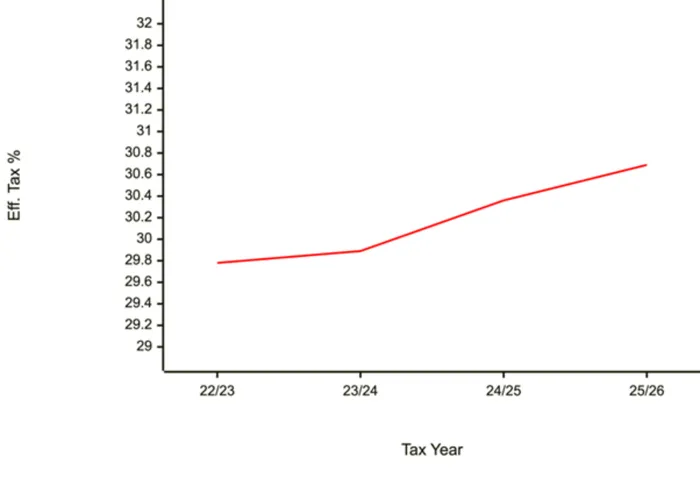
Higher income earner.
Image: Supplied
Samuel Seeff, chairman of the Seeff Property Group, said the National Budget should prioritise growth rather than simply updating the country’s finances.
Seeff called for decisive measures to unlock economic expansion and argued that households and businesses need breathing room.
To support disposable income, Seeff said there should be no increases in personal or corporate taxes, and no adjustment of tax brackets in a manner that would further strain what he described as the “inverted pyramid” of the tax base.
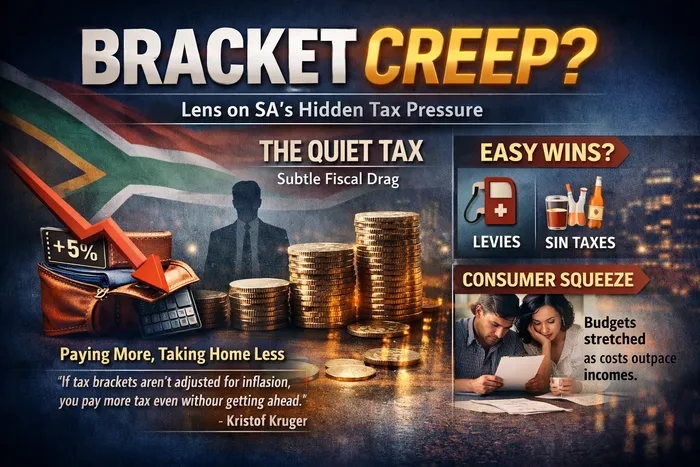
Tax creep is a silent tax.
Image: ChatGPT
Shaheed Patel, consultant in tax and exchange control, and Dehal Jivan, candidate attorney at CMS South Africa, said they expect the government to lean on traditional “easy wins” for the fiscus.
These could include fuel and Road Accident Fund levies, continued increases in so-called sin taxes on alcohol and tobacco, and a likely decision not to fully adjust personal income tax bands for inflation.
Such a move, they said, would effectively raise the tax burden on middle-to-higher income earners while potentially shielding lower-income households.
For households, the debate goes beyond tax tables and into day-to-day survival.
Hayley Parry, co-founder of Cumulate and head of financial education at Worth, said the country’s fiscal challenges mirror what many families are experiencing at home.
“When a country consistently spends more than it earns, it borrows. When households do the same, they swipe a credit card. In both cases, the future gets mortgaged to fund the present,” she said.
Parry said South Africa’s household savings rate has hovered near zero for years, which she described not as a moral failing but a structural warning sign.
While interest rates have eased, inflation has moderated, and markets have shown resilience, Parry said many consumers feel little tangible relief. “Any small saving from a lower interest rate environment is quietly eroded by income tax bracket creep,” she said.
Parry noted that middle-income earners are particularly vulnerable, as salary increases that merely match inflation can still trigger higher tax liabilities. “If we want citizens to build resilience, we need to create room for them to do so,” Parry said.
Yet not all economists expect a negative outcome this year.
The Bureau of Economic Research struck a more optimistic tone, saying the 2026 Budget could turn into a “good-news event”.
It pointed to lower borrowing costs, firmer growth, restrained expenditure and an unexpectedly large commodities windfall as factors that may improve the fiscal position.
This, the Bureau said, could allow the National Treasury not only to meet its debt targets but “could even result in taxpayers seeing some relief from bracket creep for the first time in several years”.
Citadel chief economist Maarten Ackerman also expects a relatively steady approach.
“We expect the usual adjustments for bracket creep, but no significant changes to personal or corporate income tax rates. Sin taxes may increase, potentially more aggressively than usual,” he said.
IOL BUSINESS