

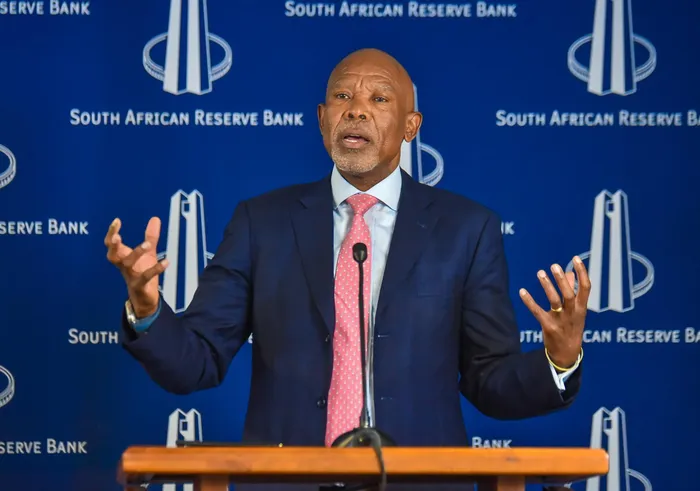
The current war in the Middle East may cause the central bank to hike rates.
Image: SARB | Facebook
The South African Reserve Bank (SARB) may face the prospect of interest rate hikes if inflation pressures intensify, as rising global tensions shift the outlook ahead of its upcoming Monetary Policy Committee meeting.
Wichard Cilliers, head of market risk at TreasuryONE, said central banks are likely to adopt a more hawkish stance as inflation concerns accelerate, driven by higher energy costs.
Stephan Potgieter, chief executive of BetterHome Group Mortgage Origination and BetterBond, said the uncertainty linked to tensions between Iran and the United States could keep interest rates higher for longer.
Potgieter said homeowners already facing higher fuel and living costs may need to factor in a more cautious stance from the Reserve Bank.
If inflation pressures from fuel and transport costs persist, the central bank may delay rate cuts or even consider modest increases, Potgieter said.
“If inflationary pressures from fuel and transport costs prove persistent, the prime lending rate may remain unchanged for longer or even rise modestly if inflation risks intensify,” he noted.
Johann Els, chief economist at PSG, said a rate cut would have been likely before the escalation in the Middle East, but the current environment has changed that view.
“The MPC [Monetary Policy Committee] is very unlikely to cut rates this week in the current environment,” Els said.
Els noted that February inflation of 3% would likely have supported a rate cut, but the conflict has introduced new risks, shifting the focus to inflation pressures from higher oil prices and a weaker, more volatile rand.
Trading Economics said escalating tensions between the US and Iran have increased the risk that inflation could rise, particularly through elevated oil prices.
This has complicated SARB’s task of balancing support for economic growth with keeping inflation within its target range, it said.
Els said petrol prices could rise by around R6 per litre in April, which would push inflation to about 4.2%, compared with earlier expectations of around 3.1%.
Trading Economics said inflation expectations, which had begun to stabilise before the conflict, are now expected to rise in the near term, with a risk of temporarily breaching the upper end of the target band.
Nolan Wapenaar, head of fixed income and co-chief investment officer at Anchor Capital, said a sustained increase in oil prices could place upward pressure on inflation at a time when policymakers were aiming to anchor expectations closer to SARB’s 3% target.
“Treasury might step in with a temporary fuel levy cut to soften the blow – they’ve done it before in 2022, so it’s not impossible,” Els said, adding that the National Budget had some room to manoeuvre.
Wapenaar said the “latest developments have increased uncertainty around the policy outlook” ahead of Thursday’s MPC.
Despite the near-term risks, Potgieter said the broader interest-rate cycle is still expected to turn downward, with gradual rate cuts likely later this year if conditions stabilise.
Els said the outlook for interest rates now depends heavily on how the conflict develops.
If tensions ease and oil prices fall, there may still be room for rate cuts later this year.
However, Els said if the conflict drags on and inflation pressures persist, the possibility of a rate hike cannot be ruled out.
IOL BUSINESS