


Gauteng recorded the highest number of civil summonses for debt in March at 11,547, followed by the Western Cape at 6,826 and KwaZulu-Natal at 6,044.
Image: Pexels
South Africa saw a mixed picture in civil debt cases during the first quarter of 2026, with civil summonses for debt edging lower even as the value of judgements increased.
According to new Statistics South Africa data, the total number of civil summonses issued for debt decreased by 0.2% in the first quarter of 2026 compared with the same period a year earlier, while civil judgements recorded for debt fell 1.7%. However, the value of civil judgements rose 0.6% to R832.4 million.
The figures come as South Africans face mounting debt pressure across income groups, with rising living costs, elevated borrowing costs and weak economic growth driving more consumers towards debt counselling and formal debt review processes.
Recent research from DebtBusters found some higher-income earners were using up to 85% of their take-home pay to service debt, while 63% of consumers overall spent more than 30% of after-tax income on repayments.
DebtBusters said consumers earning more than R35,000 a month were experiencing the highest debt-to-income ratios recorded in the decade-long history of its index, with debt levels reaching 210% of income among higher earners.
The group said almost all applicants for debt review reported having personal loans, while many also relied on one-month or payday loans.
A FinMark Trust paper published last year estimated that about 12 million South African adults were over-indebted, with 75% of borrowers using credit to cover essentials such as food.
The research also found that 37% of formal credit borrowers were experiencing repayment difficulties.
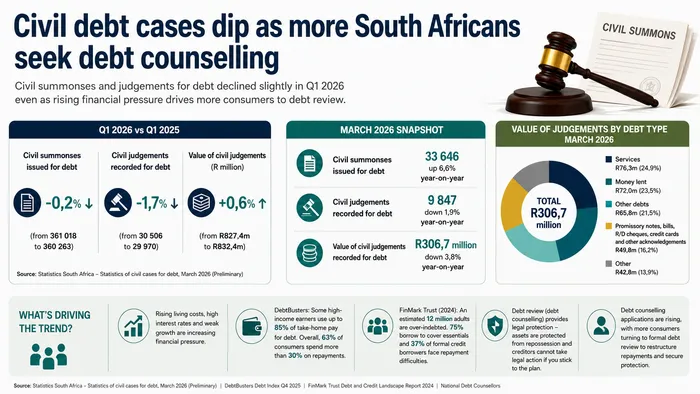
South Africans in debt by the numbers.
Image: ChatGPT
Industry bodies say debt review applications are also increasing as consumers seek legal protection from repossessions and other legal action while restructuring repayments.
National Debt Counsellors says debt review protects consumers’ assets from repossession and prevents creditors from taking legal action provided consumers adhere to agreed repayment plans.
National Debt Counselling Association chairperson René Moonsamy said earlier this year that debt counselling applications were already significantly higher than a year earlier as consumers struggled to absorb rising costs.
“The reality is that we’re going to see people borrowing more,” Moonsamy said previously.
The civil debt figures published by Statistics South Africa offer a snapshot of financial strain across households and businesses, covering debt-related civil summonses and judgements issued through magistrates’ courts.
In March alone, 33,646 civil summonses for debt were issued, up 6.6% year-on-year, while 9,847 civil judgements worth R306.7 million were recorded.
Services-related debt remained the single biggest contributor to the value of judgements during March at R76.3 million, followed by money lent at R72 million and other debts at R65.8 million.
Stats SA said the largest contributors to the quarterly decline in civil summonses were services, money lent and rent-related debt. Rent was also the largest contributor to the drop in civil judgements over the quarter.
Gauteng recorded the highest number of civil summonses for debt in March at 11,547, followed by the Western Cape at 6,826 and KwaZulu-Natal at 6,044.
IOL BUSINESS