

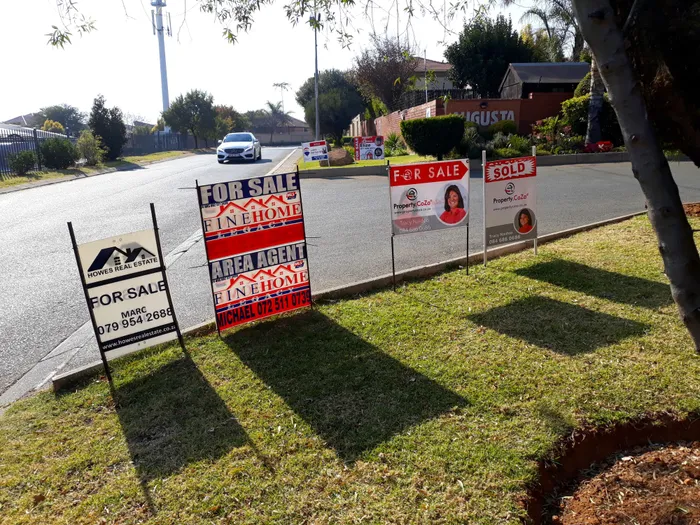
Despite seasonal slowdowns in December, BetterBond’s home loan applications were 8.9% higher year-on-year in the last quarter of 2025.
Image: Karen Sandison | Independent Newspapers
The South African residential property market is entering 2026 with a newfound sense of momentum.
After two years of being hamstrung by the highest interest rates in 15 years, a “perfect storm” of positive economic indicators is finally opening a window of opportunity for buyers who have been waiting in the wings.
According to the January BetterBond Property Brief, the recovery is no longer just a forecast – it is becoming visible in the data. Despite seasonal slowdowns in December, BetterBond’s home loan applications were 8.9% higher year-on-year in the last quarter of 2025.
With the prime lending rate retreating to 10.25%, a cumulative 150 basis point drop since the tightening cycle peaked in 2024, the cost of borrowing is finally moving back into a range that supports real-world affordability.
In addition, Botha is optimistic about economic growth, predicting between 1.5% and 2%. This, he writes, is “not great, but this would be a huge improvement on recent years, when growth was barely above zero”.
For 2026, Johann Els, chief economist at PSG Financial Services, expects 1.7% growth, which could rise to above 2% next year. “We're moving in the right direction… at least we're heading north of the 1% annual average growth we've had over the last decade or so,” he said.
The rand’s spectacular performance
Much of this renewed optimism is anchored by the rand’s performance on the global stage. In 2025, the local currency strengthened by a remarkable 13.8% against the US dollar, outperforming every major currency tracked by Currencies Direct.
“During 2025, South Africa’s currency made a habit of being among the best-performing currencies in the world,” independent economist Dr Roelof Botha wrote in the report.
A stronger rand lowers the cost of imported fuel and goods, acting as a natural brake on inflation. Investec chief economist Annabel Bishop has noted that the rand's recent strength against the US dollar is very beneficial for inflation as it will aid in lowering price pressure on fuel and food.
For the South African consumer, this translates into a “double win”: lower daily living costs and a higher likelihood that the South African Reserve Bank will continue to slash interest rates as we move deeper into 2026.
Els said, “I think the Reserve Bank is in a position where they can continue to cut rates, and I expect two more rate cuts in the first half of 2026.”
For years, the “deposit hurdle” has been the primary reason young South Africans stayed in the rental market.
However, the January report reveals a significant shift in bank behaviour. Average deposits for first-time buyers (FTBs) have plummeted by 15% year-on-year.
“Nevertheless, it remains a point of concern to prospective homebuyers that the average deposit requirement for FTBs remains 30% higher than at the beginning of 2021, despite a relatively low ratio of bank impairments to bank assets,” Botha said.
Aiding consumers in buying property is the fact that salaries are on the up after the post-Covid-19 slump.
“Over the past nine years, the real incomes of all buyers managed to increase by an impressive annual average of 10.6% in nominal terms and by 5.7% in real terms,” said Botha.
A tale of two provinces
While the national outlook is improving, the “Property Brief” highlights a widening gap between regions that are thriving and those struggling with municipal decay.
The Western Cape remains in a league of its own. With an average house price of R2.1 million, nearly 40% higher than the national average, it continues to benefit from “semigration” and a perception of superior service delivery.
However, the real surprise of 2026 is Mpumalanga, coming in second when it comes to house price growth.
The province has managed to overtake the national average house price, reaching R1.63 million and securing its spot as the third most expensive region in the country.
IOL BUSINESS