

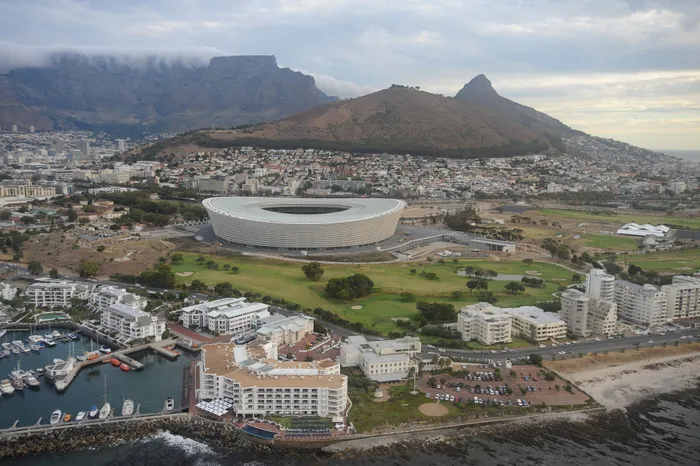
Attracting international investment, alongside increased semigration and short-term rental activity could risk making the region unaffordable for the South African buyer.
Image: Henk Kruger / Independent Newspapers
While the Western Cape High Court’s ruling against the City of Cape Town’s fixed tariff structure brings short-term uncertainty to municipal revenue planning, it also reinforces the strength of the City of Cape Town.
“The court declared that the fixed charges linked to property values, such as cleaning, water and sanitation were unlawful and that these must be removed by 30 June 2026,” says Justin Thom, director at Galetti Corporate Real Estate.
“If upheld, this should bring some measure of relief to property owners, particularly as Cape Town is home to some of the continent’s most expensive property.”
Last July, and after the adoption by the City of Cape Town of the 2025/26 budget, South African Property Owners’ Association (SAPOA) instituted legal action against the City of Cape Town to challenge the city-wide cleaning tariff, the basic water tariff, and the basic sewerage tariff, all three of which are calculated according to property value bands.
Attorneys, was heard in the Western Cape High Court from Tuesday, December 2, to Thursday, December 4, 2025, by a full bench of three senior judges of the Western Cape High Court, including the Judge President.
Last week, the court handed down judgment in SAPOA’s favour. In finding in SAPOA’s favour, the Court held that all three the tariffs are invalid and unlawful.
The invalidity is suspended until 30 June 2026.
SAPOA CEO Neil Gopal responded to the judgment, stating, "SAPOA has found no joy in litigating against the City of Cape Town, with whom it enjoys a very warm relationship." Nevertheless, he added, "SAPOA is happy that it was vindicated in its views that the impugned tariffs are unlawful, as it had argued all along."
In upholding the claim brought by SAPOA, the court also dismissed the city’s counter-application, in which it sought to have certain sections of the Municipal Systems Act declared unconstitutional.
Gopal further said that SAPOA looks forward to constructive consultation with the City in order to arrive at a lawful budget for the next financial year, which meets the needs of both the city and its residents.
Thom commended SAPOA for its role in the matter, noting its importance in safeguarding the interests of property owners: “This highlights SAPOA as an industry body willing to step in where tariffs begin to resemble property-linked taxes rather than usage-based charges.”
Thom says Cape Town is undeniably one of the most functional municipalities in South Africa, responsible for providing consistent service delivery and infrastructure investment while focusing on development: “The City has been run like a business, and it works. This model has seen Cape Town maintain its status as a leading investment destination, so often reflected in global accolades showered on the City.”
However, he says attracting international investment, alongside increased semigration and short-term rental activity could risk making the region unaffordable for the South African buyer: “The City is considering its legal options and reviewing future tariff structures, and any adjustments will need to balance affordability while preserving the revenue base required to sustain ongoing infrastructure investment.”
On Tuesday, Gopal said following their victory in its litigation against the City of Cape Town on the 2025/26 budget, there has been various calls for the city to refund the impugned charges to property owners who have been paying them since July 1, 2025.
He said when SAPOA launched the legal challenge in July last year, serious consideration was given to also asking the Court to order the City to refund any of the impugned charges already paid by residents.
He said this was decided against for a number of reasons, which included the following:
1. Firstly, it would be extremely difficult to ask the Court to order such a refund. When a court grants an order, it must be able to ensure that the order is properly complied with.
The court would have had great difficulty in ensuring that the City indeed refunds every resident making contempt proceedings, in the event that the City fails to comply with the order, nearly impossible
2. Secondly, ordering a refund would have left the City with an unfunded budget, in the sense that revenues which it anticipated receiving, would not only have to be forfeited, but reimbursed to residents. This would be contrary to the provisions of the Municipa Finance Management Act, 56 of 2003.
This Act provides, amongst other things, that, even though an adjustment budget may be tabled, municipal property rates and tariff charges may not be increased in a year. The City would therefore have been faced with a significant revenue shortfall.
Accordingly, SAPOA said it did not ask the Court to order a refund of any of the impugned charges paid by residents. The property association says none of the other parties to the litigation asked for such relief either.
“GOOD Party, who had intervened in the matter, also did not ask for such relief. Accordingly, in the event that the City applies for leave to appeal the judgment, there can be no cross-appeal to request a refund, as the relief had not previously been sought by any party and subsequently denied by the Court.”
According to Gopal, the consequence of the court order of 30 April 2026 is therefore that the City may still recover the impugned charges until 30 June 2026, notwithstanding the fact that the charges had been declared unlawful and residents remain obligated to make payment thereof.
“A strong message has, however, been sent to the City as well as other municipalities, not to raise similar tariffs in the future.”
Independent Media Property