

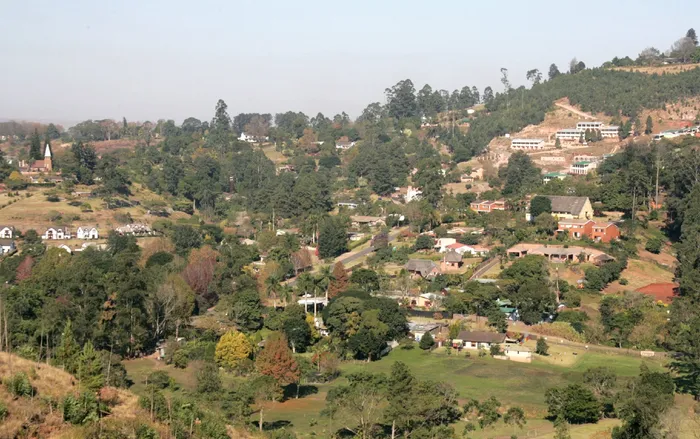
The housing deficit exceeds 50 million homes, leaving millions of families in informal settlements or inadequate housing.
Image: Khaya Ngwenya.
Private capital is not absent to fund infrastructure in South Africa, it is waiting.
This is as the country's infrastructure debate often begins with the same question: where will the money come from?
It is the wrong starting point, says Rachel Mukuze, the senior investment professional at Old Mutual Alternative Investments.
The real constraint is that too few infrastructure projects are prepared, structured and governed in a way that gives long-term investors the confidence to fund them,
Mukuze says: “South Africa does not only have an infrastructure funding gap. It has a bankability gap.”
That distinction is important because public-private partnerships, or PPPs, return to the centre of the national conversation, Mukuze says.
She says the 2026 Budget points to more than R1 trillion in public-sector infrastructure spending over the medium term.
“At the same time, the government has acknowledged persistent constraints: weak investment, project delays, cost overruns and delivery bottlenecks.”
The investment professional at the alternatives fund managers says PPPs can help address these challenges, but only if SA moves beyond the old misconception that they are simply another word for privatisation. “They are not.
“A PPP is a long-term contract between the state and a private partner to deliver an infrastructure asset or service. The state identifies the public need, sets the service standards and retains ownership or public oversight of the asset. The private partner may finance, build, operate or maintain the asset for a defined period. In return, it is paid according to agreed performance outcomes. If the asset does not perform, the private partner can be penalised.”
That is the point often missed in the public debate, Mukuze argues. She adds that a PPP is not the state stepping away. “It is the state using a structured funding and delivery mechanism to get infrastructure built and maintained. The asset does not become private simply because private capital or expertise is involved. In a well-structured PPP, the public interest remains central, but the delivery obligation becomes more disciplined.”
According to the Old Mutual Alternative Investments professional, South Africa has several sectors where this matters urgently. She says logistics is one.
“Weak rail and port performance affects exports, supply chains and the cost of doing business. Water is another, though it requires careful structuring because access to water is a constitutional right and municipal capacity varies widely. Municipal infrastructure may be the most important test of all.”
However, Mukuze says PPPs will not solve every infrastructure challenge.
She says they are not suitable for every project and they should never be treated as a replacement for public investment.
“But where they are properly prepared, transparently procured and governed with discipline, they can help turn infrastructure ambition into assets that are financed, delivered and maintained over the long term.”
Reflecting on Africa Day 2026, RB Property Group says across the continent, the housing deficit exceeds 50 million homes, leaving millions of families in informal settlements or inadequate housing.
The property investment company says in sub-Saharan Africa alone, approximately 230 million people live in slums, reflecting both rapid urbanisation and the urgent need for affordable, quality homes.
“Infrastructure tells a similar story: Africa requires an estimated $130–170 billion annually to meet its infrastructure needs, yet current spending falls far short- leaving a financing gap of over $60 billion each year. Millions lack reliable electricity, transport networks remain inadequate, and logistics costs are among the highest globally.”
This gap is not just a statistic; it represents opportunity. Every new home built, every road paved, and every power connection installed stimulates jobs, industries, and local economies, says Rob Buthelezi, chairman at RB Property Group.
It adds that Africa’s promise is tangible:
• Domestic capital exceeds $4 trillion, largely untapped for productive infrastructure and housing investments.
• Young, skilled professionals are driving innovation across construction, energy, finance, and digital sectors.
• Regional programs like AfCFTA and PIDA provide frameworks for cross-border projects, reducing risk and scaling opportunities.
By leveraging public-private partnerships (PPPs), blended finance and long-term leases or concessions, Africa can mobilise both domestic and international investment, Buthelezi says.
These instruments allow investors to share risk, gain predictable returns, and help governments meet critical development goals, he says.
The investment company says infrastructure and housing development create ripple effects across multiple sectors:
•Construction and materials: Cement, steel and local manufacturing see direct demand.
•Finance and real estate: Mortgage markets, REITs and long-term investment instruments gain scale.
•Energy and utilities: Power and renewable energy projects benefit from expanded infrastructure.
•Digital and commercial services: Reliable infrastructure boosts logistics, e-commerce and urban innovation.
With every home built, every road connected, and every utility upgraded strengthens communities while stimulating broad-based economic growth, Buthelezi says.
Independent Media Property