

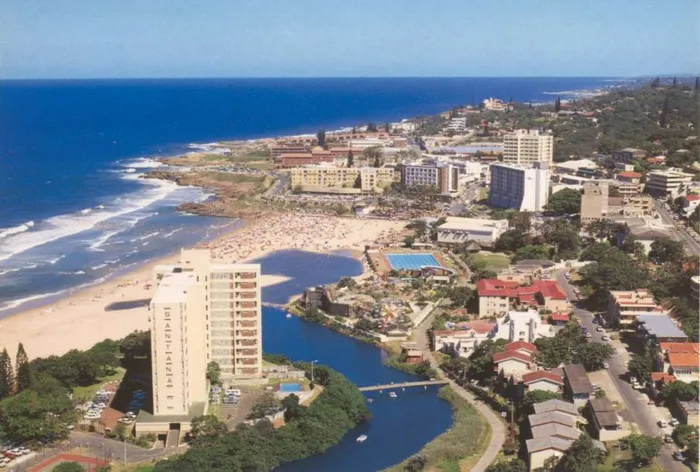
Margate has become a popular choice for home buyers, with bumper sales during Ea South Africans may soon feel renewed pressure on their wallets as economists warn that rising inflation could force the Reserve Bank to increase interest rates again.
Image: File
The domestic financial sector finds itself at a critical crossroads.
This is as the South African Reserve Bank’s (SARB) Monetary Policy Committee (MPC) prepares to deliver the May interest rate announcement on Thursday.
The early months of the year sparked optimism for a steady rate-cutting cycle, escalating geopolitical tensions in the Middle East and subsequent global oil shocks have rapidly shifted the narrative.
While South Africa's housing market continues its steady recovery trajectory, growing global uncertainty and persistent energy cost shocks look set to push the SARB toward a pre-emptive 25-basis-point interest rate hike.
If the prime lending rate ticks up to 10.50%, the impact will ripple across the property sector, affecting buyers and homeowners in different ways, says bond originator BetterBond.
A 10.50% prime rate is significantly lower than the 11.75% highs experienced during 2024
For existing homeowners, an interest rate increase will squeeze household budgets already strained by rising living costs. However, Bradd Bendall, National Head of Sales for BetterBond, says keeping perspective is vital.
“A 10.50% prime rate remains significantly lower than the 11.75% highs experienced during 2024. For example, on a R2 million bond, monthly repayments will still be roughly R1,700 cheaper than they were two years ago, offering some comfort to over-extended consumers,” he says.
“In contrast, aspirant first-time buyers face more immediate affordability hurdles. Upfront deposit requirements have already surged by 38% for this segment in April alone. Coupled with a higher borrowing cost, this tightening credit environment may delay their entry into the market."
"Consequently, we expect to see younger buyers pivot toward innovative strategies like rentvesting – renting in preferred lifestyle areas while purchasing affordable, high-yield investment properties elsewhere to get a foot on the property ladder.”
Crucially, adds Bendall, the property market enters this potential tightening cycle from a position of strength. Year-on-year home loan applications are up 6.2%, and average house prices have hit record highs – soaring 10.3% for first-time buyers (averaging R1.4m) and 19.9% for repeat buyers (averaging R1.7m).
“While a rate hike may temporarily cool short-term consumer enthusiasm, regional demand driven by semigration in the Western Cape and value-seeking buyers in Johannesburg’s south-eastern suburbs remains resilient. Controlled inflation will ultimately safeguard long-term property confidence,” he says.
As the market prepares for a potentially hawkish SARB announcement, the focus is squarely on how currency dynamics intersect with domestic monetary policy, says Harry Scherzer, CEO of Future Forex.
“The ongoing conflict in the Middle East has pushed global oil prices above $100 a barrel, testing South Africa's newly implemented 3.0% inflation target. In this volatile environment, aggressive central bank policy acts as a vital shield for the local currency.”
“By signaling a potential, defensive interest rate hike, the SARB reinforces the mechanics of the emerging-market carry trade. Maintaining a robust yield differential between South African interest rates and those of advanced economies - particularly a volatile US Dollar - is essential.”
Scherzer says the SARB’s upcoming decision will be less about internal economic overheating and more about building a fortress against external, supply-side volatility.
“Whether the MPC chooses to execute a tactical, pre-emptive hike or hold its ground to protect fragile domestic growth, it’s clear that stability is the ultimate currency.”
While a rate increase would demand immediate tightening from both consumers and corporate treasuries, the structural resilience demonstrated across the property and financial sectors over the past year suggests that South Africa’s economic foundations remain well-equipped to handle the turbulence ahead.
South Africans may soon feel renewed pressure on their wallets as economists warn that rising inflation could force the Reserve Bank to increase interest rates again, says REMAX Southern Africa.
The real estate agency says inflation surged sharply in April driven largely by higher fuel and transport costs, as well as rental inflation and rising utility costs.
Analysts are now expecting possible rate hikes in the coming months following the second round impacts of the ongoing geopolitical tensions, it adds
For homeowners, vehicle owners and anyone carrying debt, even a small rate increase can translate into hundreds or thousands of rand extra every month. That translates into:
•Higher home loan repayments
•More expensive vehicle finance
•Increased credit card interest
•Less disposable income each month
And because South Africans are already battling rising food, fuel and electricity costs, another rate hike could place even more pressure on household budgets.
According to Adrian Goslett, CEO and Regional Director of REMAX Southern Africa, while consumers cannot control inflation or interest rates, they can control how they respond.
“Small financial habits today can make a surprisingly large difference over time,” he explains.
Meanwhile, Samuel Seeff, chairman of the Seeff Property Group has made a strong call on the Reserve Bank to hold off on an interest rate hike this week despite the bump in inflation to 4% (from 3.1% in March).
He says the reality is that this is a short-term inflationary blip which was entirely expected given the petrol price increase resulting from the Middle Eastern war-induced spike in the oil price on top of the annual Eskom electricity hike. In fact, he adds, the inflation spike is not as high as we may have expected.
Independent Media Property