

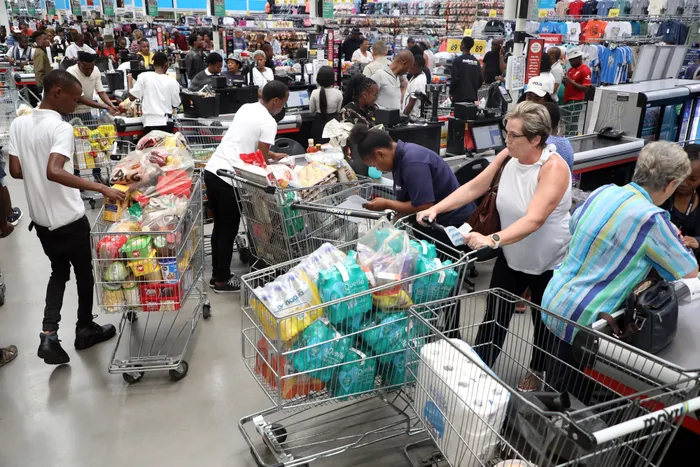
Retail confidence also surged, climbing 11 points to 43 as sales volumes held up against strong year-earlier levels, suggesting more resilient consumer spending heading into year-end.
Image: Oupa Mokoena | Independent Media
South Africa recorded a welcome rebound in business sentiment in the final quarter of 2025, with the RMB/BER Business Confidence Index (BCI) rising by five points to 44, its highest level this year and three points above the long-term average.
The improvement follows two consecutive quarters of decline and reflects a broad recovery across five of the six sectors surveyed. Only building contractors reported weaker sentiment.
RMB said the latest uptick represents a “green shoot” - promising, but still fragile - and stressed that continued structural reform and steady demand will determine whether business confidence strengthens sustainably.
According to RMB Chief Economist Isaah Mhlanga, the uptick is not a dramatic shift but marks a “meaningful turn in the right direction”.
“The key positive is that the improvement is broad-based. Even among building contractors, the only sector to dip this quarter, sentiment remains close to its long-term average,” Mhlanga said.
“While this is not a step-change, it is a meaningful turn in the right direction.”
The survey was conducted between 10 and 24 November, a period marked by several positive developments.
These include South Africa’s removal from the Financial Action Task Force grey list, an S&P credit ratings upgrade, a stable rand, and a well-received Medium-Term Budget Policy Statement.
The South African Reserve Bank’s 25-basis-point rate cut late in the survey period also supported sentiment in interest-rate-sensitive sectors such as vehicle sales, which surged by 12.5% year-on-year.
Economic activity has shown signs of stabilisation, with GDP figures released this week indicating the economy expanded 0.5% quarter-on-quarter, marking the fourth consecutive quarter of growth.
Manufacturing posted the largest rise in confidence, jumping 16 index points to 39, its highest level since 2022, following three consecutive quarters of declines. However, while sentiment improved, production levels did not increase in tandem.
Mhlanga noted that fixed-investment trends in the sector continue to look “a little better”, an encouraging sign for longer-term growth.
Retail confidence also surged, climbing 11 points to 43 as sales volumes held up against strong year-earlier levels, suggesting more resilient consumer spending heading into year-end. The rise brought confidence in line with averages recorded post-COVID.
Wholesale confidence improved by four points to 42, driven by stronger sales of non-consumer goods, although flat consumer goods sales could signal weaker momentum ahead as they remained unchanged.
New vehicle dealers saw confidence rise to 58, the only sector in which a majority of respondents reported satisfaction with business conditions.
Building contractors were the only laggards, with confidence falling seven points to 39, though activity levels in the sector improved. Despite the decline in sentiment, activity improved, which suggests that the sector continues to recover, but importantly the broader building sector continues to perform well.
The fourth quarter results also showed both purchasing and selling price inflation slowing, an encouraging sign that South Africa’s shift to a 3% inflation target may take hold sooner than expected, potentially supporting a more favourable interest-rate outlook.
Of the three provinces surveyed, only Gauteng saw sentiment remain in negative territory, with the Western Cape seeing a jump to 52 from 45 and Kwa-Zulu Natal the most optimistic, with a 23-point jump to a hefty 62 from 39.
While the broad-based rise in sentiment is a positive signal, Mhlanga cautioned against premature celebration.
“It is too early to celebrate, we need to see this tentative improvement being sustained for a couple of quarters,” he said.
Mhlanga said continued structural reform progress remains pivotal so that improved demand can support a sustained improvement in production, leading to faster capex spend down the line.
He said there are significant policy risk events in the next few years, both locally and globally, which could keep businesspeople on edge.
Mhlanga said the key areas to watch heading into 2026 include whether manufacturing output catches up with sentiment, whether retail spending maintains momentum, and whether building contractors recover from this quarter’s dip.
BUSINESS REPORT