

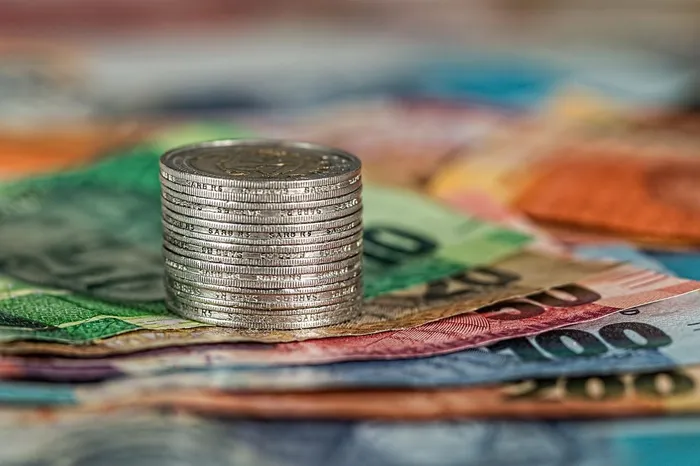
The domestic currency is ending the year on a high note as it surged to its highest in three years this week, strengthening to R16.71 against the US dollar, the highest since mid-August 2022, supported by higher prices of precious metals, particularly gold.
Image: Pixabay
The rand has emerged as one of the more resilient emerging-market currencies in a year marked by global volatility, benefiting not only from improving domestic fundamentals but also from sustained weakness in the US dollar.
This comes as the domestic currency is ending the year on a high note as it surged to its highest in three years this week, strengthening to R16.71 against the US dollar, the highest since mid-August 2022, supported by higher prices of precious metals, particularly gold.
The rand was also strengthened by consumer inflation softening to 3.5% in November from 3.6% in October, moving closer to the SA Reserve Bank's (Sarb) new 3% target and strengthening the case for a rate cut next month.
The rand has gained over 10% against the dollar so far this year, amid improving fiscal and monetary policy credibility and a lower inflation target, which is expected to bolster economic growth.
Increased investment in critical infrastructure and political stability are also supporting the positive outlook.
According to Adriaan Pask, chief investment officer at PSG Wealth, much of the rand’s recent strength cannot be viewed purely through a South African lens.
Instead, it reflects a broader shift in global capital flows as central banks reduce exposure to US Treasuries and increase their holdings of gold, a trend that has weighed on the dollar and supported emerging-market currencies.
“The rand has performed far better than many expected, and South Africa’s removal from the Financial Action Task Force (FATF) grey list in October has helped reduce perceived country risk,” Pask said.
“Alongside incremental improvements at some of our key State-Owned Enterprises, this has begun to build momentum that could carry through into 2026.”
While Transnet remains a constraint, early signs of recovery are emerging as volumes start to improve. The State-owned logistics group last week reported that rail volume performance increased by 4.4% to 81.4 million tons, compared with 78.0 million tons in the same period last year.
At the same time, investors are of the view that consistent communication from the Sarb on inflation and policy has strengthened institutional credibility, providing further support for the rand.
The dollar weakness, meanwhile, is being reinforced by developments in the United States.
Pask said concerns around stretched US equity valuations and shifting fiscal and monetary dynamics are shaping currency markets. Despite early rhetoric around fiscal discipline, US government spending has remained elevated, while pressure on the Federal Reserve (Fed) to ease monetary conditions has increased.
“While a compromised Fed is not ideal over the long term, it’s certainly more supportive for markets in the short term,” he said.
Easier monetary conditions and high fiscal spending make it difficult for investors to bet decisively against the US economy or risk assets, but they have also contributed to downward pressure on the dollar.
Market participants are now focused on key US inflation data on Thursday, with headline inflation expected to edge up to 3.1% from 3.0%.
Central bank decisions in Britain, Europe and Japan are also in focus. Britain is expected to cut interest rates, Europe to hold steady, and the Bank of Japan to hike rates to a three-decade high of 0.75%.
Wichard Cilliers, head of market risk at TreasuryONE, said the dollar index has remained largely unchanged ahead of these releases, adding to expectations that US monetary policy could remain supportive to rate cuts rather than restrictive.
“The rand is still helped by strong commodity prices, that helps our terms of trade,” Cilliers said.
Cilliers said the local currency continues to be supported by strong commodity prices, which are improving South Africa’s terms of trade.
Despite the firmer rand, foreign investors have yet to return meaningfully to South African equities. While bond inflows have resumed, equity flows remain muted, with most of the recent buying driven by domestic institutions.
Pask believes this could change if global capital begins to rotate away from expensive US assets into markets that have been overlooked for years.
“While valuations in the US are stretched, South African assets remain cheap, even after a 30% rally in the local market. Banks continue to pay out very decent dividends, they remain cash-generative, and free cash flow yields are still high,” Pask said.
“If we do see a US pullback, most markets will likely sell off in a panic, but we expect South African assets to rebound toward more normalised levels. All of this provides a solid underpin for South African assets as we move into 2026.”
BUSINESS REPORT