

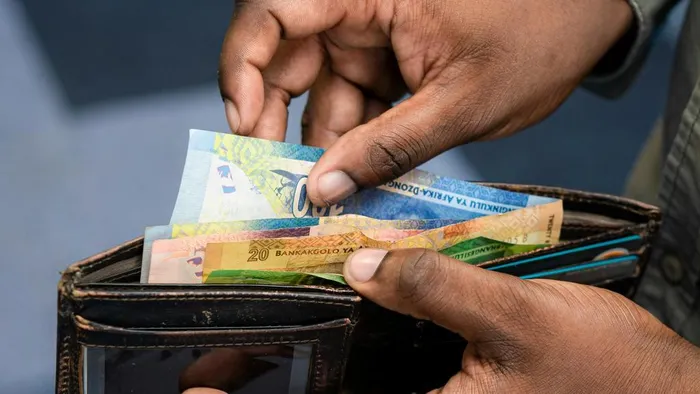
The local currency’s resurgence marks a dramatic turnaround from the weakness seen in late 2025 when it touched levels near R18.50/$, to its current range of roughly R16.00–R16.15/$, a recovery of about 17%.
Image: Pexels.com
The rand traded just below R16.00 to the US dollar on Tuesday, hovering at its strongest levels since 2022, as investors positioned ahead of Finance Minister Enoch Godongwana’s 2026 National Budget.
The local currency’s resurgence marks a dramatic turnaround from the weakness seen in late 2025 when it touched levels near R18.50/$, to its current range of roughly R16.00–R16.15/$, a recovery of about 17%.
The rebound has been driven by soaring gold and platinum prices, a softer US dollar, easing load shedding and renewed investor confidence under South Africa’s Government of National Unity (GNU).
Markets are now looking to the Budget for confirmation that fiscal consolidation remains on track.
Expectations are building that National Treasury will present a faster pace of deficit reduction, a widening primary surplus and stabilising public debt, all factors that could further entrench rand strength.
Wichard Cilliers, head of market risk at TreasuryONE, said the rand has been one of the standout emerging-market performers over the past year, buoyed by high precious-metal prices, political stability and tangible reform progress.
“After a 17% rally, however, some investors are starting to question how much further it can go,” Cilliers said.
He noted that options markets are showing increased demand for protection against rand weakness ahead of the Budget announcement.
“A strong fiscal update could support the currency and keep it near the R16.00 level or stronger,” Cilliers said.
“However, any disappointment — or renewed global risk aversion linked to trade tensions — could see the rand give back some of its recent gains.”
Frederick Mitchell, chief economist at Aluma Capital, said this year’s Budget is being delivered in a markedly different environment to previous years.
“For the first time in over a decade, Treasury is negotiating from a position of emerging strength rather than desperate defence,” Mitchell said, citing four consecutive quarters of GDP growth, two primary budget surpluses and improved electricity supply conditions.
Another key issue shaping rand sentiment is how government allocates an estimated R100 billion in revenue overrun, largely driven by elevated commodity prices, improved tax compliance and reserve drawdowns.
Ekow Eghan, EY Africa tax leader, said the debate is less about how much revenue is available and more about what signal government sends with its allocation decisions.
“The real question is what government does with the excess collections and what that signals about fiscal discipline,” Eghan said.
Treasury is effectively weighing three options: directing funds to urgent service-delivery pressures such as municipal water crises; expanding household support measures in an election-sensitive year; or prioritising balance sheet repair by reducing national debt, which currently consumes roughly 22 cents of every rand collected in debt-servicing costs.
“The 2026 budget must break this downward spiral of service failure and revenue erosion,” said Dr Clement Moyo, economist at Ntiyiso Industrialisation Consulting and Thabiso Ndebele, managing director, Ntiyiso Revenue Consulting.
“Next, the budget must recognise that municipalities are the growth engine, not a footnote.”
A decisive move toward debt reduction, analysts argue, would likely provide the strongest structural support for the rand.
Lower debt levels could reduce sovereign borrowing costs, compress bond yields and ease the risk premium embedded in the currency. A firmer rand, in turn, helps curb imported inflation, particularly fuel and food prices, offering indirect relief to households.
Markets are acutely aware that the current revenue boost is cyclical rather than structural.
Lizl Budhram, head of advice at Old Mutual Personal Finance, said consensus ahead of the Budget points to a relatively taxpayer-friendly stance, with little appetite for politically sensitive measures such as a VAT hike.
Instead, Budhram said Treasury may rely on bracket creep, fuel levies and excise duties to bolster revenues quietly.
“Election-year pressures and improved revenue collections should push unpopular tax decisions, such as a hike in VAT, further down the road,” she said.
“Thus constrained, National Treasury is expected to rely on broadening the tax base and possibly again the so-called bracket creep to swell its coffers this year.”
For the rand, the broader backdrop remains supportive: contained inflation near 3%, prospects of further interest rate cuts from the South African Reserve Bank, and stabilising debt-to-GDP projections below 80%.
BUSINESS REPORT