

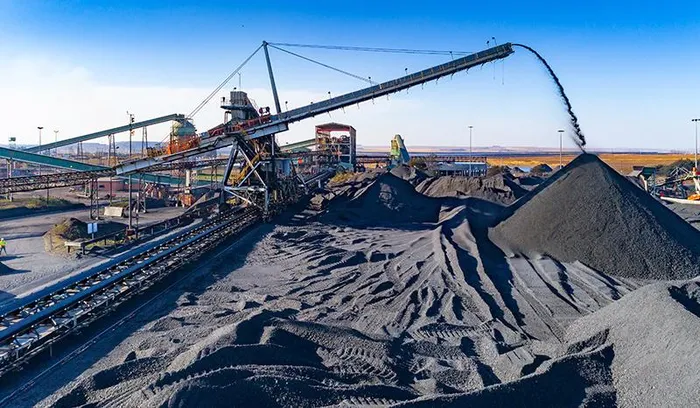
The Goedgevonden JV is a major South African open-cut coal mining operation near Ogies in Mpumalanga, formed between ARM Coal and Glencore (formerly Xstrata).
Image: Supplied
The Supreme Court of Appeal (SCA) has delivered a significant ruling in favour of a coal mining joint venture involving Glencore Operations SA and African Rainbow Minerals (ARM) Coal, overturning a decision by the South African Revenue Service (Sars) that had denied millions in diesel fuel levy refunds.
The unanimous judgment, penned by SCA Judget President Justice Mahube Molemela and handed down last week, centres on whether the Goedgevonden Joint Venture (JV) was entitled to claim diesel rebates under Section 75(1A) of the Customs and Excise Act.
The Goedgevonden JV is a major South African open-cut coal mining operation near Ogies in Mpumalanga, formed between ARM Coal and Glencore (formerly Xstrata). The mine produces thermal coal for export and domestic markets, with ownership split 51% (ARM Coal) and 49% (Glencore).
At stake was not only the interpretation of tax legislation but also broader questions about how joint ventures are treated under South Africa’s mining and fiscal frameworks.
At the heart of the dispute was a provision requiring that diesel refunds for mining activities be claimed by a “person in possession of the necessary authorisation” under the Mineral and Petroleum Resources Development Act (MPRDA).
Sars had argued that because the mining right was registered in Glencore’s name, and not in the JV’s, the JV did not qualify for refunds. Initially, Sars disallowed about R5.1 million in refunds following an audit.
However, during internal appeal proceedings, the National Appeal Committee (NAC) escalated the claim dramatically, seeking to recover over R82.9m.
The High Court upheld Sars’s position, agreeing that the JV lacked the required mining right and was therefore ineligible for the rebate. But the SCA took a different view.
In a detailed judgment, the court found that while the mining right was formally registered in Glencore’s name, it was explicitly structured to be exercised through the joint venture with ARM.
The court emphasised that the JV agreement was not merely incidental but formed an integral part of the mining right itself, having been considered and incorporated by the Minister when granting the right.
“The mining right authorised mining only through the joint venture,” the court held, concluding that the JV was, in substance, the entity conducting authorised mining operations.
This “substance over form” approach proved decisive. The court ruled that the JV did, in fact, meet the requirements of the law and was entitled to the diesel refunds.
Importantly, the SCA also criticised Sars for failing to properly exercise its discretion under another provision of the Act, which allows refunds to be paid to a third party on “good cause shown.”
The court found that Sars had adopted an overly rigid interpretation, ignoring the broader purpose of the legislation to support legitimate mining activity.
The judgment noted that the JV had purchased diesel, paid the levies, and used the fuel exclusively for lawful mining operations under a valid authorisation. Denying the refund in such circumstances would undermine the very purpose of the rebate scheme.
On procedural grounds, the court also found fault with the NAC’s handling of the case. It ruled that the committee lacked jurisdiction to hear the appeal once the amount escalated beyond its threshold and that it acted unlawfully by introducing new grounds for disallowing the refund during the appeal process.
Furthermore, the SCA held that the NAC had no authority to increase the amount payable from R5.1m to R82.9m, describing this as an improper transformation of an appeal process into a fresh assessment.
While the court acknowledged a four-year delay in finalising the matter, it did not consider this sufficient to invalidate the decision.
Ultimately, the SCA upheld the appeal, set aside the High Court’s ruling, and declared that the Goedgevonden JV complied with the relevant legal requirements. Sars was ordered to pay the legal costs, including those of two counsel.
The ruling is thought to have far-reaching implications for the mining sector, particularly for joint ventures structured to meet Black Economic Empowerment requirements.
It clarifies that such entities can qualify for tax benefits even if they are not the formal holders of mining rights, provided they are substantively authorised to conduct mining operations.
BUSINESS REPORT