

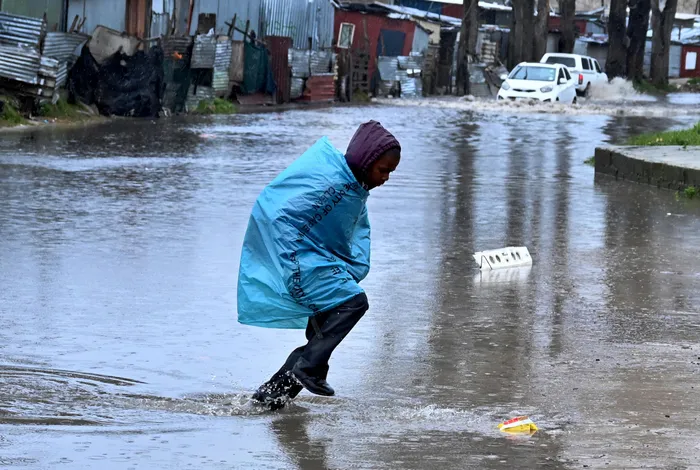
In its Second Party Opinion on South Africa’s Sustainable Finance Framework on Tuesday, S&P highlighted that the country is already vulnerable to a wide range of physical climate threats.
Image: Ayanda Ndamane / Independent Newspapers
South Africa faces escalating exposure to climate-related risks that could weigh on its economic stability and long-term development, according to a recent assessment by S&P Global Ratings, which underscored both the urgency of climate adaptation and the gaps that remain in the country’s response framework.
In its Second Party Opinion on South Africa’s Sustainable Finance Framework on Tuesday, S&P highlighted that the country is already vulnerable to a wide range of physical climate threats.
“South Africa is vulnerable to physical climate risks, with water and food insecurity, alongside natural disasters such as droughts,” the agency noted, pointing to structural challenges that are likely to intensify as global temperatures rise.
S&P warned that “physical climate risks can affect many economic activities,” adding that increasing greenhouse gas emissions will exacerbate the frequency and severity of climate shocks.
For an economy already grappling with infrastructure constraints and inequality, this raises concerns about resilience across key sectors such as agriculture, water supply, and energy.
The report also distinguished between physical risks—such as extreme weather events—and transition risks associated with the global shift to a low-carbon economy.
While South Africa has made policy progress, S&P suggested that the country’s exposure to both forms of risk remains significant. It noted that climate considerations were “intertwined, including with climate transition and physical climate risks,” highlighting the complexity of balancing economic growth with decarbonisation.
S&P acknowledged that the government has taken steps to strengthen its climate policy architecture.
The introduction of the Climate Change Act and the development of a Climate Risk and Vulnerability Framework are cited as important milestones. These initiatives aim to provide “a standardized approach for assessing climate risks and vulnerabilities, enabling better climate” planning and response.
However, the agency pointed out that implementation gaps persist. In particular, it flagged the lack of a comprehensive, mandatory system for assessing physical climate risks across projects.
“We note that a dedicated compulsory assessment framework for physical climate risks…has not yet been developed,” S&P said, warning that this could limit the effectiveness of climate resilience efforts.
This shortfall is especially relevant for infrastructure and property development, where exposure to risks such as flooding, heat stress, and water scarcity can have long-term consequences.
Without consistent risk assessment standards, investments may fail to adequately account for future climate conditions, potentially leading to higher costs and asset vulnerability down the line.
Last week, the Development Bank of Southern Africa (DBSA) announced it will invest R300 million in the $750 million (around R12 billion) Infrastructure Climate Resilient Fund (ICRF), in a bid to accelerate climate adaptation and sustainable infrastructure across Africa.
The Fund, which is managed by African Finance Corporation Capital Partners (ACP), is designed to embed climate resilience into infrastructure projects from conception through to operation—an approach increasingly seen as essential as Africa faces intensifying climate shocks.
Meanwhile, S&P recognised the role that sustainable finance can play in addressing these challenges.
Climate adaptation projects, it said, “are essential for building resilience against climate-related risks and protecting” communities and economic assets. Investments in climate-resilient infrastructure, water management, and disaster risk reduction could significantly enhance South Africa’s ability to withstand environmental shocks.
Yet even within green and transition projects, S&P cautions that risks remain. For example, while initiatives such as low-carbon transport and renewable energy are critical for reducing emissions, they may still carry environmental trade-offs.
The agency noted that such projects “entail climate and environmental risks and impacts,” including issues related to resource use and land management.
Ultimately, S&P’s assessment presents a mixed picture as South Africa’s policy direction and sustainable finance framework demonstrate a clear commitment to addressing climate change, but the scale of the risks—and the gaps in implementation—suggest that more needs to be done to safeguard the economy.
BUSINESS REPORT