

The answer is not a shopping list of buzzwords. It is a small set of choices that change how you win work, deliver it, and operate assets over time.
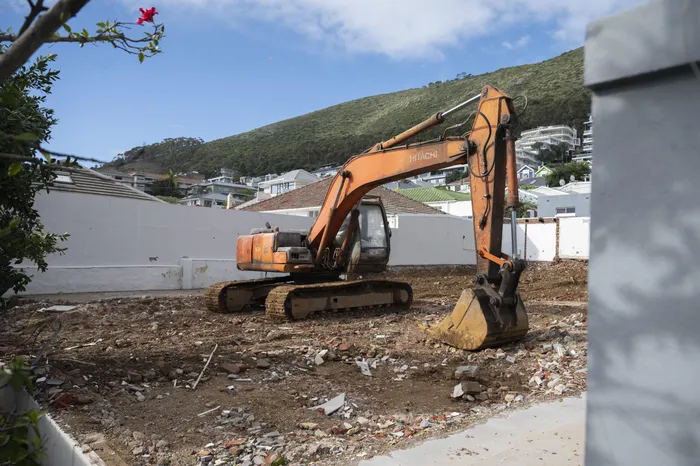
Image: Armand Hough/Independent Newspapers
When I speak with executives across the built environment, I hear the same question in different forms.
What should we prioritise next year so that we do not simply survive, but create an advantage? The answer is not a shopping list of buzzwords.
It is a small set of choices that change how you win work, deliver it, and operate assets over time.
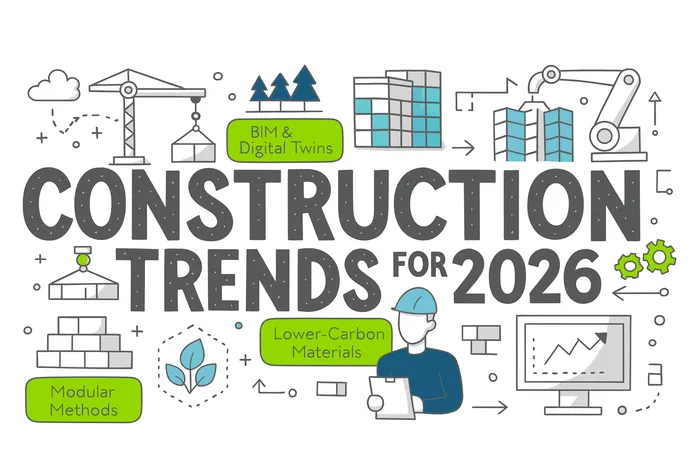
Modular and off-site build move from “interesting” to “useful.”
Factory-built components are no longer a novelty. In our market, modular methods reduce on-site time and waste, and limit disruption in dense urban areas.
They also help manage labour pressures by moving repeatable work into controlled environments.
The firms that benefit are not those that talk about modular; they are the ones that design for it early, align crane and transport logistics, and build supplier capability close to the site.
BIM adoption is widening, and the shift to data-rich models and digital twins is accelerating. That matters because decisions are increasingly made on total lifecycle value, not just capex.
Predictive scheduling, cost and risk models, and better field data help leaders commit to dates and margins with more confidence.
In the South African context of volatile inputs and tight programmes, digital maturity is less about prestige and more about repeatability.
In the South African context of volatile inputs and tight programmes, digital maturity is less about prestige and more about repeatability.
Image: Supplied.
In the South African context of volatile inputs and tight programmes, digital maturity is less about prestige and more about repeatability.
Image: Supplied.
More projects are embedding sensors and analytics during construction rather than retrofitting later.
The prize is lower running costs, better occupant experience, and operational resilience.
In our region, where many assets are under-maintained, the opportunity is significant.
The practical move is to align early with owners and facilities teams on what data matters, then integrate those requirements into scope and sequencing.
Automation does not replace the human in the loop.
It raises the bar on the skills we need.
Teams that can manage robotics, assemble modular systems, and read data from site sensors will outperform those that treat these as side projects.
The immediate step is a workforce plan that adds digital literacy and off-site capability to traditional trades, supported by focused training.
Floods, storms, and heat are shaping design and material choices.
For South Africa and the broader region, infrastructure backlogs and climate risk mean resilience work will grow, particularly as energy and water constraints bite.
Bringing risk assessment into early planning and selecting systems for local conditions will reduce lifecycle cost and claims pain later.
First, start earlier. If modular is on the table, design for it. If smart systems will matter in operations, define the data and interfaces before concrete is poured.
If lower-carbon materials will be a tender requirement, engage the supply chain now.
These are choices that create value in pre-construction, not line items to bolt on at the end.
Second, budget for capability, not experiments. A pilot that never scales has little value.
Budget for the tools you will actually use on live work: model coordination linked to schedules, drone and site telemetry where it improves measurement or safety, and the training that lets supervisors and foremen use these tools confidently.
Third, localise the global playbook. Importing trends without adapting them to our logistics, regulatory realities, skills base and climate is a fast way to lose money.
The winners adapt methods to South African constraints and make pragmatic progress.
Finally, a word on the pipeline.
Trends only matter if they translate into work. Knowing which projects are moving, who the role players are, and where the real specifications are being set remains the difference between hoping and planning. That is the gap we built Databuild to close.
As we look to 2026, the strategic move is simple. Invest in the few capabilities that change outcomes.
Focus less on novelty and more on what reliably wins work, delivers it well, and leaves an asset that performs. That is where the advantage lies, and it is within reach.
Morag Evans, CEO of Databuild.
Material choices are moving beyond aesthetics and unit price. Clients are asking about embodied carbon, durability and circularity, and regulators are tightening expectations.
For local contractors and developers, this will be a way to defend margins by offering designs that cost less to operate and last longer in our climate.
Early engagement with suppliers to secure low-carbon options and to track metrics will separate leaders from followers.

Morag Evans, CEO of Databuild.
Image: Supplied.
BUSINESS REPORT