

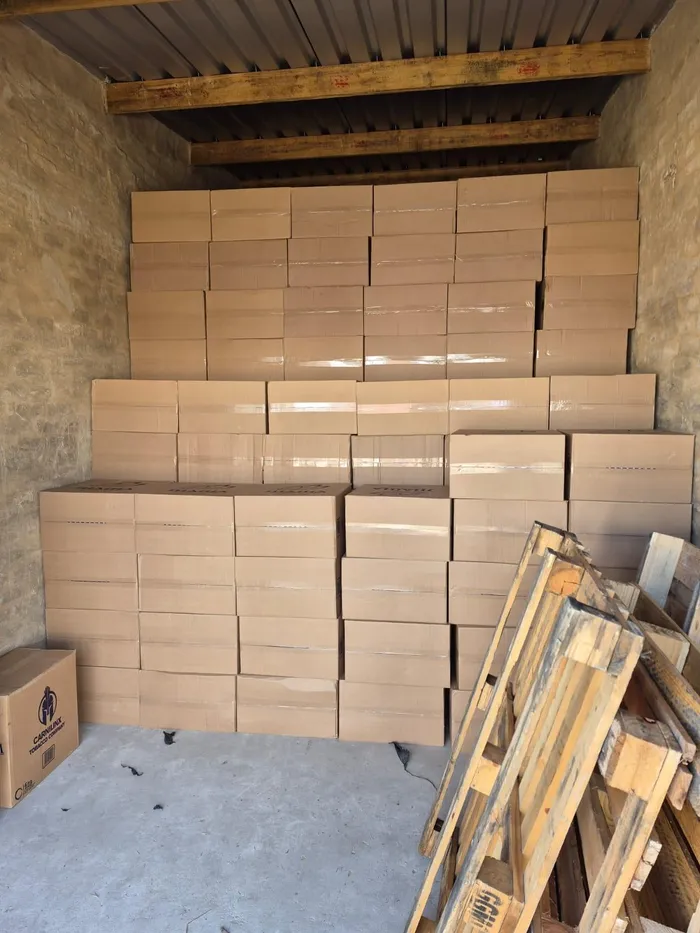
R10 million worth of illicit cigarettes were found hidden inside a truck in this file photo.
Image: The Hawks
A Treasury official in his interaction with the media during the question and answer sessions, said that combating the illicit economy was a work in progress. He said previously the agencies charged with combating the illicit trade in alcohol and tobacco had operated in silos, but that there was now more inter-agency cooperation, but we would have to wait to see the results.
Already, the use of surveillance cameras at tobacco factories had yielded results, but more was expected going forward.
In his media briefing, Finance Minister Enoch Godongwana said R1 billion each had been allocated to the police and defence force respectively to combat the illicit economy by targeting the organised crime syndicates.
The illicit economy is estimated to be worth R40 billion, but this is just a guess as it does not report any figures to state entities. The Consumer Goods Council of South Africa (CGCSA) has a far higher estimate at 10% of the economy or R760 billion.
The Consumer Goods Council of South Africa (CGCSA) has established Illicit Economy Task Forces to combat this crisis through public-private partnerships, improved enforcement, and policy advocacy, but warning the public of the health risks of illegal alcohol and pharmaceutical drugs.
Around three out of every four cigarettes sold in South Africa are illegal, which means that the government loses between R18 billion and R28 billion a year in tobacco taxes. Legitimate manufacturers cannot compete with smuggled cigarettes that cost between R10 to R20 a pack. Legitimate businesses have to pay at least R26.22 per pack in tax. The result is that thousands of farm and factory workers have lost their jobs, and their dependents face hunger.

Budget 2026
Image: logo
The liquor industry estimates that illicit alcohol sales now makes up close to a fifth of consumption. This means a revenue loss of at least R16 billion a year. As the Consumer Goods Council of South Africa has warned, this exposes consumers to unsafe products, which could lead to deaths.
The gains from the illicit economy fuels crime and corruption, which in turn undermines the rule of law. Previous academic studies have shown that the rule of law is the single most important factor in successful economies.
Corruption Watch noted on 10 February that South Africa’s anti-corruption efforts are still found wanting. This is because South Africa stagnates with a score of 41, the same as in 2024, on the Corruption Perceptions Index. This below the global average of 42.
Corruption Watch said countries that have shown improved scores over time have largely benefitted from sustained efforts by political leaders and regulators to institute broad legal and institutional reforms and welcomed the current inquiries into corruption in the criminal justice system. It warned that those countries with persistently low or declining scores usually indicate limited or eroding democratic checks and balances, compromised justice systems, undue influence over political processes and a failure to safeguard civic space, which is why crime seems so rampant in South Africa.
When corrupt officials and politicians continue to abuse their power, the frequent result is poor quality services and fiscal crises, as public funds are mismanaged, contributing to enduring poverty, rising inequality and worsening living standards for millions of people. The result is a rise in service delivery protests and citizens taking the law into their own hands and meting out vigilante justice as the police are not doing their job.
BUSINESS REPORT