

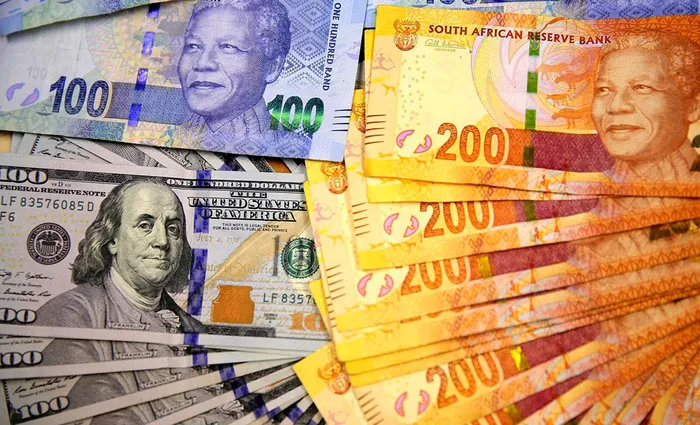
The Financial and Fiscal Commission (FFC) has warned that the South African economy is showing signs of stagflation.
Image: Reuters
The Financial and Fiscal Commission (FFC) has warned that the South African economy is showing signs of stagflation.
This is despite the decline in inflation, which has contributed to an improved financial environment, including moderating interest rates, a strengthening currency, and a reduced risk premium on South African debt.
In a post-budget presentation to Parliament, FFC Head of Research Chen-Wei Tseng said these developments should not be misconstrued or overstated as evidence of substantive economic reform or robust growth.
“Unfortunately, our real GDP growth in the third quarter of 2025 was only 0.5% annualised, as we keep reminding and checking ourselves. While nominal GDP growth was 2.3%, these data points strongly suggest the economy is exhibiting features of stagflation, characterised by stagnant growth. Accordingly, inflation — even if numerically low, as we’ve seen, under 4% or so — should therefore still be regarded as elevated in the current context,” Tseng said.
He said the economy reached stagflation after years of wasteful fiscal expansion and fruitless borrowing directed toward unproductive expenditure. This resulted in escalating debt-servicing costs that generate no economic returns and consequently lead to a stagnant economy.
The FFC meanwhile noted that while the lower inflation achieved in recent years has contributed significantly to the more favourable macroeconomic outlook in the budget, its empirical analysis shows a divergence between real and nominal economic growth in the third quarter of 2025, correlating with a slight uptick in inflation.
It said this suggests that growth was largely driven by price increases rather than actual increases in economic production.
“Therefore, the Commission maintains that the domestic growth outlook should be met with caution, especially given that real growth remains subdued below 1% at the moment,” Tseng said.
It added that key factors of production — namely employment, capital, and total factor productivity — reveal that underlying productivity in the economy remains low and below what is needed to strengthen economic performance and the growth outlook.
“In addition, the empirical results provide evidence of persistently near-zero levels of capital stock contribution to real growth in the economy. The Commission reiterates that this requires attention, particularly in terms of maintaining neglected infrastructure,” it said.
On the macroeconomic forecasts, the FFC noted that Treasury estimates the economy will grow at 1.6% in 2026, rising to 2.2% in 2028.
It said its own growth forecasts estimate that real GDP growth will trend downward over the medium term, providing a less optimistic outlook.
“The Commission remains cautious because the estimated growth forecasts are below the threshold needed to meaningfully tackle unemployment and expand South Africa’s tax base. Reversing this potential downward trend will require eliminating redundancies in fiscal spending, reallocating existing spending towards more productive investments, and ensuring these reallocations are strategic and not duplicative,” the Commission said.
On the fiscal policy outlook, the FFC said the 2026 budget expects a declining budget deficit over the medium term, along with the debt-to-GDP ratio stabilising.
“However, the Commission notes that debt-service costs — importantly, the direct charge on the National Revenue Fund — continue to increase nominally, from R420.6 billion last year to R469.3 billion in 2028/29, thereby directly reducing the fiscal envelope in South Africa.
The analysis on debt redemption shows that for the 2026/27 financial year, total maturing debt amounts to R131.4 billion, which is 6.3% of total revenue.
Notably, although debt redemptions are subject to renegotiation, they are currently expected to increase to R274.2 billion, or 13.2% of revenue, in 2027/28.
“Servicing public debt remains a significant challenge to restoring fiscal credibility in South Africa and continues to pose a risk that must be properly managed to prevent a debt spiral or liquidity challenges.”
The FFC outlined two scenarios for fiscal consolidation — either over a five-year period or a three-year period — anchored on projected revenue streams and designed to achieve a balanced main budget position.
The short-term fiscal consolidation path is very stringent and requires capping expenditure growth at a very low rate of 0.7% for three years in order to achieve a balanced budget by 2028/29.
“Alternatively, the Commission also calculates a more medium-term fiscal consolidation path, where expenditure growth remains capped at 3.1% per year over a five-year period until 2030/31,” the Commission said.
BUSINESS REPORT