

Sacci attributed the March decline largely to external pressures linked to the ongoing conflict in the Middle East, which has contributed to increased volatility in key economic indicators.
Image: Alex Wong/Getty Images/AFP
South African business confidence weakened in March, with economists warning that rising geopolitical tensions in the Middle East are beginning to filter through to the domestic economy.
The South African Chamber of Commerce and Industry (Sacci) Business Confidence Index (BCI), released on Tuesday, declined by 3.3 index points to 131.3 in March, marking the second drop recorded this year.
Despite the monthly decline, the index remained significantly higher than a year earlier.
Sacci noted that the BCI stood 7.8 points above its March 2025 level, with the index averaging 132.4 in the first quarter of 2026 compared to 123.1 in the same period last year.
The latest dip follows a mixed start to the year, with the index edging down by 1.8 points in January before rebounding to 134.6 in February.
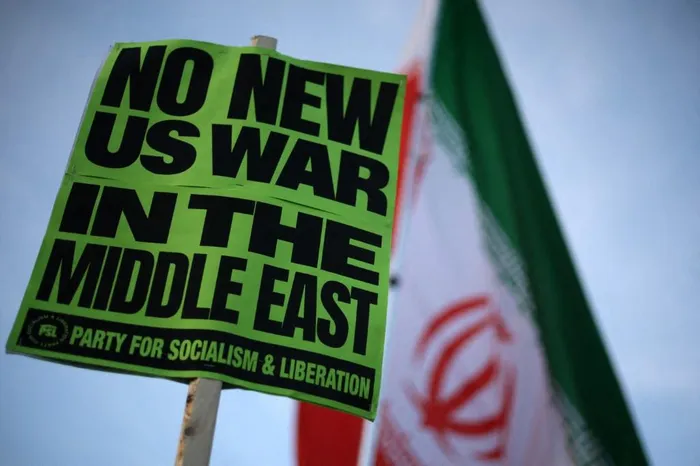
Sacci attributed the March decline largely to external pressures linked to the ongoing conflict in the Middle East, which has contributed to increased volatility in key economic indicators.
“Between February and March 2026 (month-on-month) the decline in the BCI was mainly the result of a more volatile and weaker rand exchange rate, lower share prices on the JSE, the lower global price of precious metals, and decreased volumes of merchandise imports,” said Sacci.
The Chamber added that these developments were primarily driven by exogenous shocks stemming from the war in the Middle East, particularly its impact on global energy markets.
However, some positive factors helped cushion the overall decline. Increased new vehicle sales, a rise in overseas tourism, and lower inflation provided support to business sentiment during the month.
On a year-on-year basis, Sacci highlighted several contributors to improved confidence, including stronger inbound tourism, higher precious metal prices, increased vehicle sales, and gains in JSE all-share prices.
At the same time, the organisation flagged ongoing risks facing businesses in 2026, including weaker foreign trade volumes, subdued retail activity, higher energy costs, sluggish manufacturing output, and declining real values of building plans approved.
Sacci said the global economy in March was significantly affected by the Middle East conflict, particularly through its impact on crude oil supply and pricing. While South Africa has been somewhat cushioned by elevated precious metal prices and a relatively resilient rand, the broader economic effects remain a concern.
The Chamber said that the exceptional increase in business confidence towards the year-end in 2025 and into the 1st quarter of 2026 presents an important opportunity to convert positive business sentiment into real economic activity.
“South Africa is in the fortunate situation that its business sentiment is to some degree hedged against unique negative events. This benefit may however create a false impression where the real economy shows signs of stagnation,” it said.
Economists echoed these concerns, noting that the index is beginning to reflect early signs of global economic strain.
Prof Raymond Parsons, economist at the North-West University Business School, said the BCI is capturing the initial negative effects of the global energy crisis linked to the Middle East conflict.
“On the positive side, the initial setback to business sentiment may well be temporary, and the economy nonetheless also has resilience to draw upon in adjusting to current external economic shocks,” he said.
Parsons added that uncertainty around growth and inflation has increased, with future confidence likely to depend on how long the conflict persists, potential interest rate decisions by the South African Reserve Bank, and government interventions to ease cost-of-living pressures.
“It will also be influenced by whatever supportive measures are introduced by the recently appointed Ministerial task team to mitigate the negative impact on the cost of living, fuel and food security.”
Professor Waldo Krugell, a North West University Business School economist, said the latest data represents some of the first clear signs of negative global developments feeding into domestic indicators.
“The impact of the US and Israel's war with Iran first hit the exchange rate, JSE and oil prices and that shows in the index,” Krugell said.
“The second-round impacts on the cost of imported products and inflation in South Africa more broadly, are still in the pipeline. It shows that we cannot escape the consequences of global events.”
Meanwhile, Unisa economist Dr Eliphas Ndou warned that weakening confidence could undermine recent macroeconomic gains.
“The index will remain susceptible and increasingly sensitive to uncertainty linked to oil price developments in the Middle East, marginal inflationary pressure and a weaker exchange rate,” Ndou said.
“The index, as a leading indicator of economic activity, points to an impending slowdown in economic growth.”
BUSINESS REPORT