

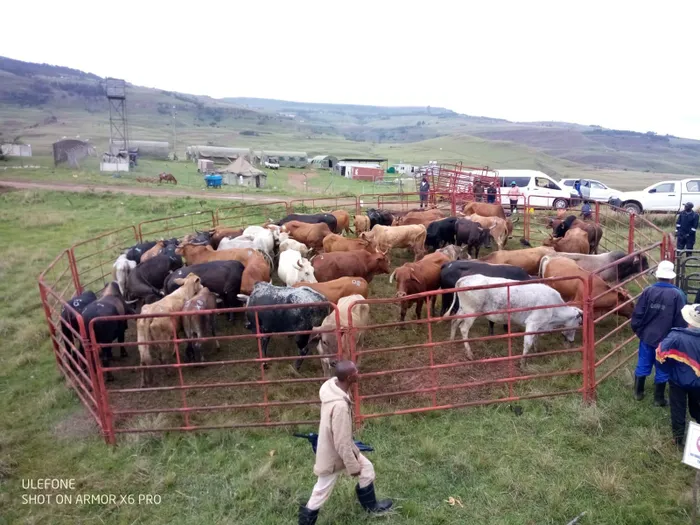
As foot-and-mouth disease wreaks havoc in South Africa's rural heartlands, communal farmers face the harsh reality of disrupted livelihoods and compounded challenges. Can intervention efforts restore their income and empower their communities in the long run?
Image: Supplied.
In the heart of South Africa's rural landscapes, the haunting effects of foot-and-mouth disease (FMD) are breaking the spirit of communal farmers who depend on their livestock for survival.
With around 50% of the nation’s estimated 14 million cattle owned by these emerging farmers, the stakes couldn’t be higher.
Their voices remain largely unheard, as they navigate through the harrowing restrictions that the disease imposes on their livelihoods.
Since November of last year, Sarah Frazee, CEO of Meat Naturally Africa (MN), has witnessed firsthand the devastating fallout from FMD.
The organisation, which facilitates mobile cattle auctions across the Eastern Cape and KwaZulu-Natal, was forced to cancel all 27 of its planned auctions.
This shift came at a critical time, as farmers relied on these events to sell their livestock and generate income.
“From December 2025 to March 2026, we could only facilitate six direct sales of checked cattle, generating R1.6 million for the farmers,” Frazee said.
She said it was a stark contrast to the more than R20 million they typically earn during the same period.
“The impact has been overwhelming for them—without the mobile auctions, farmers trek for days to reach the nearest auction, risking the health of their animals along the way,” Frazee added.
On April 15, Minister of Agriculture John Steenhuisen announced that early data from the mass FMD vaccination strategy is showing promising outcomes.
Frazee, representing the communal farmers, underscored the dire need for timely state support to expedite the vaccination process.
At a recent meeting in Durban attended by various stakeholders in the agricultural sector, MN was the sole organisation representing communal interests.
“They shared a vaccination schedule prioritising the districts where we operate, which was reassuring,” Frazee said.
With plans to resume auctions in late April, she remains hopeful but acknowledges the precarious nature of the situation as winter approaches.
Encouragingly, MN’s unique approach promotes not just livelihood enhancement, but also environmental stewardship. By employing regenerative grazing techniques through the 'Pioneering innovations for sustaining healthy communal grasslands' project, backed by the WWF Nedbank Green Trust, MN is equipping farmers to manage their rangelands sustainably.
Poovi Pillay, Executive Head of the Social Impact Unit at Nedbank, emphasised the importance of these efforts, stating that while addressing rangeland degradation is crucial, uplighting farmer livelihoods remains the priority.
“In many cases, poor management threatens both their livelihoods and local biodiversity,” Pillay said.
Frazee highlighted that local livestock health and market access can enable communal farmers to benefit directly from environmental restoration efforts.
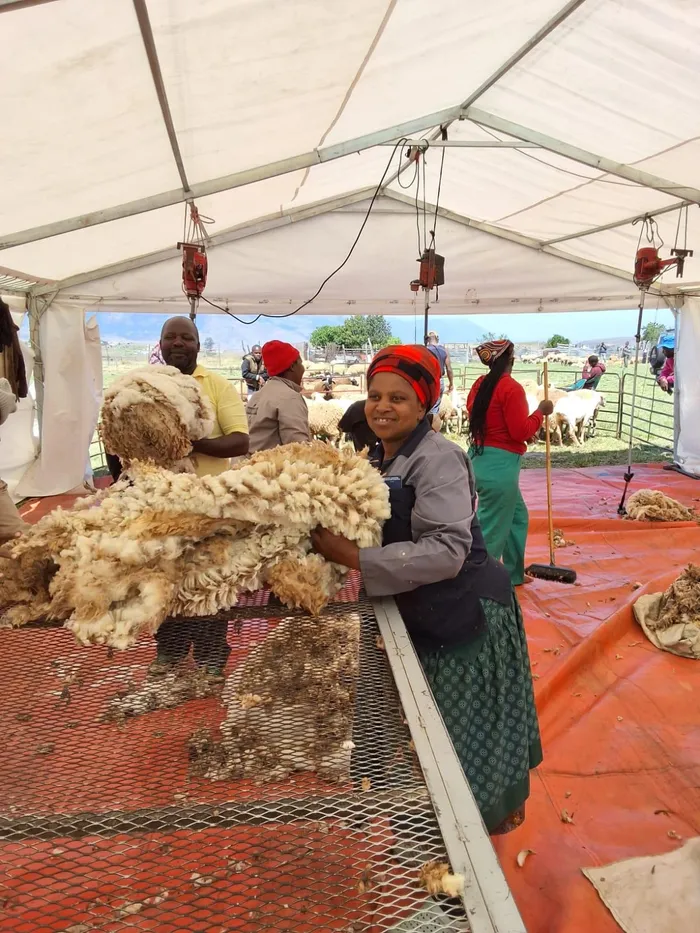
The recent wool season has provided a silver lining, as communal farmers have taken advantage of competitive prices from Fleece Naturally, a MN initiative.
Image: Supplied.
“When farmers see their livestock thrive and fetch fair prices, they can appreciate the role they play in sustaining their land,” she added.
The recent wool season has provided a silver lining, as communal farmers have taken advantage of competitive prices from Fleece Naturally, a MN initiative.
The organisation is also empowering women to become wildfire prevention champions, aided by training funded through the WWF Nedbank Green Trust.
This initiative nurtures a community-focused approach to land management, as educational outreach is targeted towards schools, tackling the underlying causes of wildfires.
Further, MN has brokered a partnership with Sibuyi Abattoir within the Kruger National Park buffer zone, enhancing local access to quality poultry, and creating pathways for circular economies that keep financial resources within communities while bolstering food security.
"Our goal is to help communal farmers not only survive but thrive. When we combine innovation with community-led solutions, we lay the foundation for resilience and prosperity in communal farming,” Frazee said.
Follow Business Report on Facebook, X and on LinkedIn for the latest Business and tech news.