

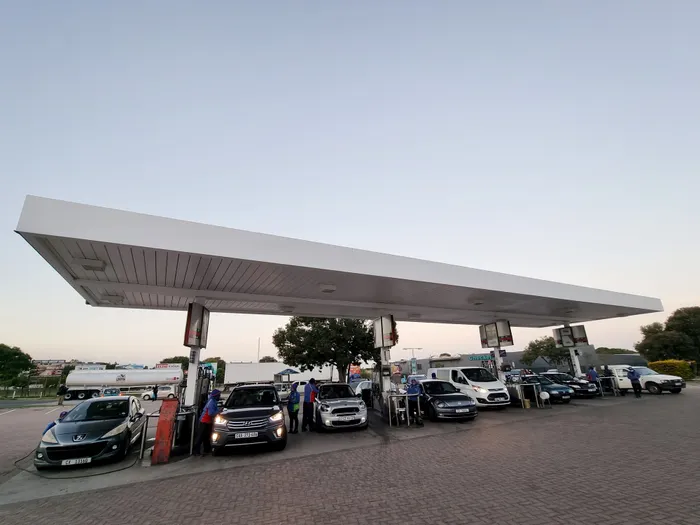
Stats SA's release of consumer price inflation (CPI) on Wednesday indicated a slight increase to 3.1% in March 2026 from 3.0% in February 2026.
Image: David Ritchie / Independent Media
Consumer price inflation (CPI) data released on Wednesday indicated a slight increase to 3,1% in March 2026 from 3,0% in February 2026. Economists have warned that the slight increase is calm before the storm and inflation could spike from This month due to rising oil and fuel prices caused by Middle East tensions.
Stats SA said that annual consumer price inflation was 3,1% in March 2026, up from 3,0% in February 2026. “The CPI increased by 0,6% month-on-month in March 2026.”
John Loos, an independent economist, said that Headline CPI (Consumer Price Index) inflation in March accelerated slightly. “The Housing and Utilities CPI was the biggest single driver of overall CPI inflation, increasing its contribution due to a residential rental inflation acceleration."
Investec chief economist Annabel Bishop said that March’s CPI inflation rate was not impacted by the Middle East war, with the oil price shock only coming through in April’s CPI inflation data. “Inflation is calculated from around the first week of each month, back three weeks into the previous month, and so March avoided the war’s effect, with a lag in the impact too on oil feedstocks.”
Frank Blackmore, Lead Economist at KPMG South Africa, said the main contributors to the higher inflation in February were housing and utilities, which increased in their contribution by 0,1 percentage point, as well as entertainment, restaurants, and accommodation services, which increased by 0,2 percentage points over the February reading.
“On Tuesday, the Monetary Policy Review was also released. The salient points highlighted there is still a lot of uncertainty around the war in Iran, both in terms of its duration and intensity. Therefore, most central banks have decided to hold interest rates at current levels,” added Blackmore.
Blackmore concluded that this means that interest rates are likely to stay higher for longer in South Africa, and may even increase, depending on the intensity and duration of the inflationary shock of the war.
Koketso Mano, FNB senior economist, said that headline inflation is likely to increase in April, to around 3.8% y/y, with monthly pressure of 1.0%, driven by the fuel price surge as well as further passthrough to public transport costs.
“Meanwhile, the momentum on food may continue to reflect persistent meat industry pressures but could be dampened by softer cereal and vegetable costs. Energy inflation remains the most prominent upside risk in the near term, with the Middle East conflict pushing up the cost of petroleum-related products while Eskom’s latest electricity tariff increases filter through to the economy.”
Mano added that the government’s intervention through the R3 per litre general fuel levy reduction partially cushioned the fuel price increase in April and we assume similar support will be extended for one more month.
“Even with this, month-to-date indications are for another R2 per litre and R7 per litre increase in petrol and diesel prices in May, respectively,” Mano said.
Prof Raymond Parsons, economist at North-West University Business School, said the slight rise in the March headline inflation was expected.
“The full impact of the global oil price shock, together with the higher fuel and Road Accident Fund levies, adjusted carbon taxes, and higher Eskom tariffs implemented on April 1, will only be seen in subsequent months. It will also be necessary to assess later what further steps might be taken by the government to mitigate the negative impact of the global energy crisis on the cost of living, fuel, and food security,” he said.
Parsons said that the dominant feature in all economic narratives and policy decision-making, whether global or domestic, is now that of highly elevated uncertainty, precipitated by the ongoing Middle East conflict.
Ulrich Joubert, an independent economist, said food inflation has risen 3.4%. “Meat prices have risen 11.6% in March. That is a reflection of the red meat industry due to Foot and Mouth Disease. I expect this to continue for the rest of the year due to FMD. Fuel fell by 8% but due to Middle East tensions we can expect fuel prices to rise in May and inflation to increase in April and May.”
North West University economist Prof Waldo Krugell said that it's water supply and electricity that really pushed up the average inflation rate. “The increase from 3.0% to 3.1% is not a big one yet and it's not what we're worried about. It will look different when we get the April numbers in May and I think then we'll really see the impact of the fuel prices on the average inflation rate.”
BUSINESS REPORT
https://businessreport.co.za/