

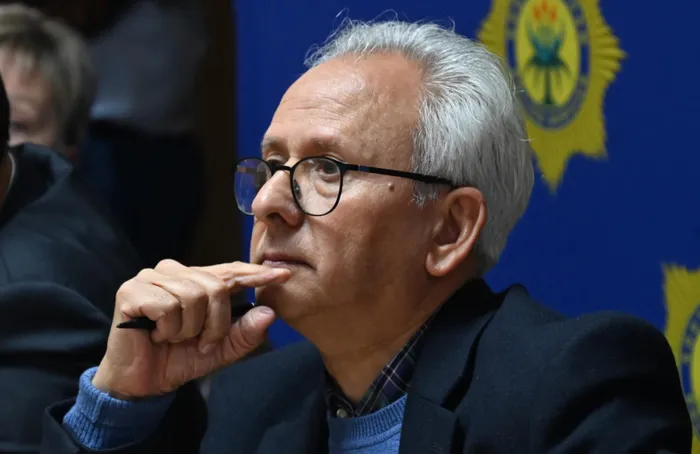
Despite a 3.8% salary increase for Cabinet Ministers effective from April 2026, South African taxpayers are burdened with the dual salaries of Police Minister Senzo Mchunu, currently on paid leave, and his replacement, Professor Firoz Cachalia. This situation has sparked public outcry and raised questions about the implications for police leadership and accountability.
Image: Ayanda Ndamane / Independent Newspapers
With Cabinet Ministers approved salary increases of 3.8% that came into effect from 1 April 2026, South African tax payers are still forking out double the amount for the post of Police Minister.
Police Minister Senzo Mchunu,was placed on special leave last year, continues to earn his full annual salary of R2.69 million, which translates to approximately R224,166.67 per month.
Mchunu was placed on special leave by President Cyril Ramaphosa for the duration of the Presidential Inquiry, known as the Madlanga Commission.
His replacement, Professor Firoz Cachalia from Wits University had since replaced the police top boss, and while his salary was not made public, it has been reported that he is earning the full salary of a Cabinet Minister.
With the Police Ministry already bloated with two deputy ministers and costing taxpayers millions of rand in salaries and ministerial perks, there has been a public outcry over the president’s decision to place Mchunu on a long paid leave and appointing Cachalia who came from outside the Cabinet.
Matthew Parks, Parliamentary Coordinator of trade union, Congress of South African Trade Unions (Cosatu) told Business Report on Monday that while the situation has no impact on the South African Reserve Bank (Sarb), SARS will tax any income as required by law.
Parks said, "Whilst appreciating and respecting the right of all persons to be presumed innocent until proven guilty, having effectively two Ministers for Police sends a messy message to the public."
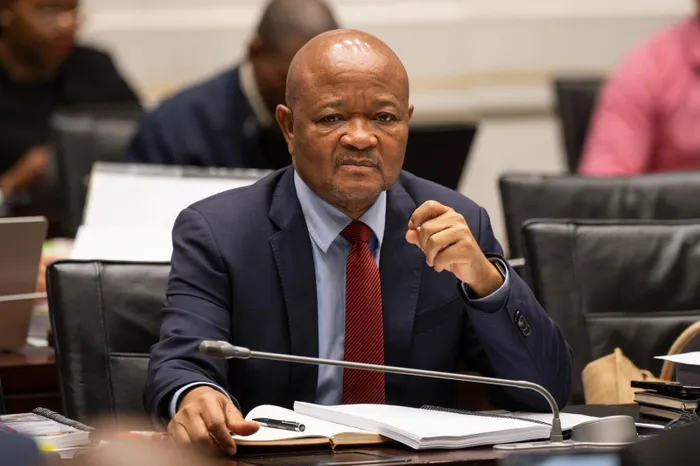
Despite a 3.8% salary increase for Cabinet Ministers effective from April 2026, South African taxpayers are burdened with the dual salaries of Police Minister Senzo Mchunu, currently on paid leave, and his replacement, Professor Firoz Cachalia. This situation has sparked public outcry and raised questions about the implications for police leadership and accountability.
Image: ARMAND HOUGH Independent Newspapers
Parks added, "It is important that the Madlanga and Ad Committee investigations be concluded and the President would then be able to resolve this matter. It benefits no one that this state of affairs continues. The Police need leadership whose integrity is beyond reproach and with the clear authority to action the findings of the Madlanga and Ad Hoc findings as a matter of the highest urgency."
"Our crime levels are unacceptably high and if we are to win this war we need a leadership of the police that has the full authority to deal with it. This includes the issue of the SAPS Commissioner," Parks further said.
Meanwhile, Labour law expert, Advocate Bo Dlamini, had told the Cape Times that Ramaphosa's decision to place Mchunu on special leave may be unconstitutional and wasteful.
Dlamini said since ministers are not appointed under the Public Service Act, it is unclear where the president based his decision to give Mchunu a leave of absence, saying it was even worse that the leave may take up to a year, which is unusual for ministers and it can constitute a wasteful expenditure.
He further stated that although ministers’ appointments are not regulated by labour laws, the president, in a supervisor-subordinate relationship, could have suspended the minister instead of granting him a leave.
“Ramaphosa was supposed to suspend Mr Mchunu and appoint an independent tribunal to investigate the two violations of the Constitution within three months and make a report with recommendations,” said Dlamini.
The Madlanga Commission aims to investigate “serious corruption allegations” made by KwaZulu-Natal Police Commissioner Lieutenant-General Nhlanhla Mkhwanazi.
The claims, which directly implicate Mchunu, suggest that high-level interference has obstructed criminal investigations and enabled corrupt syndicates to flourish within law enforcement.
“These allegations, if proven true, threaten to undermine public confidence in the ability of the South African Police Service to protect citizens and combat crime and corruption,” Ramaphosa said when he announced Mchunu's special leave.
Follow Business Report on Facebook, X and on LinkedIn for the latest Business and tech news.