

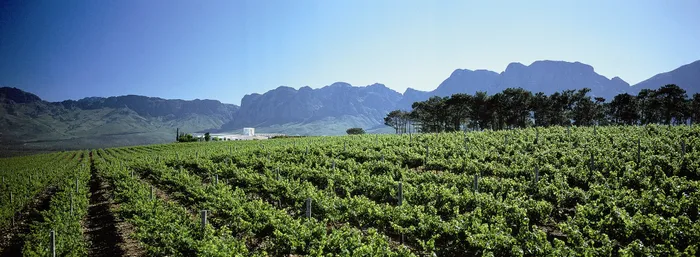
South Africa Wine welcomed a positive harvest in 2026 in the wine industry on Monday, with the 2026 grape harvest estimated at 1.37 million tonnes, an improvement from 2025.
Image: Supplied
South Africa Wine has welcomed a positive harvest in 2026 in the wine industry on Monday, with the 2026 grape harvest estimated at 1.37 million tons, an improvement from 2025.
“Overcoming significant climatic challenges to produce wines of exceptional quality, concentration and balance. Guided by advanced technical expertise and precise vineyard management, the vintage further reinforces South Africa’s position as a producer of premium wines for global markets,” said the industry on Monday.
South Africa Wine added that the season itself was defined by significant climatic variability, often described as a “pendulum season”, shifting between dry conditions and periods of intense rainfall.
“A warm, dry growing phase supported strong vineyard development and fruit set, while well-timed rainfall in February provided vital relief to water-stressed regions but also introduced disease pressure in certain regions, requiring careful management. This was followed by heat spikes in March, which accelerated ripening and compressed harvest windows,” it said.
South Africa Wine said that South Africa’s 2026 grape harvest is estimated at 1.37 million tons, marking a moderate recovery from 2025.
“This measured increase follows a series of smaller vintages and reflects improved vineyard performance, while maintaining a clear focus on quality and value.”
South Africa Wine added that despite the challenging conditions, early indicators point to excellent quality across key cultivars, with strong flavour concentration, balanced acids and sugars, and outstanding colour development in red wines.
Dr Etienne Terblanche, consultation service manager at Vinpro, said that this was a highly variable and technically demanding season, requiring producers to make precise, informed decisions in both the vineyard and cellar.
“From canopy management and irrigation discipline to selective harvesting and careful sorting under disease pressure, the 2026 harvest highlights the depth of expertise across our industry. The result is wines with excellent balance, concentration and strong premium potential,” Terblanche said.
“Producers were required to adapt continuously throughout the season – managing smaller berry sizes, responding to increased disease pressure following the February rainfall, and handling a compressed harvest window that placed significant pressure on cellar capacity and logistics.”
South Africa Wine said that the industry enters the 2026 marketing season against the backdrop of a highly competitive, oversupplied global wine market, where slower consumer demand, elevated inventory levels, and sustained pricing pressure continue to constrain growth and put margins under pressure.
“In this environment, South Africa’s ability to deliver consistent quality across a broad range of styles and price points is increasingly important.”
Rico Basson, CEO of South Africa Wine, said that the challenge in the current market is protecting value in an environment where global oversupply and pricing pressure are driving increased competition.
“South Africa has clear strategies in place to steer these conditions responsibly, with a strong focus on premiumisation, market diversification, disciplined supply management and long-term brand positioning,” Basson said.
Siobhan Thompson, CEO of Wines of South Africa (WoSA), said that global markets are increasingly looking for authenticity, quality and consistency – and the 2026 vintage delivers on all three.
“The exceptional quality of this vintage reinforces South Africa’s reputation as a producer of world-class wines and supports our ongoing efforts to grow value in export markets,” Thompson said.
According to Francois Rossouw, CEO of the Southern African Agri Initiative (Saai), South Africa’s 2026 wine grape harvest is very important because it shows that even under tough and highly variable weather conditions, producers were able to deliver a crop with both improved volumes and excellent quality, which is exactly what the sector needs in 2026.
“An estimated harvest of 1.37 million tonnes represents a welcome recovery from 2025, but even more important is that the fruit quality creates better opportunities for strong wine prices, premium market growth and improved confidence across the value chain,” said Rossouw.
“For farmers, this is not just about tonnes in the cellar, but about proving the resilience, skill and adaptability of our vineyards and farming businesses, while strengthening South Africa’s reputation as a dependable producer of high-quality wines for both the local and export market.”
BUSINESS REPORT