

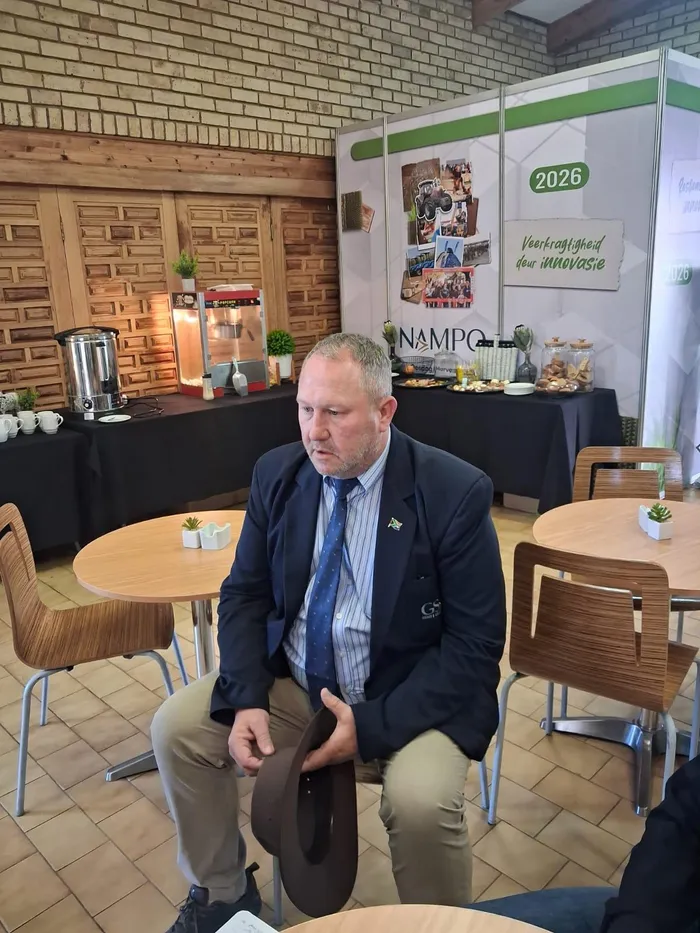
Grain SA reiterated its call to amend the current tariff-based reference price on wheat at the Southern Hemisphere's largest agricultural expo, the NAMPO Harvest Day, in Bothaville, Free State.
Image: Yogashen Pillay / Independent Newspapers
Grain SA has renewed its call for urgent reforms to South Africa’s wheat tariff system, warning that prolonged delays in finalising a tariff review are placing severe pressure on local producers already battling subsidised international competition.
Speaking at NAMPO Harvest Day, the organisation said the delayed implementation of proposed amendments to the current tariff-based reference price for wheat has become a major concern for the domestic grain industry.
Grain SA said a joint application with the South African Cereals and Oilseeds Trade Association (SACOTA) was submitted to the International Trade Administration Commission in June 2024 to revise the existing wheat tariff system and automate the lengthy tariff publication process.
According to the organisation, the current system no longer provides adequate protection against heavily subsidised wheat imports from major producing countries.
“South African producers do not compete on equal footing in global markets, with many international wheat industries receiving significant government support, subsidies and protection measures that local producers simply do not have access to.”
The organisation argued that the wheat tariff mechanism remains one of the few tools available to shield local producers from distorted global market conditions and unfair competition.
Grain SA chairperson Richard Krige said the tariff debate should not be viewed as protectionism, but rather as a necessary measure to ensure fair competition.
“We need a tariff system that works for producers in real time and responds effectively to rapidly changing global market conditions. Producers cannot absorb endless delays while competing against countries that actively support and protect their agricultural sectors,” Krige said.
“Trade wars, tariffs and opportunities are already affecting the sustainability and competitiveness of domestic grain production. South African producers are expected to compete globally, but too often they are doing so without the policy responsiveness and trade certainty available to producers in competing countries.”
Grain SA said the application to the International Trade Administration Commission of South Africa (ITAC) sought both an increase in the domestic dollar-based reference price for wheat and improvements to the methodology used to implement wheat import tariffs, with the aim of making the system more transparent and responsive.
However, nearly two years after the application was lodged, the industry is still awaiting final implementation.
During this period, global wheat prices have continued to decline, while South African producers have faced rising input costs, infrastructure constraints and mounting logistics pressures.
Grain SA recently warned that many wheat farmers are already operating below sustainable levels.
Krige said that every month of delay matters.
“Producers are making production and investment decisions in one of the most volatile global trade environments in years, yet the industry is still waiting for the outcome of a tariff application submitted almost two years ago. Policy delays in highly volatile markets have real economic consequences.”
Despite its criticism of the current system, Grain SA stressed that it supports a fair and rules-based trade regime that recognises the importance of maintaining domestic food production capacity.
Krige said growing geopolitical instability and export restrictions across the world highlighted the need for South Africa to strengthen its own agricultural resilience.
“If South Africa wants resilient agricultural value chains, sustainable rural economies and long-term food security, then producer profitability and policy certainty cannot become secondary considerations,” Krige said.
He added that countries around the world were actively protecting strategic agricultural sectors, while South Africa risked falling behind if it failed to act decisively.
“The sector can only navigate these cycles through partnership, transparency and practical collaboration. NAMPO provides an important platform to engage openly on the challenges facing the sector, while also driving practical solutions that improve competitiveness, expand markets and secure the future sustainability of grain production in South Africa,” he said.
BUSINESS REPORT