

KZN Tourism and Film said that Africa’s Travel Indaba (ATI) held last week at the Durban ICC was a successful event for the economy and the tourism industry.
Image: Karen Sandison / Independent Newspapers
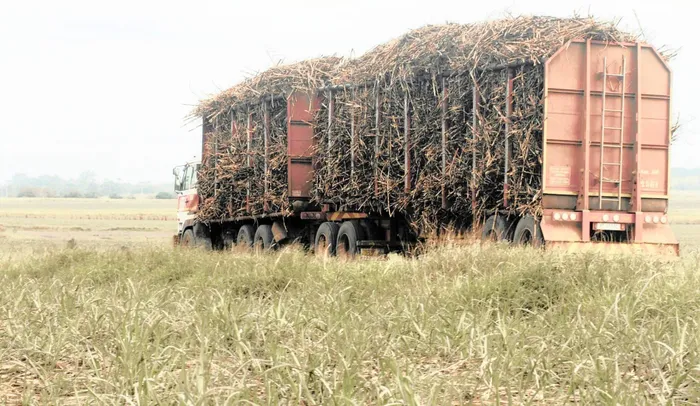
South Africa’s sugarcane industry has started the 2026/27 milling season on a strong footing, with cane deliveries significantly ahead of last year’s pace, but deep uncertainty surrounding Tongaat Hulett and rising sugar imports continue to cast a shadow over the sector.
SA Canegrowers on Monday said early season figures point to a promising start for the country’s 28,000 sugarcane growers, highlighting the sector’s resilience despite mounting operational and financial pressures.
“All the sugar mills except for the three Tongaat Hulett mills have opened for the season, and early season statistics show that 48% more raw sugarcane has been delivered to the mills by growers when compared to the same period last year,” SA Canegrowers said.
The industry body noted that Tongaat Hulett’s three mills, which support approximately 18,000 growers, are expected to begin operations in the coming weeks.
Higgins Mdluli, chairperson of SA Canegrowers, said growers supplying Tongaat Hulett remained under severe pressure as uncertainty over the company’s future continues.
“We hope growers supplying the Tongaat Hulett mills, who are beginning the season later than other growing regions, will be able to have a productive and successful season despite the uncertainty surrounding the company,” Mdluli said.
“The industry continues to show remarkable resilience even under extremely difficult conditions.”
Tongaat Hulett recently secured R200 million in temporary operational funding support from the Industrial Development Corporation as negotiations aimed at avoiding liquidation continue.
The company’s liquidation application is scheduled to return to court on 17 June, while discussions involving business rescue practitioners, Vision parties and the IDC remain ongoing.
At the same time, the industry is grappling with a sharp rise in imported sugar, which growers say is threatening the long-term sustainability of local production.
SA Canegrowers said South Africa imported 16,000 tons of sugar in March alone, double the volume imported during the same month last year.
“Last year was one of the worst years on record regarding sugar imports, with 213,000 tons being imported from duty-bearing countries,” the organisation said.
“If nothing changes, this year is set to repeat this pattern, placing significant strain on sugarcane growers and milling companies, including Tongaat Hulett.”
Dranca Neo Phalatse, postgraduate coordinator at the faculty of natural and agricultural sciences at the University of Pretoria, said the early-season performance was encouraging and suggested improved production conditions for growers.
“The increase in cane deliveries compared to the same period last year suggests improved activity and demonstrates the resilience of growers despite ongoing challenges in the industry,” Phalatse said.
“This is generally good news for cane farmers, as stronger early-season deliveries could indicate improved production and potential opportunities for income generation.”
However, she warned that the broader structural risks facing the industry remain unresolved.
“Regarding Tongaat mills, there appears to be optimism that they may open in the coming weeks, particularly given the temporary funding support received and ongoing negotiations,” she said.
“However, uncertainty remains, and developments will likely depend on the outcome of current discussions and legal processes.”
Meanwhile, Dr Siyabonga Madlala, the South African Farmers Development Association (SAFDA) executive chairperson, said most milling companies had started operations between March and early April, but Tongaat Hulett’s delays continued to affect thousands of growers.
“In terms of milling opening dates, the majority of milling companies commenced operations in March 2026, with a smaller number starting in early April,” he said.
“It is anticipated that crushing operations will begin during the last week of May 2026, subject to final readiness and operational alignment.”
While SAFDA welcomed the relatively smooth start to the season across other milling operations, Madlala warned that growers remain under intense financial strain due to rising input costs.
Madlala said that increases in diesel, fertiliser, and chemical input prices are squeezing production margins, especially for small-scale growers.
“At the same time, the ongoing influx of cheaper imported sugar sold at prices below local production costs continues to pose a serious risk to the financial sustainability of farming operations,” he said.
Madlala said the delayed reopening of Tongaat Hulett mills was already having severe consequences for farmers supplying those operations.
“These farmers are unable to deliver cane as scheduled, leading to cane backlog, deterioration in cane quality, reduced cane yields, and cash flow delays, placing financial pressure on the farmers' ability to cover operational costs such as fertiliser, chemicals, transport, and wages.”
BUSINESS REPORT