

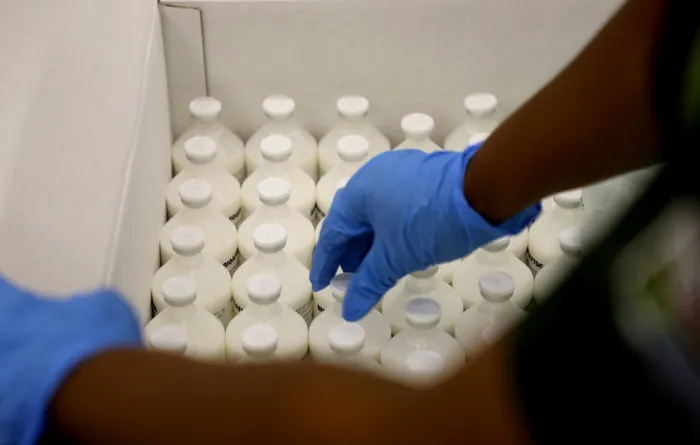
FMD Response SA said that it welcomed a judgment by the Pretoria High Court on Monday allowing farmers to procure and self-administer vaccines against Foot and Mouth Disease (FMD), following an application brought by Sakeliga, the South African Agri Initiative (SAAI) and Free State Agriculture.
Image: Timothy Bernard / Independent Newspapers
Lobby group FMD Response SA has welcomed a Pretoria High Court judgment allowing farmers to procure and self-administer vaccines against Foot-and-Mouth Disease (FMD), saying the ruling could significantly accelerate efforts to contain the spread of the virus.
The judgment, handed down on Monday, followed an application brought by Sakeliga, South African Agri Initiative and Free State Agriculture.
FMD Response SA said the ruling was a critical intervention as the government aims to vaccinate 80% of cattle by the end of December, despite the vaccination programme only beginning in February.
The outbreak of Foot and Mouth Disease has placed increasing pressure on South Africa’s livestock industry, particularly in KwaZulu-Natal, where movement restrictions and outbreaks have disrupted beef and dairy farming operations.
Andrew Morphew, spokesperson for FMD Response SA, argued that the current pace of vaccination was insufficient to halt transmission of the disease.
Morphew said an 11-month vaccination programme is too slow to achieve the simultaneous immunity required to stop disease transmission and meet the World Organisation for Animal Health standards for controlling FMD.
He stressed that vaccinations needed to occur within a concentrated six-to-eight-week period to ensure cattle develop immunity at roughly the same time, thereby interrupting the spread of the virus between herds.
“The prolonged amount of time it is taking to administer the vaccines is precisely why vaccinated cattle at three dairy farms in KwaZulu Natal have become infected with the virus,” Morphew said.
However, the organisation said the judgment does not create a free-for-all or give farmers an automatic right to import vaccines themselves.
“Instead, it confirms that farmers may procure and administer FMD vaccines that have been lawfully imported or lawfully manufactured, under auditable conditions.”
Morphew said that the key question now is whether lawful private importers, manufacturers and their agents will be allowed to bring vaccines into the country and make them available to farmers without unnecessary delay.
“The court has opened the door to private vaccination. The government and SAHPRA must now ensure that lawful private vaccine channels can operate at the speed and scale this crisis requires.”
FMD Response SA added that they also note that there are credible reports that more than 90% of commercial beef farmers in KwaZulu-Natal have been unable to access state vaccines and that cattle at commercial farms in that province remain unvaccinated.
“Reports such as this show precisely why the private sector needs to be able to administer vaccines with speed and scale. It is essential that the government does not stand in the way of the private sector importing FMD vaccines and selling them to private farmers.
FMD Response SA said the government will have imported up to 13.5-million doses of FMD vaccine by the end of May, but what remains unclear is how many vaccines are being administered and how many remain in fridges.
BUSINESS REPORT