

Nissan has reaffirmed its commitment to South Africa and Africa despite recent restructuring.
Image: Supplied
Nissan says it will continue investing in South Africa and the broader African region, despite the restructuring that saw it sell the Rosslyn Plant to Chinese manufacturer, Chery.
The plant was responsible for producing the Nissan Navara range for local consumption and export to Africa.
Speaking during a media briefing at the Nissan Vision Event in Yokohama, Japan, Nissan president and CEO Ivan Espinosa said the decision to reduce production capacity, including in South Africa, formed part of a wider effort to stabilise the business.
“As you know, we restructured the manufacturing footprint from 17 to 10 plants. This was unfortunately the hard medicine that our company needed in order to ensure sustainability,” he said.
“It’s a decision that touched people’s lives and communities, but for the long-term sustainability of the company, we had to do it.”
Despite that, Espinosa confirmed the region remains part of their strategy.
“We will continue investing in South Africa and in Africa in general. We’re going to bring more products, and there are some other products that will continue coming.”
Nissan Chief Performance Officer Guillaume Cartier added that the continent remains an opportunity.
“For us, Africa is an opportunity. “If you look at the total market, it’s not big, about 1.3 million units, but the population is large, and motorisation is still low.”
He added that South Africa was a key market. “South Africa is the number one African market by far; it represents 30 to 40% of Africa. So it’s important, and it remains important.”
Cartier said Nissan’s approach would rely on global sourcing rather than local production.
“We can source from many places like Thailand, India, and even Mexico. Our strong message is we believe in Africa and South Africa.”
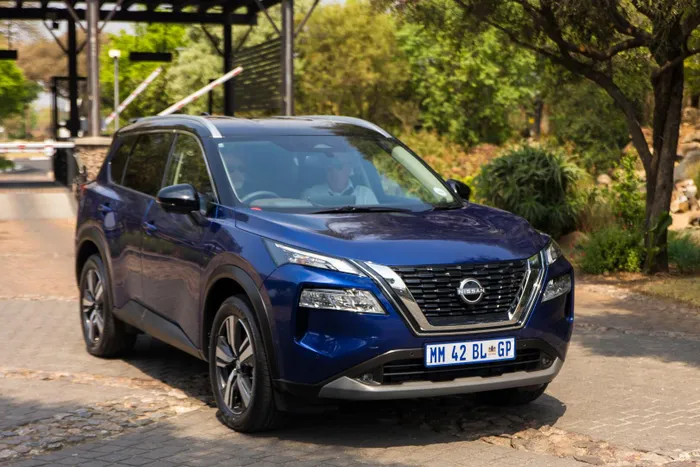
Nissan says that cars like the X-Trail will still be part of their local offering.
Image: Supplied
Globally, Nissan’s current strategy is shaped by what Espinosa described as a period of overreach.
“We had an ambition of growing the company far beyond the natural growth that the company could accept. “We over-invested, hoping that the volume would come.”
While volumes peaked at 5.7 million units, the company had been structured for significantly more. “The company was designed to receive eight million cars. This is what generated the problem that we have today.”
The response has been a restructuring programme internally referred to as a reset phase.
“We needed a strong shot of medicine; it was painful, but we had to resize very quickly.
Beyond restructuring, Nissan has defined a clear long-term direction centred on technology.
“We are a company that has deep roots in technology, autonomous, software and electrification.
He described the goal as positioning Nissan around “mobility intelligence for everyday life”.
“We bring human-centric technology that is accessible to everyone. “This vision helps us prioritise decisions and investments to become quicker, sharper and more competitive.”
Nissan’s global approach is built around three key markets: the United States, China and Japan.
“The US represents more than one-third of our business, China is setting the standards of the automotive industry for the future, and Japan is where we have our largest engineering footprint,” Espinosa said.
These markets are expected to lead product development for other regions, including Europe.
Europe, meanwhile, is being treated as a demanding but important region.
“It’s not that easy to be profitable in Europe. Regulation is not stable, and competitiveness in terms of cost is another challenge,” Cartier said of the challenges.
However, he confirmed a continued presence. “We are committed to Europe, but we need to ensure profitability.”
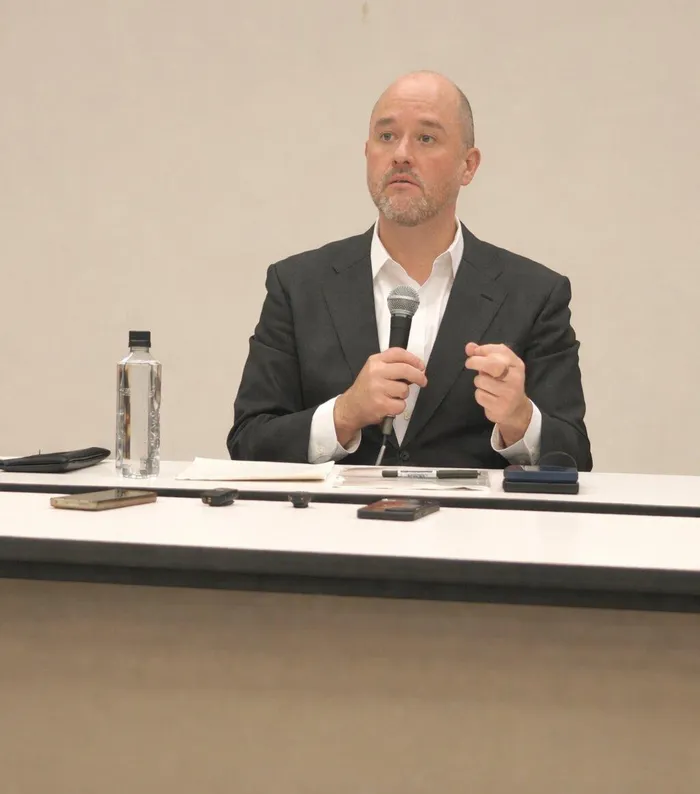
Nissan president and CEO Ivan Espinosa.
Image: Willem van de Putte
On the product front, Espinosa confirmed that a new GT-R is part of Nissan’s future.
“Of course it’s a priority,” he said of the legendary marque. “It’s not only a car, but it’s also a symbol, so a new GT-R will come.”
On powertrains, Nissan is maintaining a multi-path approach rather than committing to a single solution.
“We are not dictating one path.”
He added that e-Power plays a strategic role. “It is very close to EV technically, so we can pivot quickly if demand for EVs accelerates.”
“We have to be extremely agile; we may have to adjust our powertrain mix depending on customer demand,” Cartier agreed
The company is also working to reduce development times.
“The 30-month timing is for global coverage products. We believe that at the moment, 30 months is competitive.
“In China, we have already demonstrated quicker turnaround times and developed a product in 24 months,” Espinosa said.
Nissan will continue working with alliance partners, including Renault and Mitsubishi, where it makes sense.
“We have a long-standing positive relationship with many successful projects, and will continue exploring possibilities,” Espinosa said.
“We will work together where we see a good win-win relationship and good business.”
Espinosa concluded by saying that the focus remains on completing the recovery phase
For Nissan, the current focus remains on completing its recovery phase while laying the groundwork for future growth.
“We understand very well where we are and why we are here. Now it’s about making the company more focused, more competitive and ready for what comes next,” Espinosa concluded.