

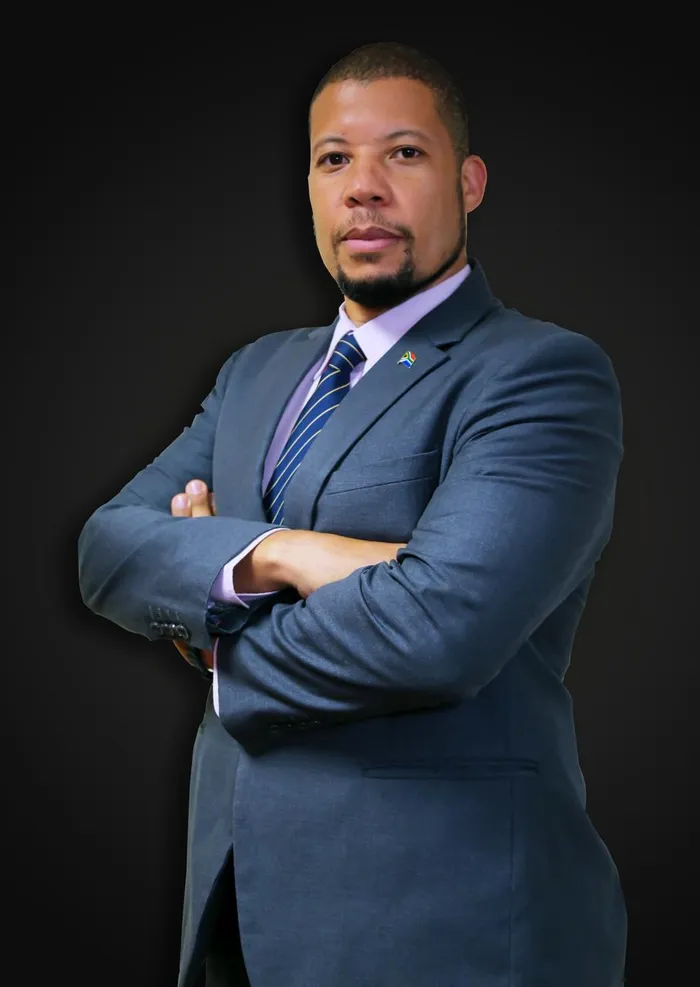
Neville Matjie is the Chief Executive Officer of Brand South Africa, the agency mandated to manage the image and reputation of the country.
Image: Supplied
When the Financial Action Task Force (FATF) confirmed on 24 October 2025 that South Africa had been removed from its grey list, the news carried significance far beyond the financial sector.
It was a defining moment for our democracy, a recognition of years of reform, and a reaffirmation of our nation’s credibility in the eyes of the world.
For almost three years, South Africa has been engaged in a whole-of-society effort to strengthen governance, restore institutional integrity, and rebuild confidence in its financial system.
The outcome is not just a technical compliance milestone, but a validation of our collective ability to reform, to lead, and to inspire trust.
From grey listing to renewed confidence
South Africa was placed on the FATF grey list in February 2023, after weaknesses were identified in our systems to combat money laundering, terrorist financing, and illicit financial flows.
It was a sobering reminder that the erosion of institutional capability can have lasting economic and reputational costs.
Finance Minister Enoch Godongwana called it “a wake-up call to confront our institutional weaknesses and rebuild capacity where it was lost.”
President Cyril Ramaphosa described it as “a turning point for our governance and financial integrity.”
These words set the tone for a national recovery journey anchored in accountability and reform.
The power of collective reform
Over the past three years, government, regulators, and the private sector worked together to implement a comprehensive 22-point action plan developed with the FATF.
The National Treasury, Financial Intelligence Centre (FIC), South African Reserve Bank, South African Revenue Service (SARS), and law enforcement agencies strengthened supervision, improved transparency, and enhanced collaboration.
The results are visible. South Africa now has more effective enforcement systems, greater transparency in beneficial ownership, and stronger mechanisms to prevent the abuse of financial structures.
As a result, the FATF found that the country had fully addressed its strategic deficiencies, leading to its removal from the grey list in October 2025.
This achievement reaffirms South Africa’s ability to self-correct and to align with the highest international standards of governance.
It also restores confidence among investors, partners, and citizens that our institutions are not only resilient but responsive.
A catalyst for renewed investment
The timing of South Africa’s delisting could not be better. It coincides with a wave of renewed investment confidence in our economy and with major commitments from global partners who continue to believe in South Africa’s potential.
On 9 October 2025, European Commission President Ursula von der Leyen and President Cyril Ramaphosa announced a Team Europe investment package worth nearly €12 billion, under the Global Gateway partnership between South Africa and the European Union.
The package doubles down on a shared ambition to make South Africa a global leader in the just energy transition, sustainable infrastructure, digital connectivity, and pharmaceutical manufacturing.
This new investment builds on the €4.7 billion package announced at the EU–South Africa Summit in March 2025 and reflects a deepening partnership between Team Europe and South Africa.
The combined investments cover strategic areas such as green logistics, clean energy, infrastructure modernisation, and the development of a sustainable pharmaceutical value chain.
The Team Europe package is already delivering concrete results, including new commitments to the Coega Green Ammonia Project, which will enable South Africa to become a producer of clean maritime fuel, and investments to strengthen local biomanufacturing capabilities for vaccines and pharmaceuticals to serve the African continent.
In the private sector, confidence continues to grow.In December 2024, Nubank, one of the world’s largest digital financial institutions, announced a US$150 million investment in Tyme Group, the parent company of TymeBank in South Africa.
The investment, which is being executed through 2025, has accelerated Tyme’s local expansion and demonstrated sustained investor confidence in South Africa’s fintech and innovation ecosystem.
In June 2023, BMW Group South Africa announced a R4.2 billion investment at its Rosslyn plant to expand production of plug-in hybrid electric vehicles (PHEVs) for both local and export markets.
The investment entered its implementation phase in 2024 and reflects South Africa’s growing role in the global automotive transition towards sustainable mobility.
Microsoft South Africa has announced a R5.4 billion investment in artificial intelligence and data-centre infrastructure, reinforcing South Africa’s position as a regional hub for digital innovation and AI capability. Google South Africa has committed R2.5 billion to establish a new cloud-region facility in Johannesburg, integrating the country into its global digital network and significantly expanding local data capacity.Momentum is also building in the energy and logistics sectors.
The R40 billion Energy Fields Initiative, combining wind, solar, and battery storage, represents a new phase of private-sector participation in renewable energy.
The Independent Transmission Projects (ITPs) programme has also opened opportunities for private investment in the national grid.
In addition, the 2025 Budget committed more than R1 trillion over the next three years to infrastructure, supported by public-private partnerships designed to stimulate inclusive and sustainable growth.
These investments show tangible evidence of confidence in South Africa’s governance, policy direction, and institutional stability.
They demonstrate that when credibility is restored, investment follows.
The broader economic and social impact
The removal from the grey list strengthens the overall competitiveness of the South African brand. It enhances the perception of the country as a reliable and well-governed destination for trade, tourism, and investment.
It lowers risk perceptions, reduces transaction costs, and supports stronger engagement with international partners.
Tourism, which contributes over six percent to GDP and supports more than 1.5 million jobs, stands to benefit directly from the renewed confidence in South Africa’s stability and governance.
Visitors and investors alike value destinations that are well managed, transparent, and trustworthy.
A resilient nation, an enduring brand
South Africa’s exit from the FATF grey list is not the end of a process but the beginning of a new chapter.
It reflects the best of what our democracy can achieve when business, government, and civil society work together with shared purpose.
This milestone reinforces what defines our Nation Brand: resilience, accountability, innovation, and the spirit of Ubuntu.
It shows that our credibility is built not on promises, but on performance.
South Africa’s story is one of renewal, courage, and progress. It is the story of a country that faces its challenges honestly, learns from them, and emerges stronger. The world has taken note, and confidence in South Africa is rising once again.
* Neville Matjie is the Chief Executive Officer of Brand South Africa, the agency mandated to manage the image and reputation of the country.
** The views expressed do not necessarily reflect the views of IOL or Independent Media.