

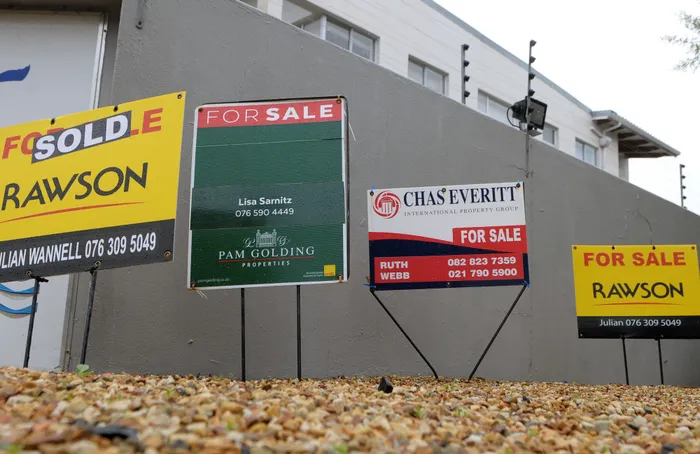
Explore the evolving landscape of South Africa's property market as it enters 2026, driven by lower interest rates, structural changes, and emerging investment hotspots. Discover the key trends shaping the future of real estate in the region.
Image: Independent Newspapers
After years of recovery, South Africa’s property market is entering 2026 with renewed confidence, says John Jack, CEO of Galetti Corporate Real Estate.
He says lower interest rates, improved infrastructure stability, and a rebound in investor sentiment are reshaping where buyers are investing and determining which asset classes are expected to outperform.
The 2025 Rode Report on the South African Property Market reinforces this momentum, noting that industrial property remains the most resilient sector nationwide, while office markets are undergoing structural transformation through conversions. The report highlights that coastal regions, particularly the Western Cape and KwaZulu-Natal, continue to outperform national averages in both rental growth and investor confidence.
According to Jack, the next phase will reward selectivity rather than scale: “2026 is about investing with intention. The opportunities are there, but they’re increasingly concentrated in specific regions and asset classes where fundamentals are strong, and demand is measurable.”
In Johannesburg, industrial property continues to underpin investor activity, particularly in the R10- to R40-million bracket, according to Cameron Smith, managing director of Gauteng broking at Galetti.
“The industrial sector is still the stronghold for investors in Johannesburg. There are ongoing enquiries for tenanted industrial assets, especially where there’s potential to unlock higher rental potential by reworking, redeveloping, or upgrading properties," Smith says.
Smith cautions that larger investors are seeking balance: “The increase in rental needs to be market-related. Otherwise, you risk creating a white elephant in the node. That being said, there’s simply not enough quality stock, which means that most landlords are achieving their rental numbers.”
Smith says key industrial hotspots remain concentrated along major logistics corridors, particularly the N1 highway from Waterfall through Midrand and Louwlardia, as well as the eastern belt stretching from Kramerville to Pomona.
Justin Thom, director at Galetti Corporate Real Estate, believes the recovery in office nodes such as Bryanston, Rosebank, Sandton, and Umhlanga is structural rather than cyclical.
“We are seeing a meaningful amount of older commercial office stock being withdrawn from the market through residential conversion,” says Thom. “Large vacancy pockets that once weighed heavily on these nodes are gradually being absorbed, not through leasing alone, but through repositioning and rezoning to high-density residential," Thom says.
This process, while time-intensive, is reshaping supply fundamentals. Rezoning and redevelopment timelines can span 18 to 36 months, but once complete, they permanently remove excess office stock from the market, tightening vacancy levels and stabilising rentals, he says.
Beyond strengthening office fundamentals, Thom notes that residential conversions serve a broader urban function: “These developments are creating more affordable, high-density accommodation options for younger working professionals, placing them within walking distance of major employment nodes and high-quality amenities. It’s improving live-work integration in areas like Rosebank and Sandton in particular.”
Demand for property in coastal towns remains strong. In the Western Cape, industrial and logistics corridors continue to reinforce the province’s investment appeal.
“Industrial assets in the Northern Suburbs continue to see strong demand, with solid value in most cases. The Central Industrial Belt and Airport precinct are also attractive, particularly for logistics operators needing efficient access to both the port and Cape Town International Airport,” says David Arton Powell, head of Cape Town broking at Galetti.
Powell adds that decentralised office nodes in Somerset West, Paarl and Tygervalley are showing potential, driven by urban expansion into the Winelands: “These nodes offer long-term growth potential as businesses follow residential migration patterns, Powell says.
George is also evolving into a strategic regional hub. “With a growing population, an expanding airport and office demand, George is more than just a lifestyle destination,” says Powell.
Jack adds that KwaZulu-Natal is reasserting itself as a prime coastal destination: “Investment is returning after years of uncertainty, and confidence is rebounding, supported by Durban’s strength as a logistics hub. Notably, the KwaZulu-Natal South Coast is experiencing its strongest market confidence in over a decade.”
South African investors are also casting their eyes abroad, with Dubai emerging as a key destination.
Jack notes that transaction volumes have surged from around 200,000 annually to approximately 270,000, with total transaction values reaching roughly AED 680 billion. “This level of activity is only set to continue into 2026 and beyond, and traditional sales methods can struggle to keep pace. That’s why we believe auctions will play a growing role in how property is traded in high-demand markets like Dubai, giving South Africans direct access to this investment potential.”
PERSONAL FINANCE